At a glance: which option may suit your business?
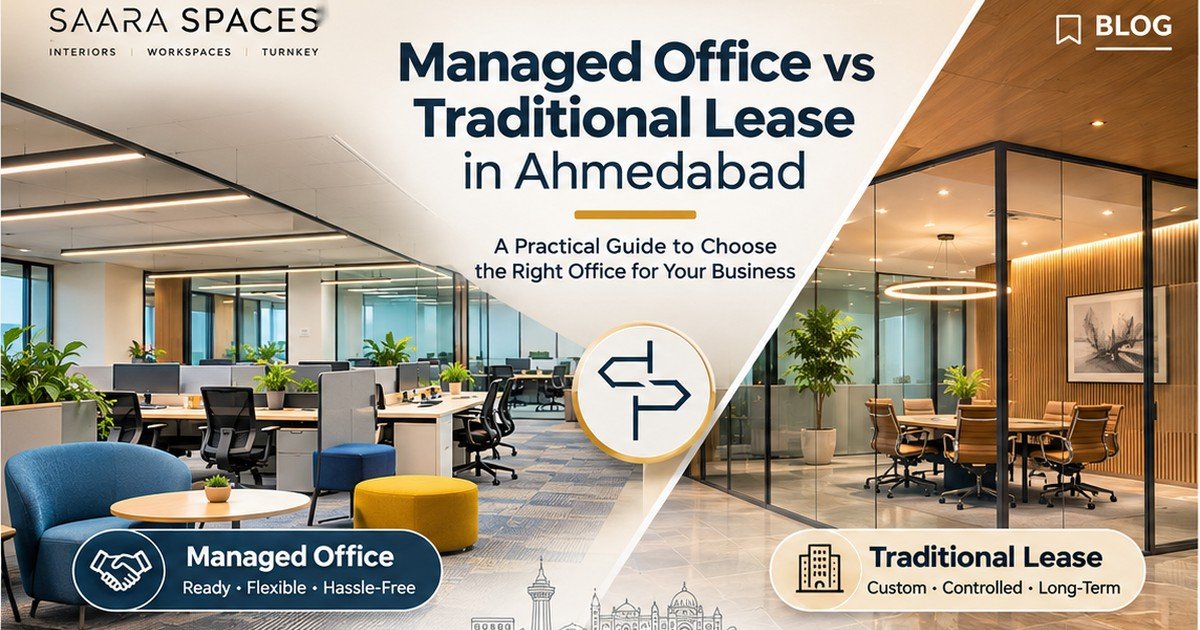
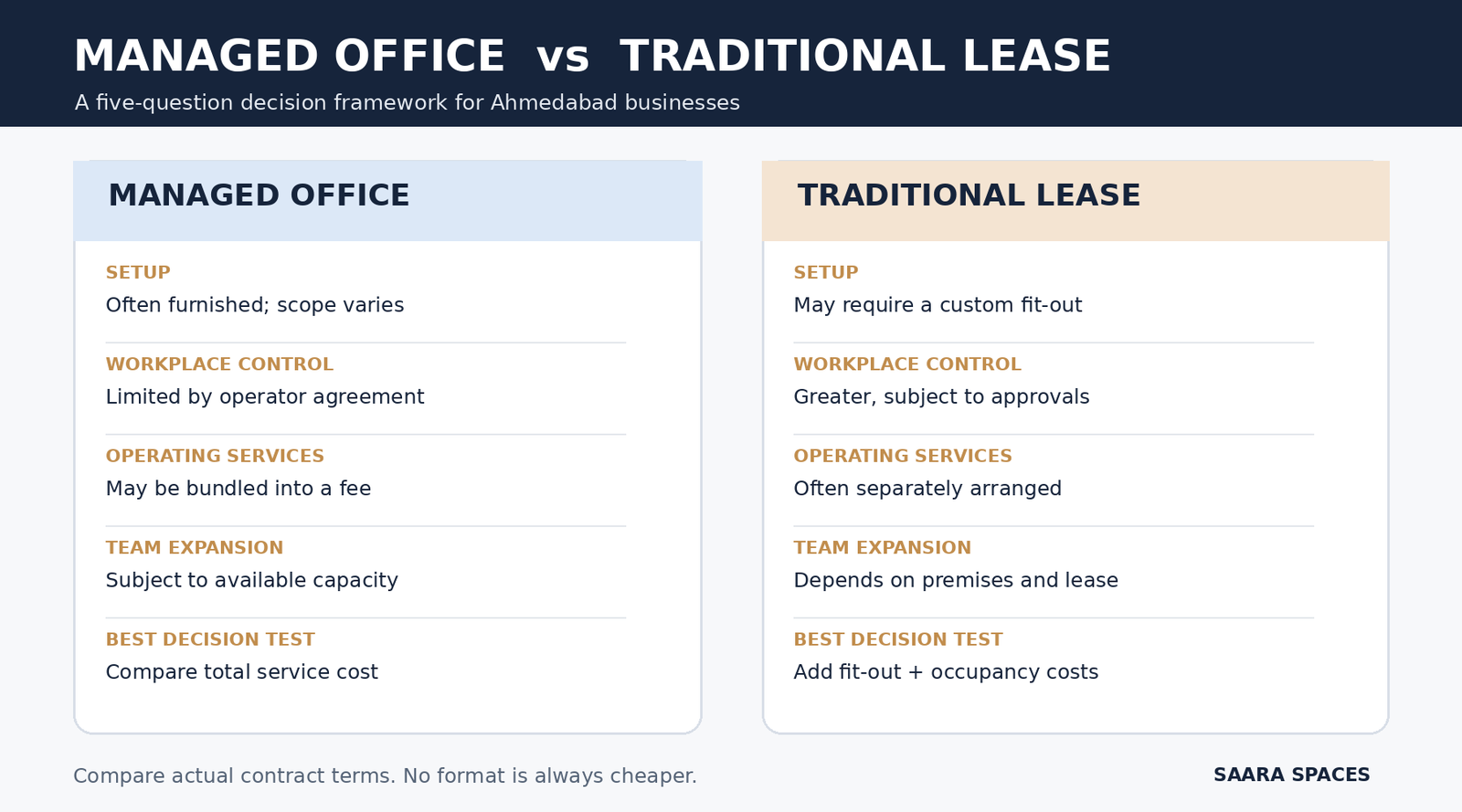
Consider a managed office when you need a relatively ready workplace, prefer the operator to coordinate day-to-day services, or want to avoid managing a large fit-out yourself. Consider a traditional lease and custom office fit-out when workplace control, confidential functions, technical specifications and long-term use matter more. An already-fitted conventional office can be a useful third option.
CBRE’s India Office Occupier Survey 2026 found that 67% of surveyed occupiers expected flexible workspaces to form part of their office portfolios within two years. This reflects surveyed India-market intentions, not Ahmedabad-specific pricing or a guarantee that every company should choose flexible space.
1. Understand what you are actually renting
A managed office typically offers a dedicated workspace through an operator, with some combination of furniture, facility management, reception, connectivity, cleaning or meeting facilities. The exact inclusions and degree of privacy vary by provider and agreement. Managed space is not necessarily the same as an open coworking desk.
A traditional commercial lease usually gives the tenant possession or occupation rights over defined premises, subject to contract terms. The company may then arrange partitions, furniture, electrical and data services, ceilings, lighting and other works itself. But some conventional properties are already fitted out; do not assume every lease starts as a bare shell.
Ask for: a written inclusions/exclusions schedule, measured floor plan, service responsibilities and an explanation of who owns the installed fit-out at the end of the term.
2. Compare total occupancy cost, not just the headline price
Per-seat managed-office fees and per-square-foot conventional rents are different units. A proper comparison uses the same team capacity and time period.
| Cost or obligation | Questions to put to both providers |
|---|---|
| Monthly charges | What exactly is included in rent or service fees, and how often can rates rise? |
| Deposit | What is the amount, refund process and permitted deduction? |
| Interior fit-out | Who funds partitions, workstations, customisation and installation? |
| Connectivity and IT | Is dedicated bandwidth, networking and support included? |
| Utilities and maintenance | Are electricity, HVAC, cleaning and repairs included or separately billed? |
| Meeting facilities and parking | Are these dedicated, shared, limited by hours or charged extra? |
| Exit and reinstatement | What are the notice terms, early-exit costs and restoration obligations? |
Working formula: comparable occupancy cost over the term = non-refundable setup costs + recurring charges + expected operating costs + contractual exit costs. Compare recoverable deposits separately as a working-capital requirement; they are not automatically an expense.
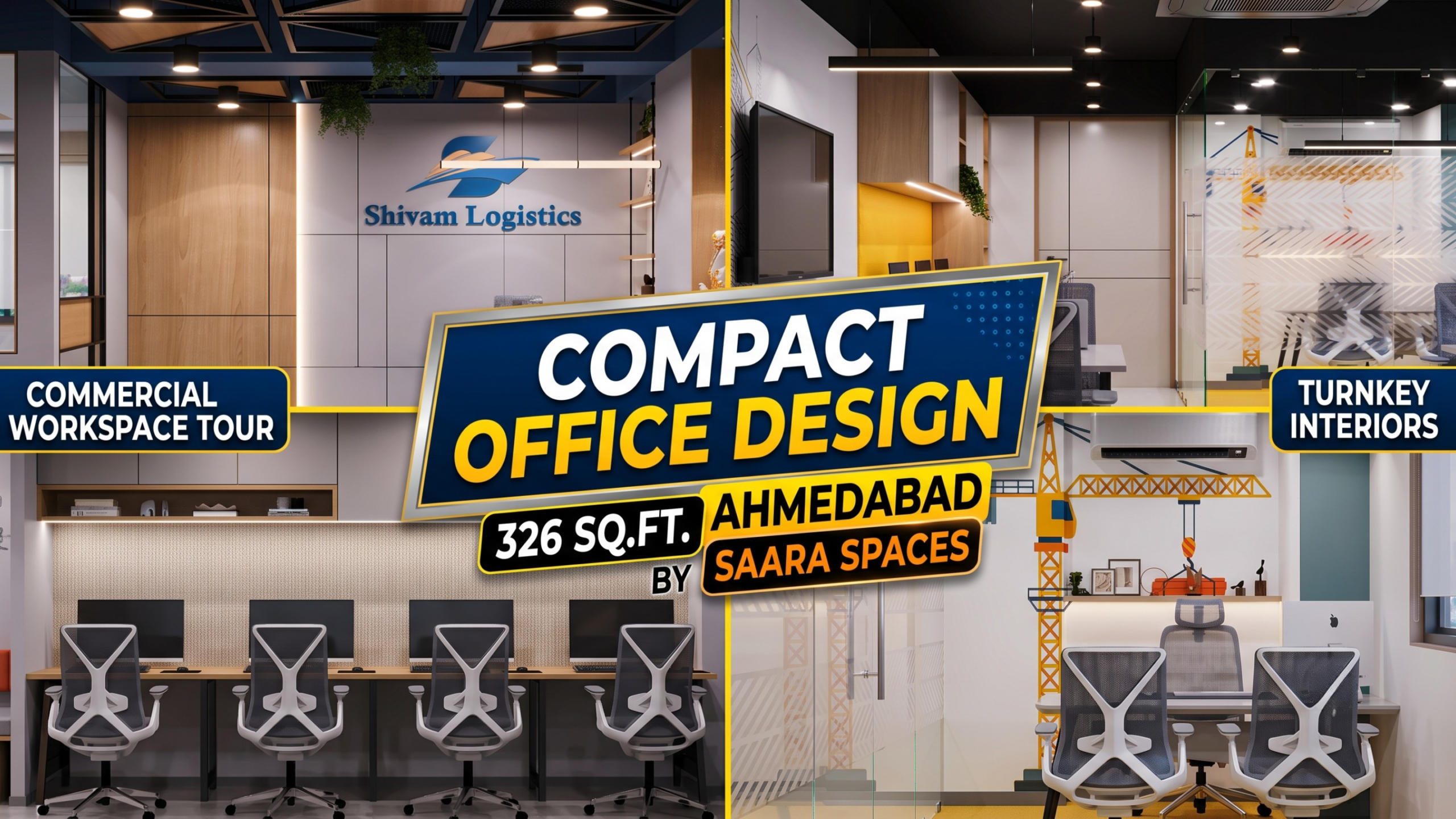
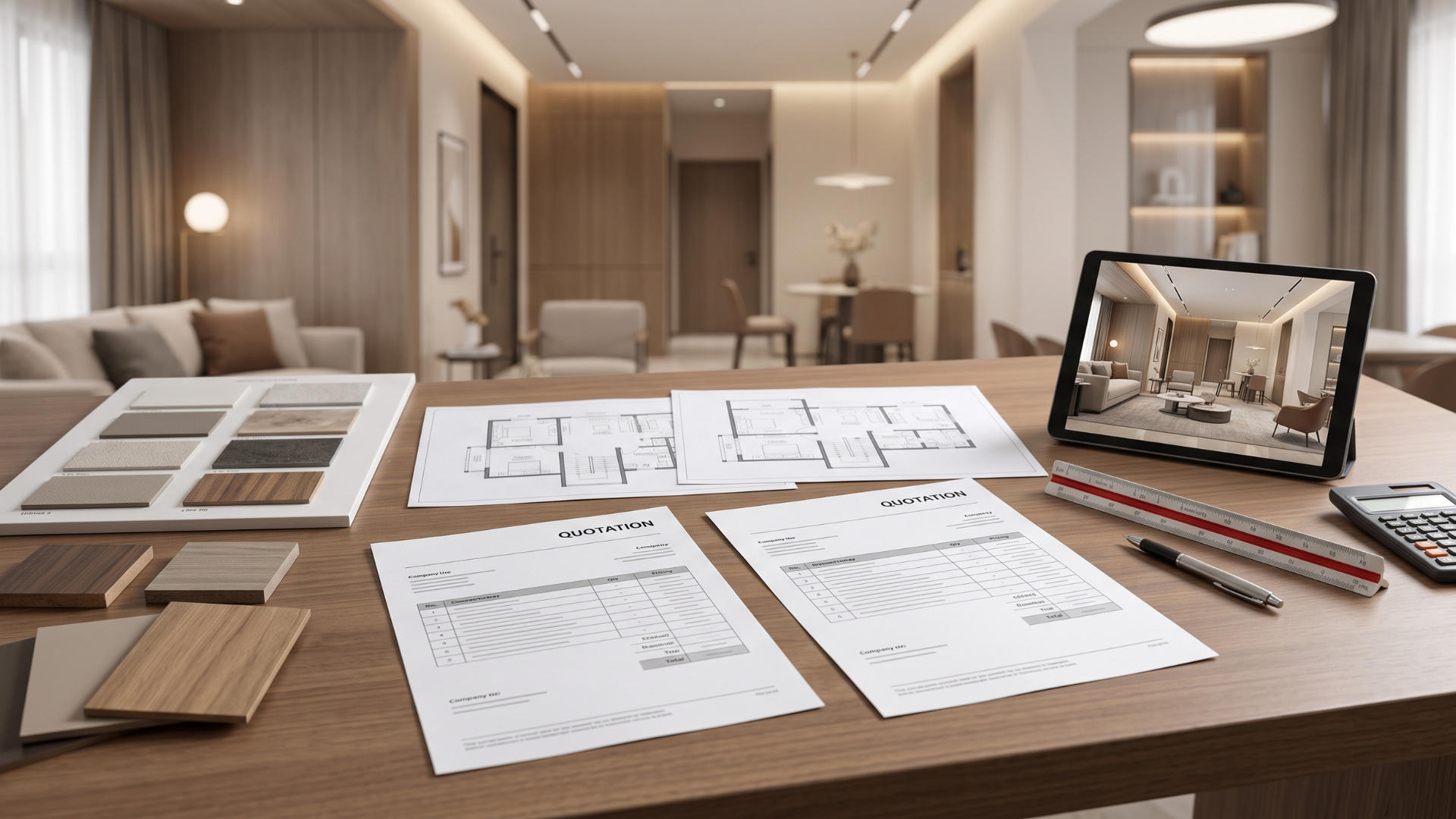
For a conventional office, review interior quotations alongside layout drawings and exclusions. Saara Spaces’ interior design quotation checklist explains why a low headline quote does not always mean a lower final cost. Taxes and lease obligations should be checked with appropriate advisers.
3. Choose based on how your team uses the space
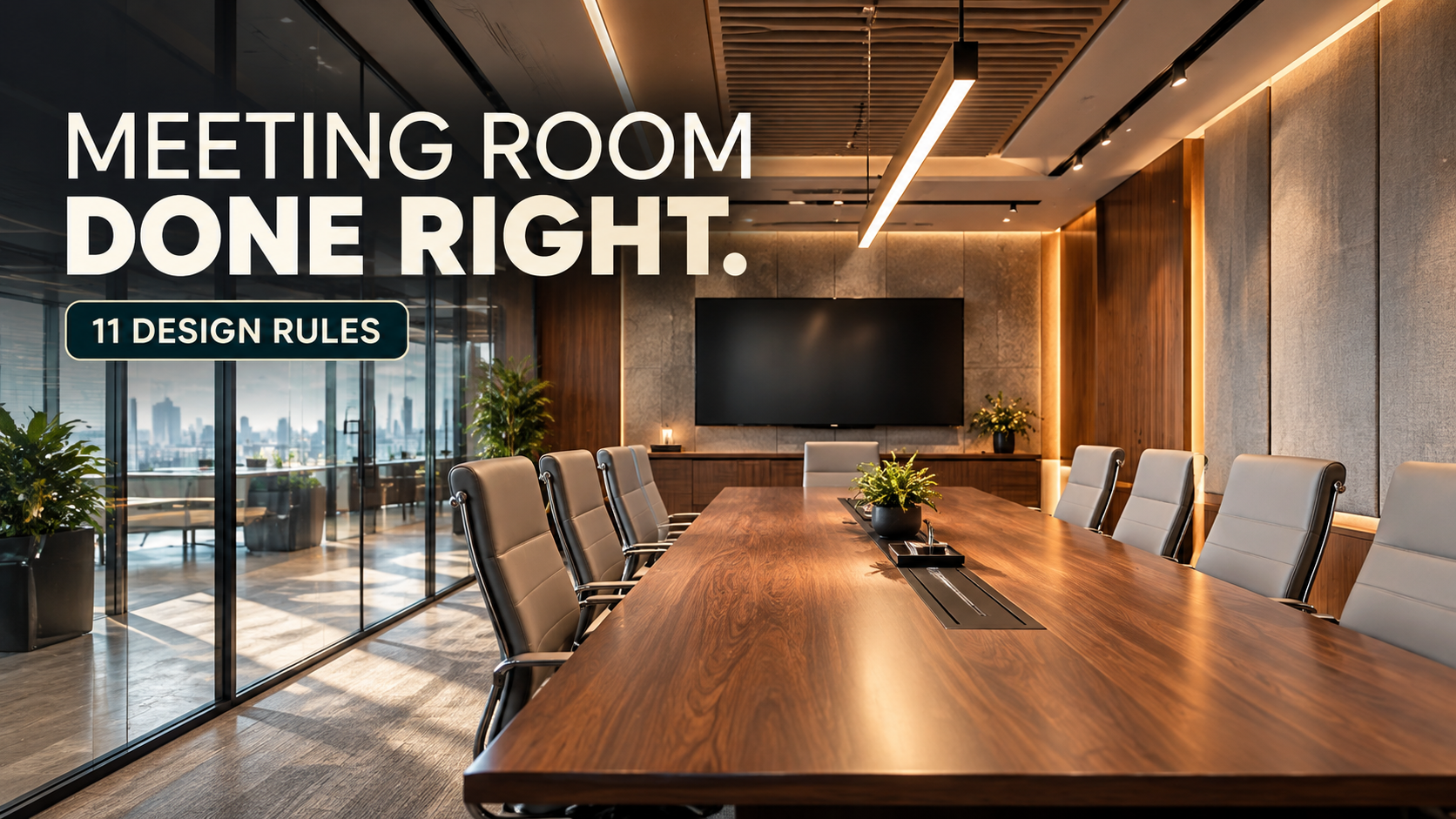
How many people are present on a busy day? How many client meetings happen at once? Do teams need confidential calls, specialised IT, storage or separate customer entrances? These questions should shape the premises decision before furniture is selected. For businesses hosting frequent client or hybrid meetings, the meeting room design checklist provides a more detailed planning reference.
A managed office can work well if its existing meeting rooms, private zones and technology meet those needs. A custom fit-out may make more sense if adjacency between departments, acoustics or operational requirements cannot be accommodated within the operator’s available configuration.
Saara Spaces’ IT office interior design guide considers how different workstations, meeting spaces and call areas should respond to team workflows. For project examples, see the documented CMS Minds and Infocusp Innovations workplaces discussed below. These are interior-design references, not comparisons of their lease contracts.
4. Check usable area, circulation and privacy
Advertised area and comfortable usable space are not interchangeable. Columns, service zones, meeting areas and circulation reduce the floor area available for desks. In a managed-office proposal, workstations may be priced separately from shared meeting rooms and reception facilities.
Request a floor plan showing:
- Workstation locations and chair clearances
- Client movement and reception
- Private calls and meeting rooms
- Storage, printing and IT equipment
- Accessible routes, doors and exit provisions
- Power, data, lighting and HVAC connections
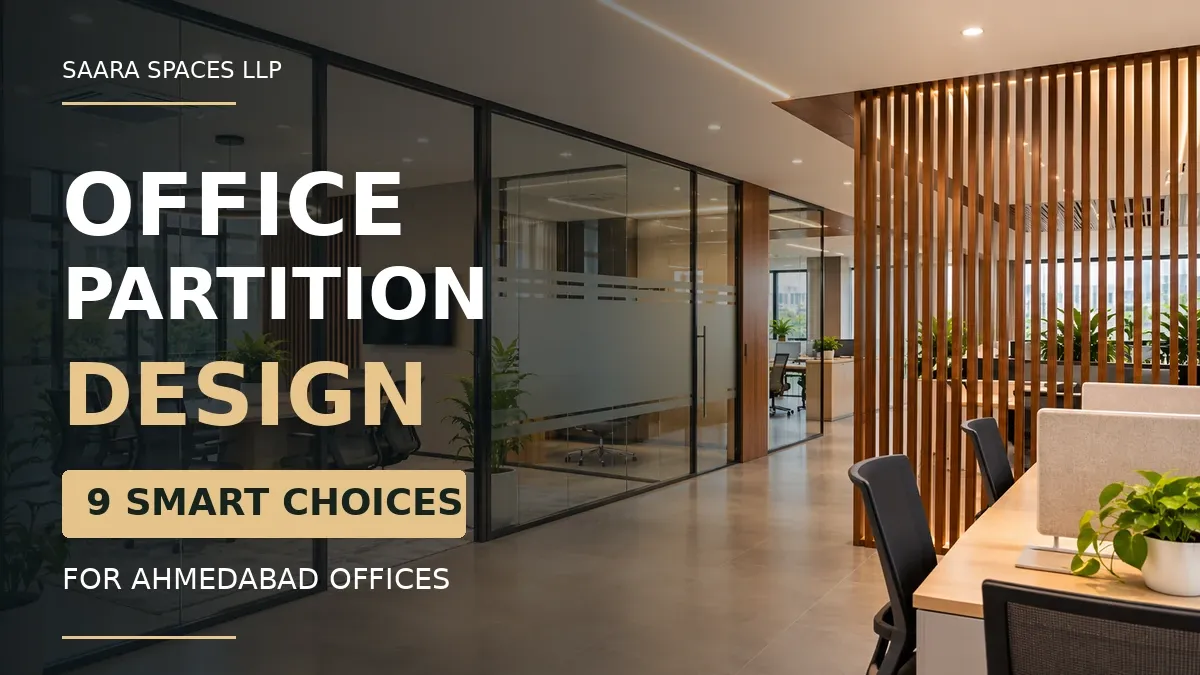
Glass walls may make an office look open without providing adequate speech privacy. For confidential discussions, consider the door specification, acoustic separation and surrounding workstations. See our office acoustic design guide and office partition comparison for additional planning considerations.
5. Decide how quickly you must occupy the office
Time can change the choice. A business opening a new Ahmedabad branch may value a working office with immediate furniture, connectivity and facility support. A growing headquarters may be willing to invest more time in a layout tailored to its operational needs.
Do not assume that a managed office always offers immediate move-in. Bespoke branding or additional technology can require changes. Equally, taking over an already-fitted conventional office can be quicker than a full custom fit-out.
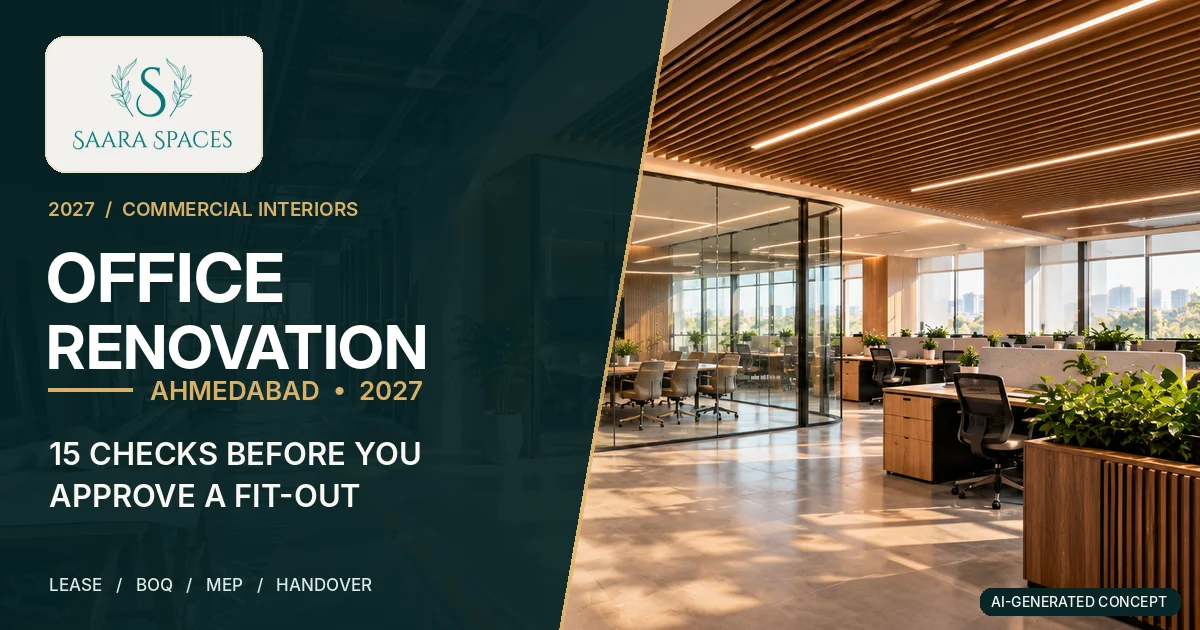
Ask both parties for a schedule covering access, approvals, construction or modification, internet activation, testing and handover. If you are coordinating a custom fit-out, review how turnkey interior execution is organised. For existing spaces, also review our office renovation planning checks.
6. Test the decision against future headcount
Prepare three realistic scenarios: the team remains stable; it grows; or hybrid patterns change the number of people onsite. For each scenario, test total monthly cost, usable capacity and the practical ability to expand or reduce space.
A managed-office provider may have nearby additional seats, but availability should not be assumed. A traditional lease may accommodate future workstations within the premises, but vacant space has an ongoing carrying cost. Contract flexibility—not marketing language—is the deciding factor.
The FICCI–CBRE Flex-plosion research (March 2026) describes flexible space as a complement to conventional leasing in many corporate real-estate strategies. This does not mean a smaller company needs both types of space.
7. Assess the building before the interior
Office design cannot compensate for fundamental site constraints. Before committing to a managed office or conventional commercial unit in Ahmedabad, verify employee commute, parking allocation, lift access, electrical capacity, HVAC arrangements, internet reliability, fire and life-safety provisions, accessibility, building operating hours and signage restrictions.
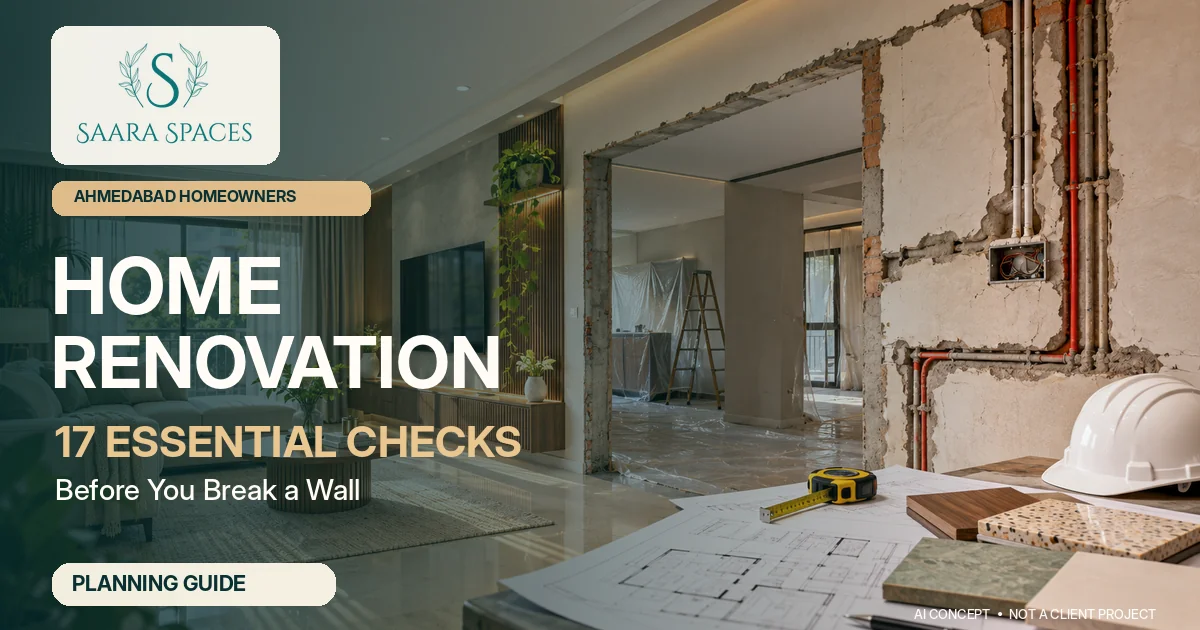
For any fit-out involving alterations, establish who obtains the required permissions and who verifies that the proposed use complies with applicable building requirements. Generic online advice cannot replace project-specific professional and authority checks.
8. What real Saara Spaces office projects illustrate
CMS Minds — 2,235 sq. ft., Ahmedabad
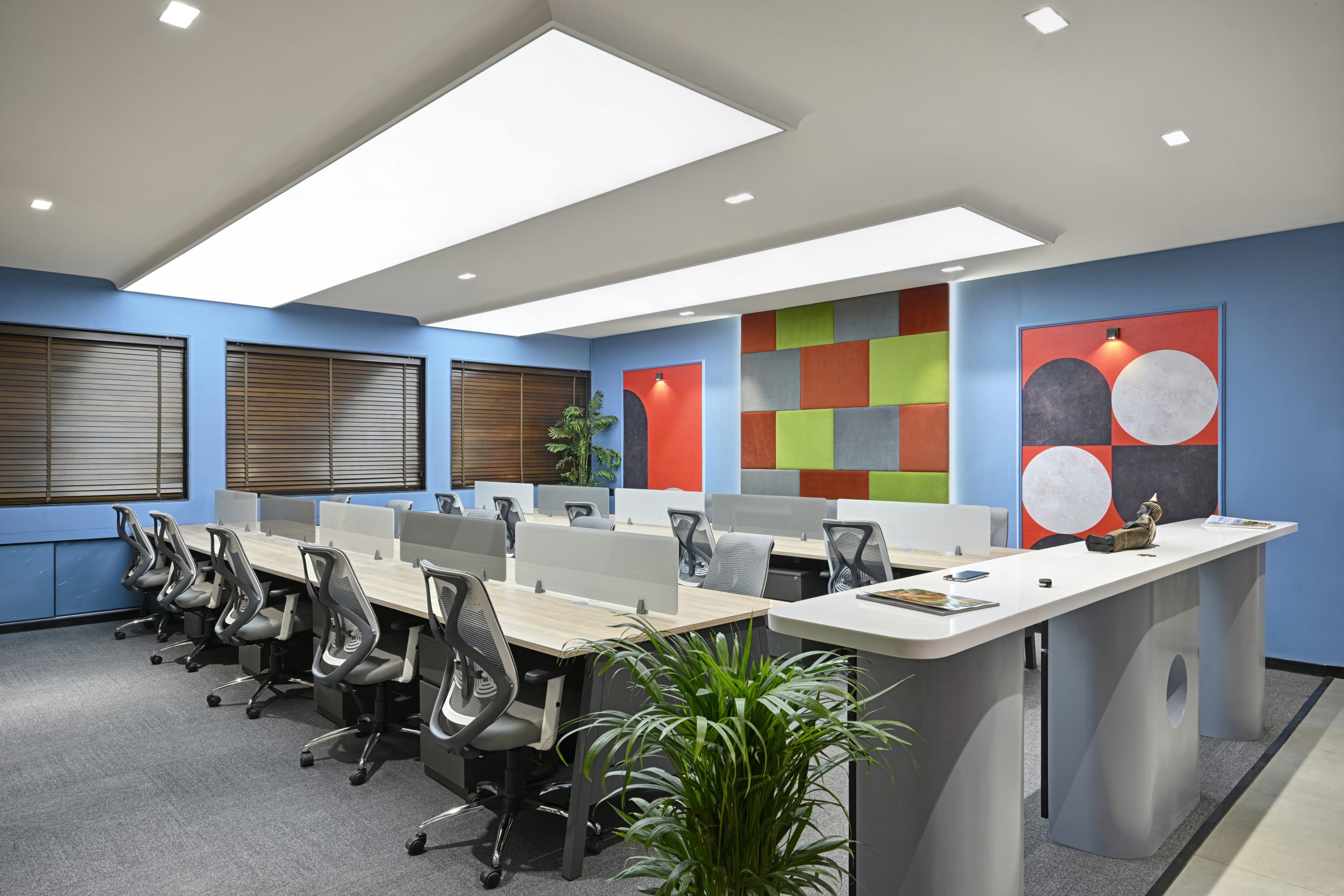
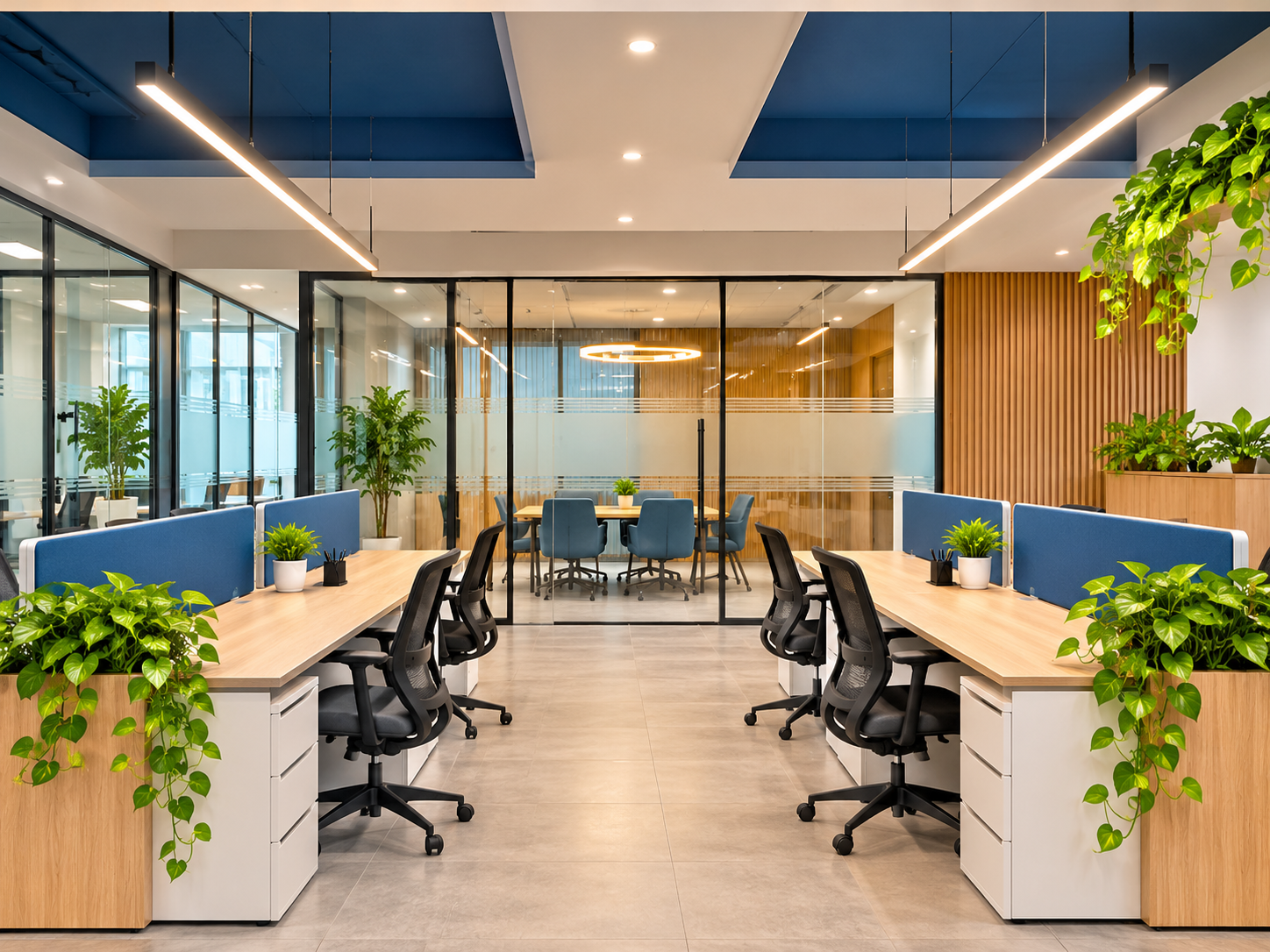
The CMS Minds office project at Shilp Business Gateway demonstrates how different types of work can be organised within a business workplace. The published project description includes workstations, meeting areas and a dedicated call booth. For a company comparing office arrangements, the lesson is to assess what functions require dedicated space and whether the proposed premises can genuinely accommodate them.
Infocusp Innovations 2 — 2,547 sq. ft., South Bopal
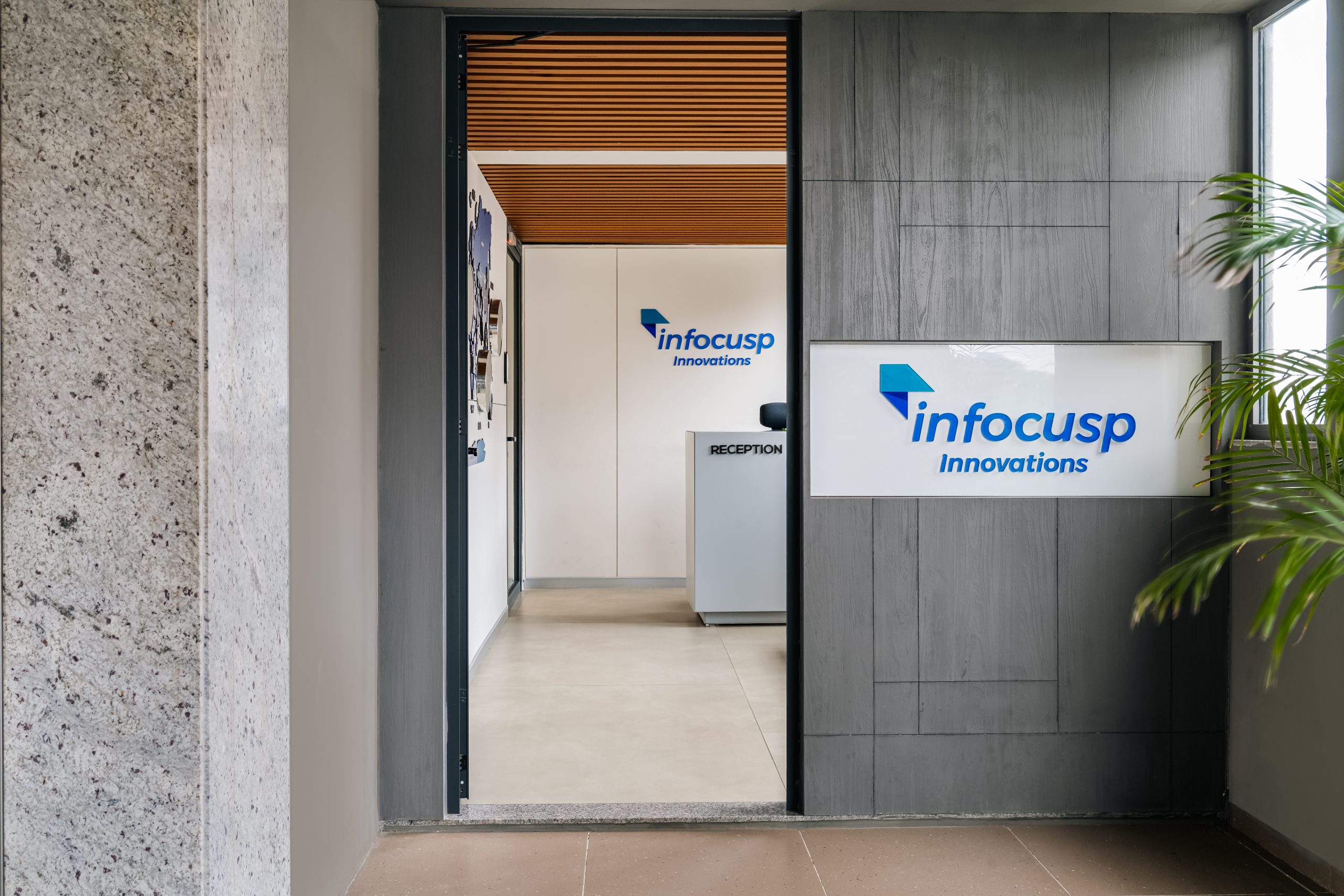
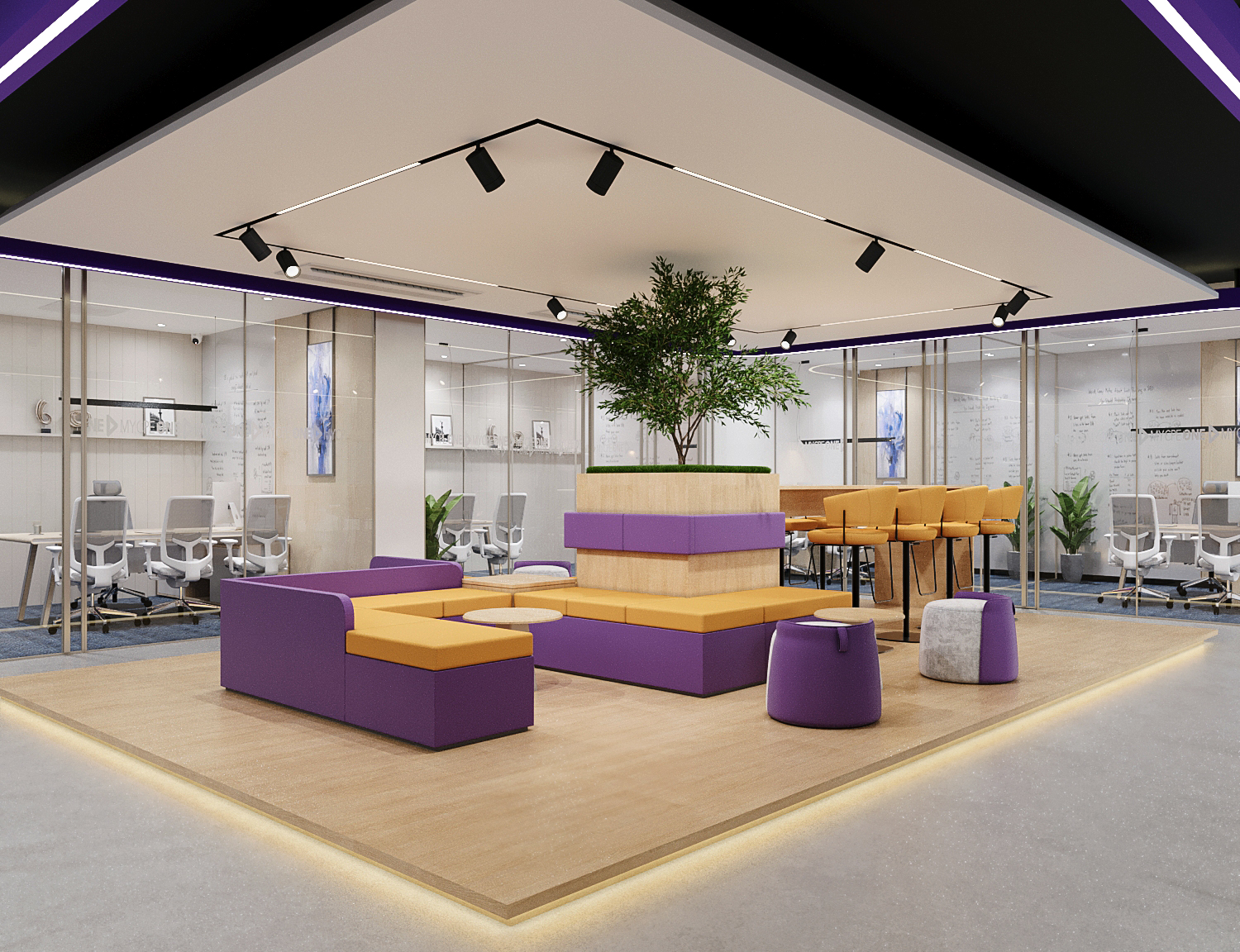
Saara Spaces’ Infocusp Innovations 2 workplace at Gala Hub ANX in South Bopal combines workstations with casual seating pods and brand-focused spatial details. The published portfolio describes height-adjustable workstations and informal seating. This is a practical example of custom office interiors—but it does not disclose the organisation’s lease arrangements or claim a quantified productivity benefit.

Important: Neither of these project descriptions establishes the client’s lease type, financial return or cost per workstation. Their relevance here is the planning of a real working environment.
9. Use a fit-out scope and BOQ before making a commitment
If you select a conventional office, ask for a measured plan, technical drawings, material specifications, itemised Bill of Quantities (BOQ), exclusions, procurement responsibilities and a handover checklist. These documents support better comparison and reduce the risk of late surprises.
Relevant technical areas include partitioning, furniture, network/data, electrical systems, lighting, HVAC interfaces, joinery, flooring and maintenance access. Our commercial interior planning guide examines how these decisions connect across a project.
10. Eleven questions to answer before signing
- How many employees will regularly be onsite?
- What is the minimum likely occupancy period?
- Which areas must be genuinely private?
- What does each quoted fee include and exclude?
- What cash will be tied up in deposits or fit-out?
- What happens if the team grows or shrinks?
- Who can change the layout and at what cost?
- Who maintains HVAC, connectivity and common facilities?
- Are parking, meeting rooms and visitor access adequate?
- What are the exit, reinstatement and escalation terms?
- Who signs off the office as operationally ready?
Frequently asked questions
Is a managed office always cheaper than a traditional office lease in Ahmedabad?
No. A managed office can reduce the need to organise a separate fit-out and facility services, but the total depends on the quoted services, period of use, headcount and exit obligations. Compare both arrangements across the same time horizon.
Is a managed office the same as coworking?
Not necessarily. A managed office may provide a dedicated company workspace with operated services; coworking often includes more shared seating or facilities. The specific operator agreement determines the arrangement.
Can an office layout be customised under a managed-office agreement?
Sometimes. Ask whether partitions, signage, furniture, IT infrastructure and branding can be changed, who pays, and what must be removed when the agreement ends.
What should be inspected before taking a bare-shell office?
Check accurate measurements, floor condition, electrical load, HVAC interfaces, access and safety systems, landlord permissions and budget implications before approving a fit-out design.
Can Saara Spaces help plan an office interior in Ahmedabad?
Saara Spaces has documented commercial office design-and-execution projects in Ahmedabad. Share your site details, work patterns and proposed fit-out requirements with the team to discuss potential scope.
Final decision: choose the contract and workplace that match the business
A managed office may simplify setup and operations; a traditional lease may offer more workplace control. But an unsuitable contract, poor plan or overlooked building limitation can undermine either option.
Start with operations, compare true commitments, test future scenarios and check the premises before signing. If you are assessing a leased commercial property and want to understand its workplace potential, contact Saara Spaces to discuss your office layout and interior project requirements.
Research context: CBRE India Office Occupier Survey 2026 and FICCI–CBRE Flexible Workspaces Research (March 2026). These sources describe India-wide workplace trends, not verified Ahmedabad lease rates.