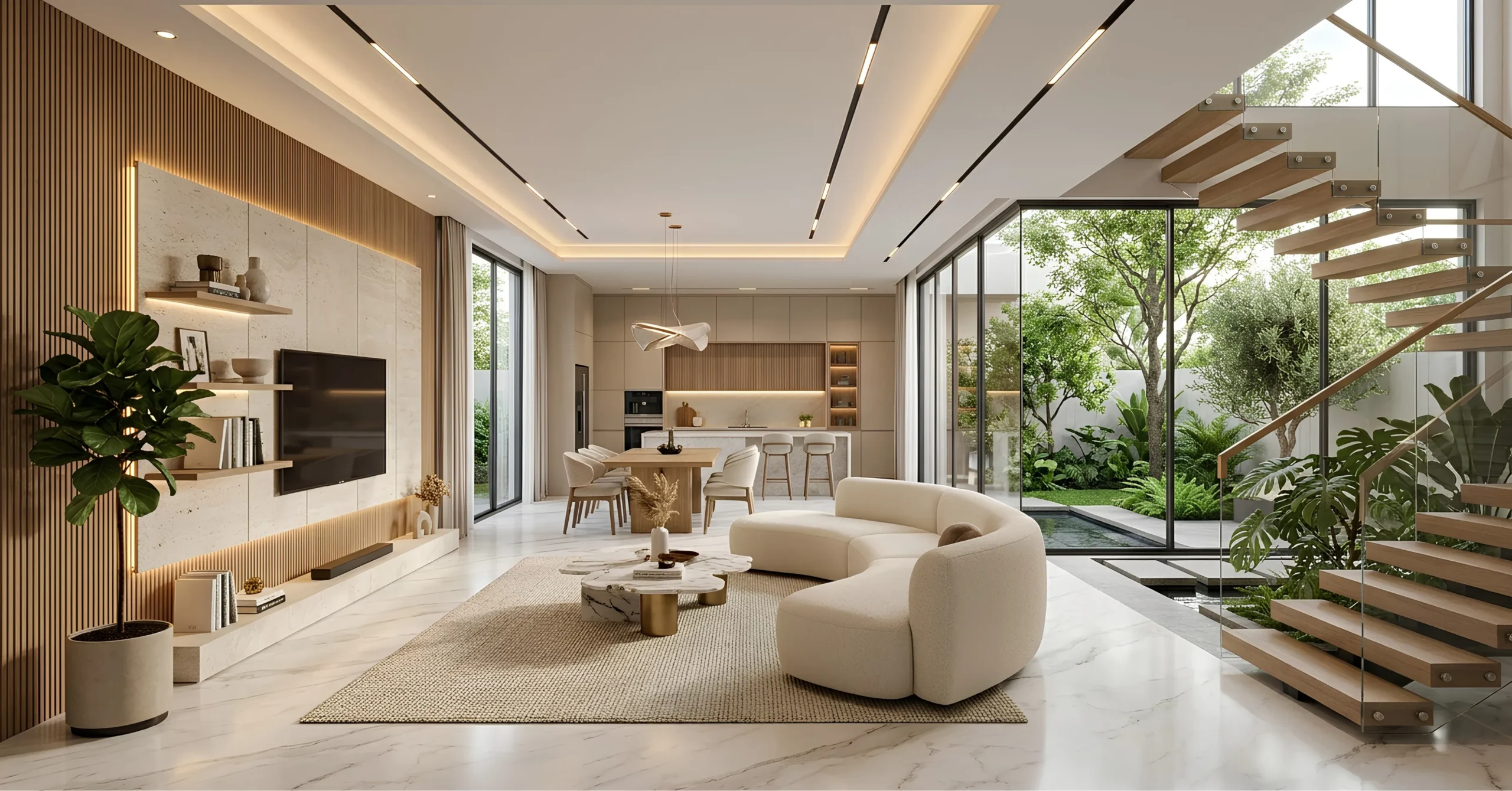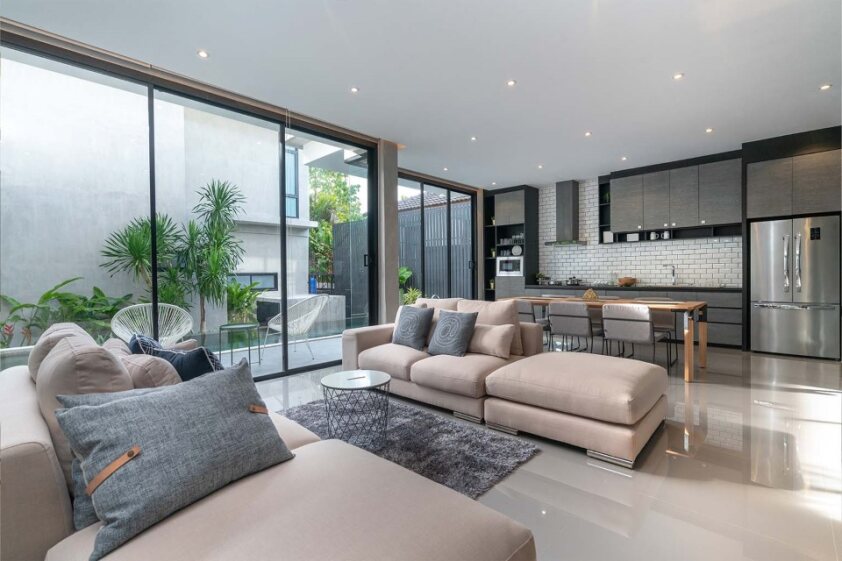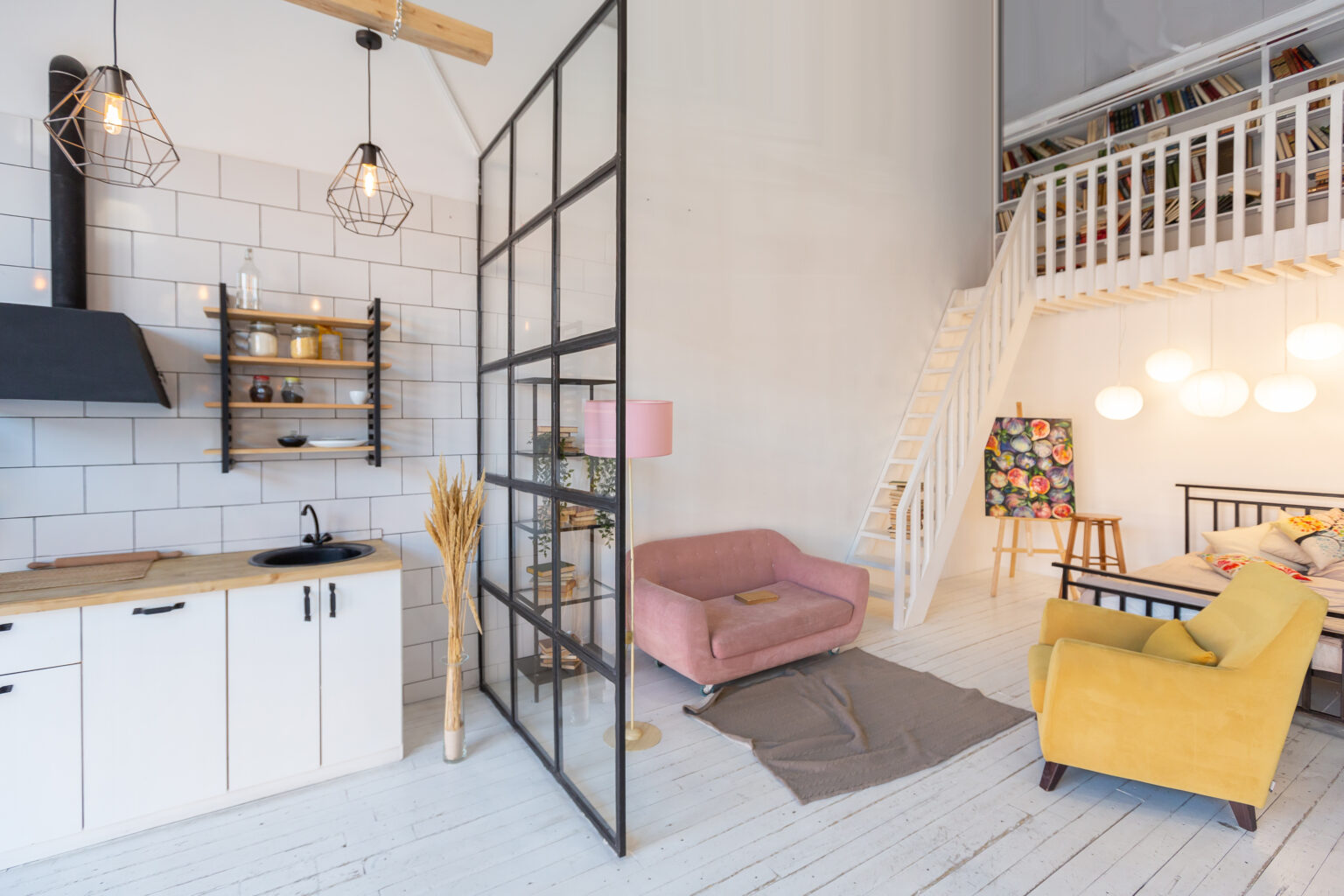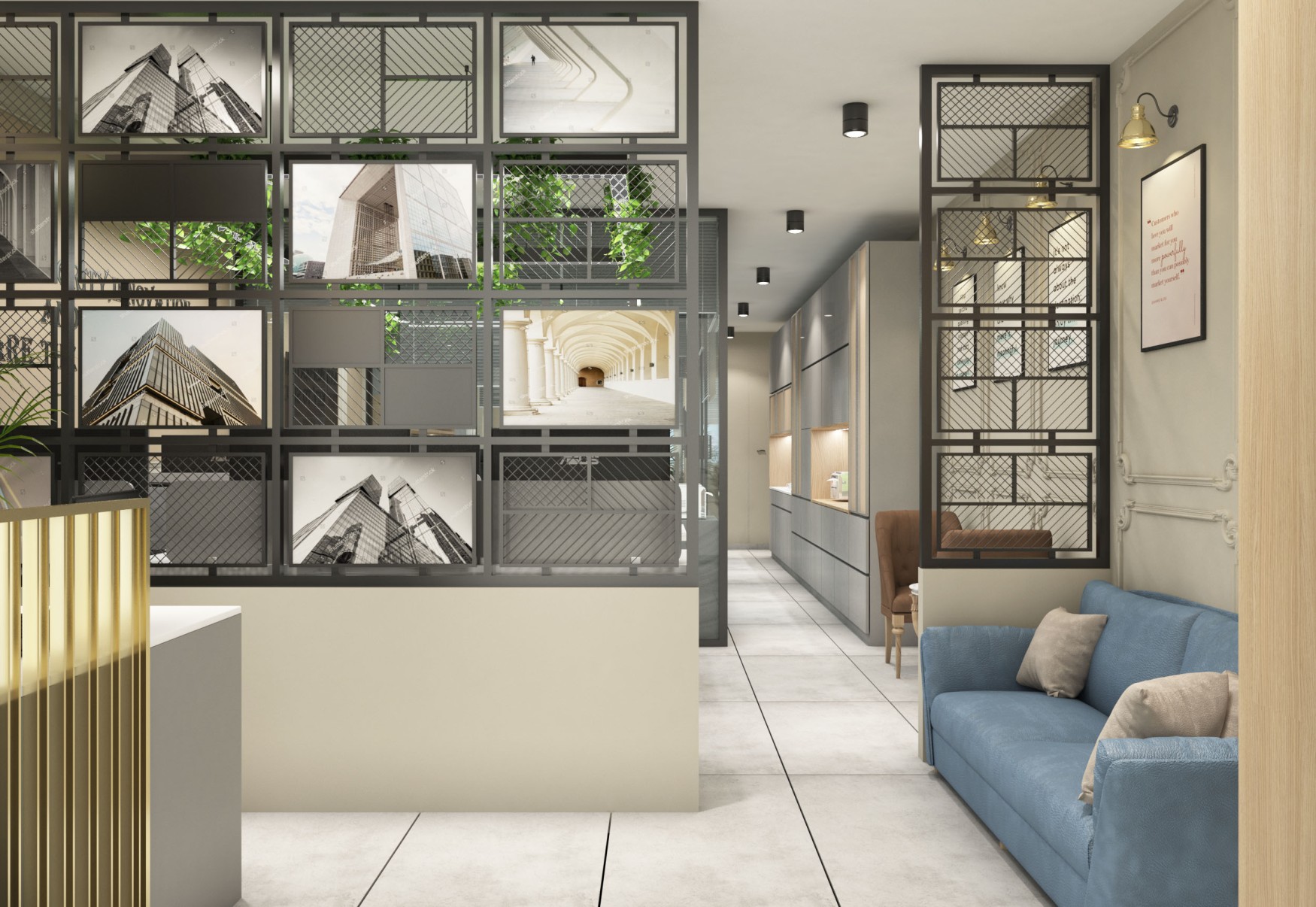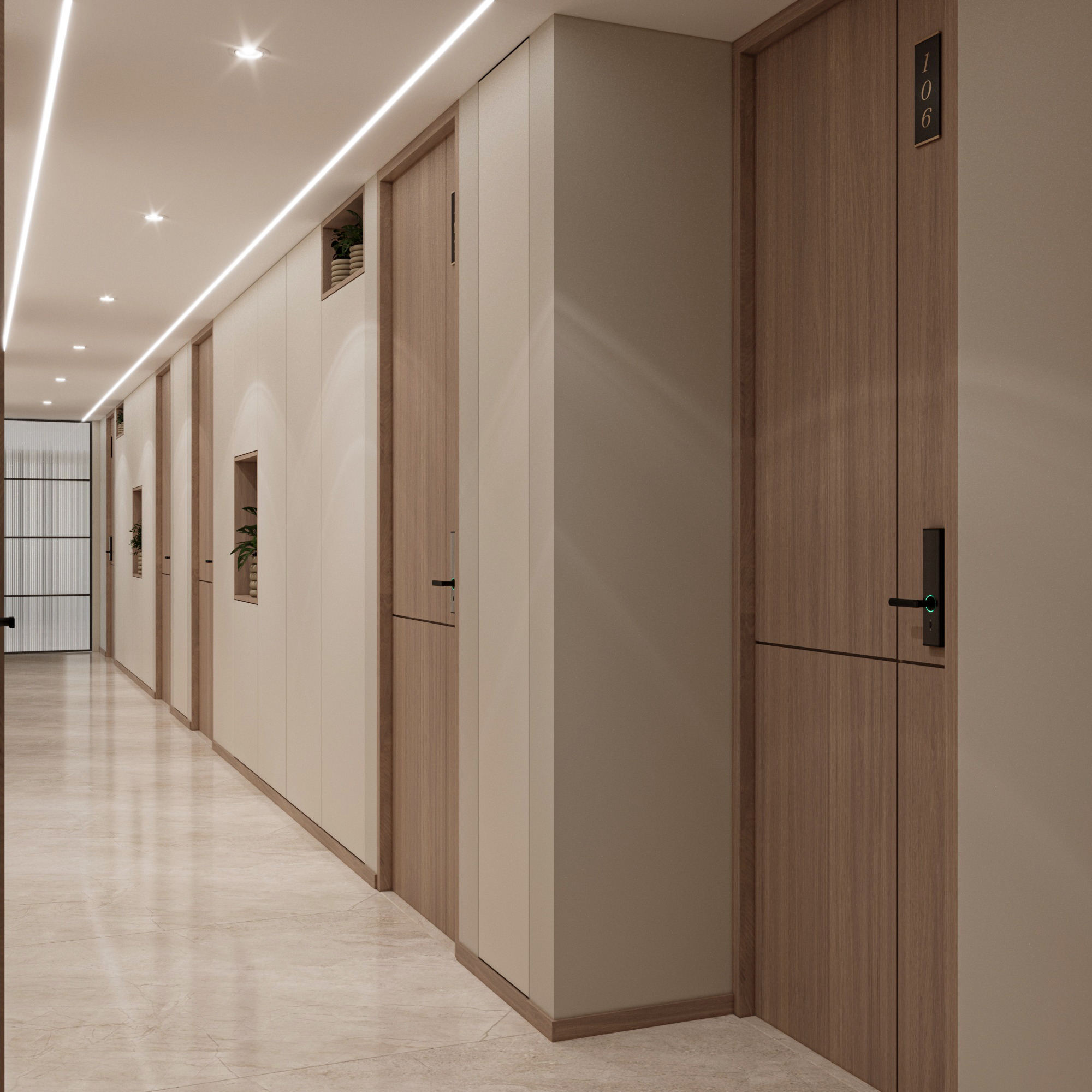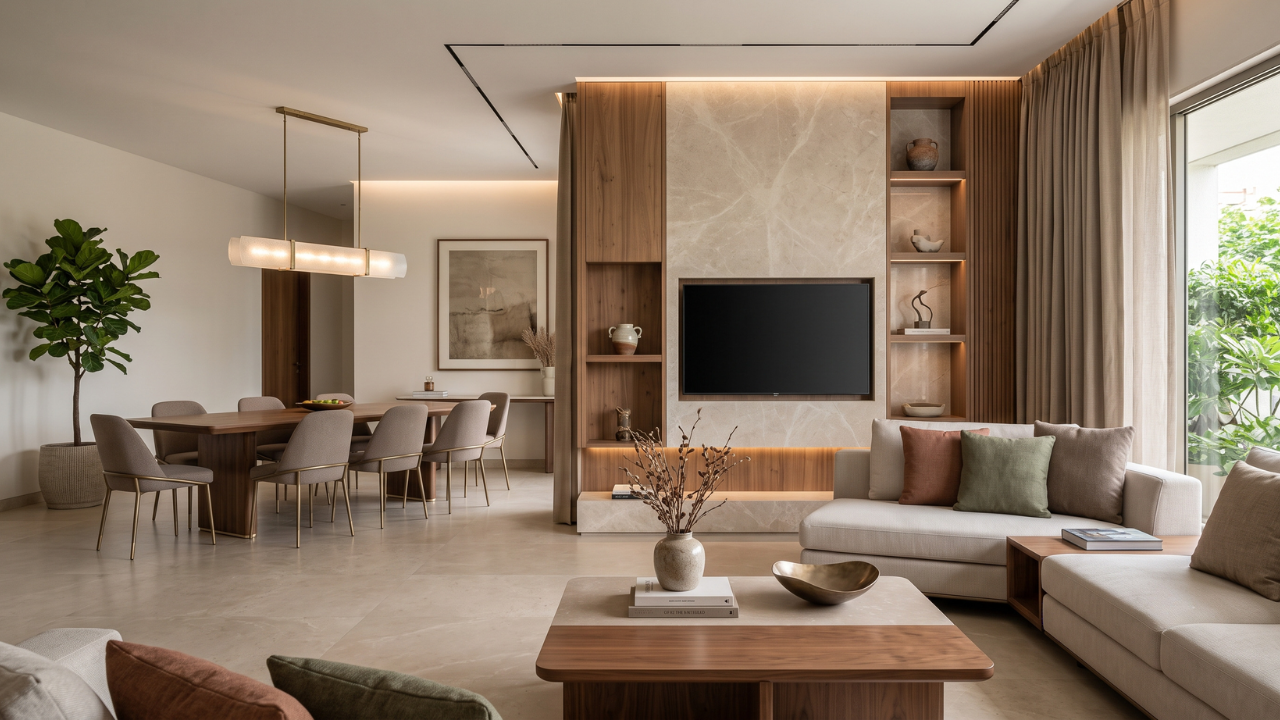
Luxury interior design is often misunderstood as the use of expensive marble, oversized furniture, glossy finishes or decorative excess.
A genuinely premium home feels different.
It is usually quieter, better proportioned, more considered and more personal.
The luxury comes from how the rooms connect, how materials meet, how lighting changes throughout the day, how storage disappears into the architecture and how every detail feels intentional rather than added later.
For homeowners exploring luxury interior design in Ahmedabad, this distinction matters.
A premium 4 BHK apartment, villa or bungalow should not feel like a collection of expensive individual elements. It should feel like one complete environment where layout, materials, lighting, furniture and lifestyle requirements have been resolved together.
At Saara Spaces, residential interiors are approached through both design and execution, with the aim of creating homes that balance aesthetics with everyday usability.
So what actually makes a home feel luxurious?
These are twelve elements that matter far more than simply choosing the most expensive finish.
1. Thoughtful Space Planning Comes Before Decoration
A luxury interior begins with the floor plan.
Before selecting upholstery, lighting or wall finishes, the space should answer basic questions properly:
- How will people move through the home?
- Where should furniture sit?
- Which areas should remain visually open?
- Where is privacy required?
- How much storage does each room need?
- Which spaces should connect naturally?
- Where should the visual focus fall?
Poor planning cannot be corrected later with premium materials.
A living room may have beautiful furniture, but if the seating blocks circulation or feels out of proportion with the room, the space will never feel refined.
The same applies to bedrooms, kitchens and passage areas.
Luxury often comes from restraint and proportion.
A larger room does not need to be filled completely. Allowing breathing space around furniture can make the room feel calmer and more architectural.
In apartments, careful planning can also help create stronger visual connections between the living room, dining area and kitchen without making the home feel overly open or undefined.
2. Bespoke Furniture Makes the Home Feel Designed, Not Furnished
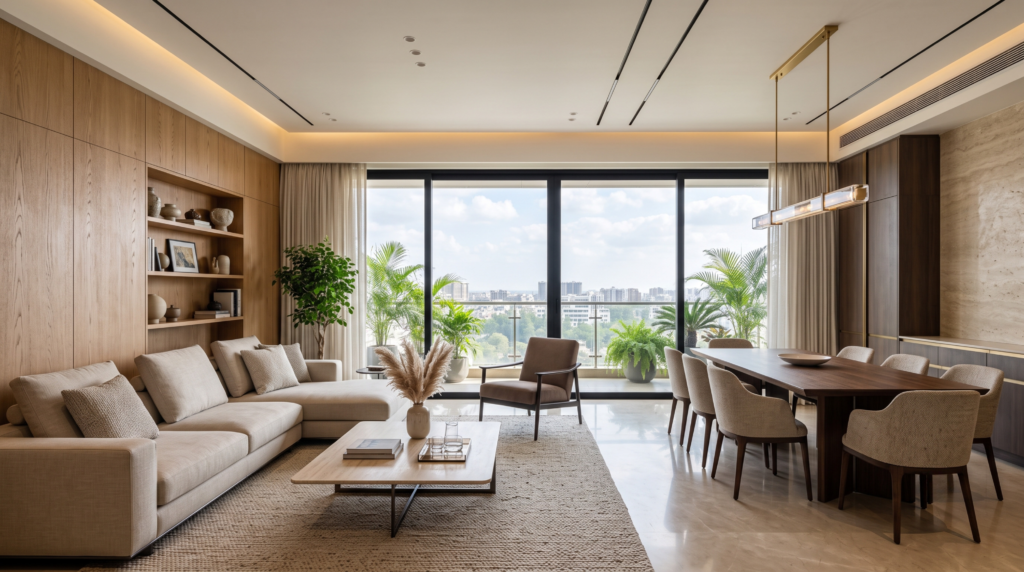
One of the clearest differences between a generic interior and a bespoke interior is the relationship between furniture and architecture.
Ready-made furniture can work well in many homes, but premium interiors often require certain pieces to be designed specifically for the space.
This may include:
- TV units
- Feature storage walls
- Wardrobes
- Study units
- Window seating
- Dining storage
- Display shelving
- Bedroom headboards
- Vanities
- Bar or crockery units
Custom furniture helps solve awkward dimensions and creates visual continuity.
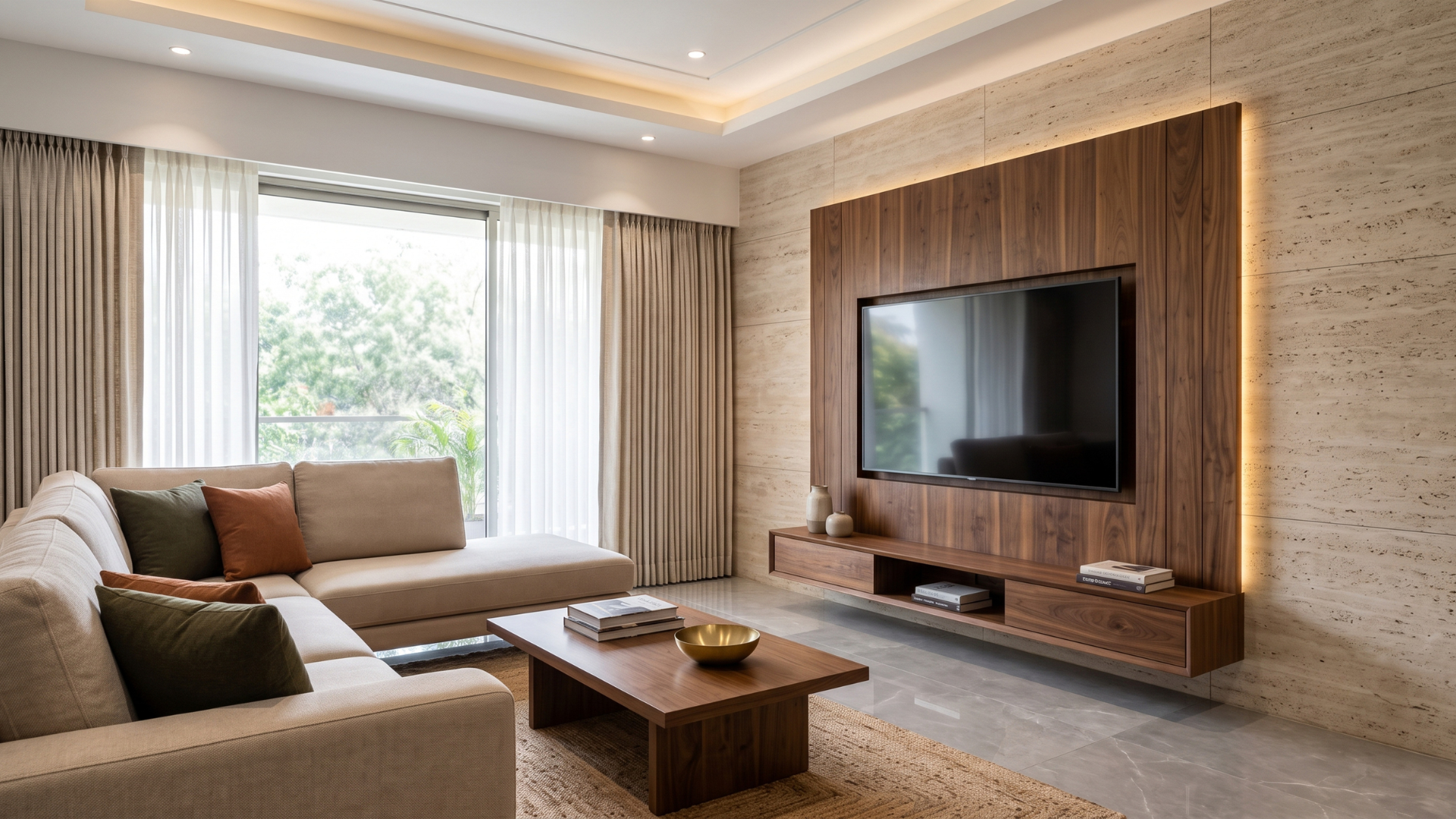
For example, a wall-to-wall television unit can be designed to integrate storage, display space, lighting and wiring into one composition rather than having separate furniture pieces competing visually.
Similarly, a custom wardrobe can respond to the actual storage habits of the homeowner instead of simply filling a wall.
The goal is not customisation for its own sake.
It is to make the home fit the people who live there.
3. Layered Lighting Creates Depth After Sunset
Many homes are planned mainly for daylight and become visually flat at night.
Luxury interiors behave differently.
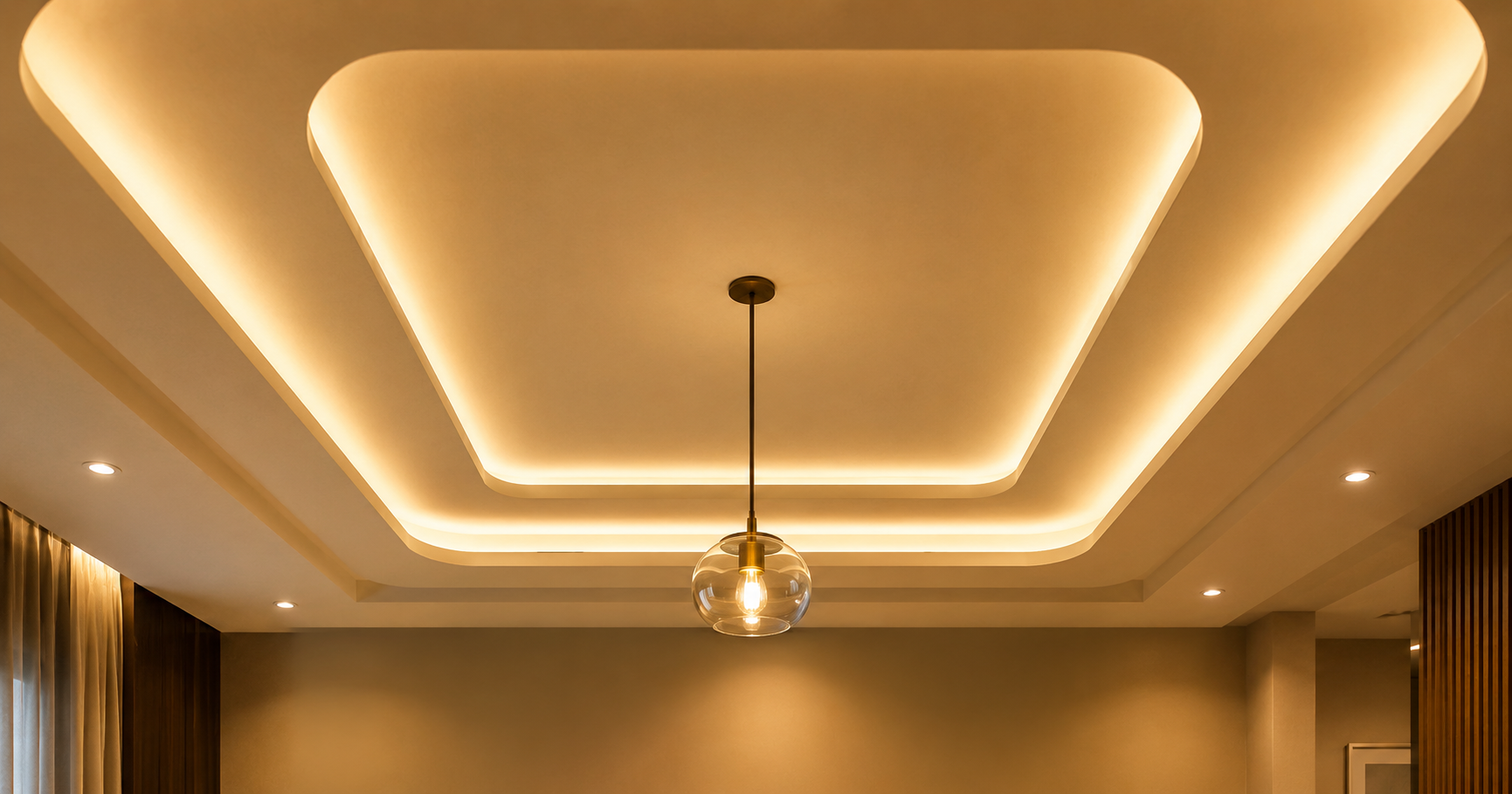
Instead of relying on one bright ceiling light, premium spaces use layers of illumination.
These typically include ambient, task and accent lighting.
Ambient lighting establishes the general light level of the room.
Task lighting supports activities such as reading, cooking, dressing or working.
Accent lighting highlights artwork, textures, cabinetry, wall panels or architectural details.
When these layers are planned together, the atmosphere of a room can change without changing the interior itself.
A living room may feel bright and active during the evening and much softer later at night.
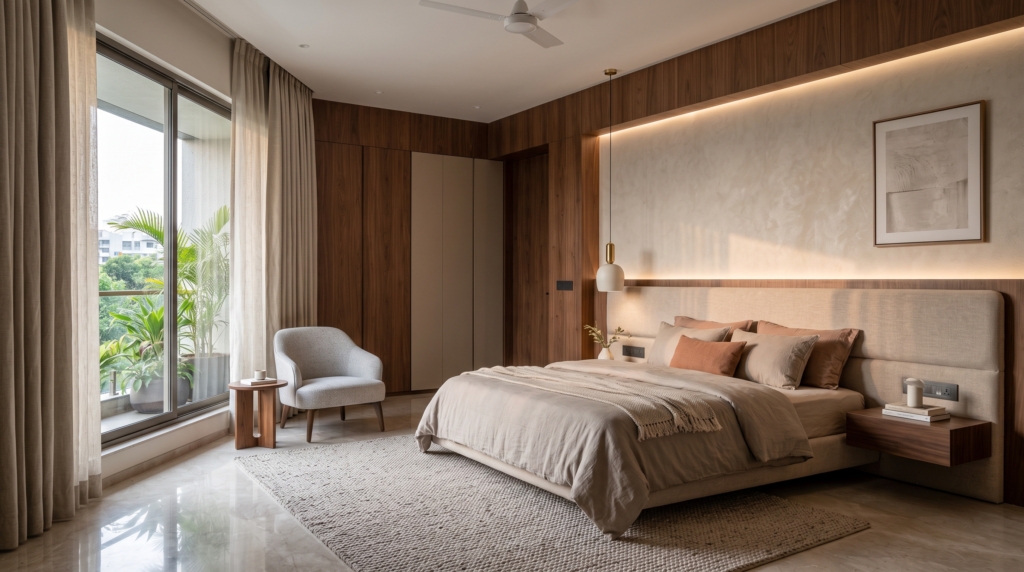
A bedroom can use concealed warm lighting to create a relaxed environment without depending on harsh overhead fixtures.
Lighting should therefore be considered during design development rather than treated as an electrical decision at the end of the project.
4. Premium Materials Work Best When They Are Used With Restraint
A premium material does not automatically create a premium interior.
How the material is used matters more.
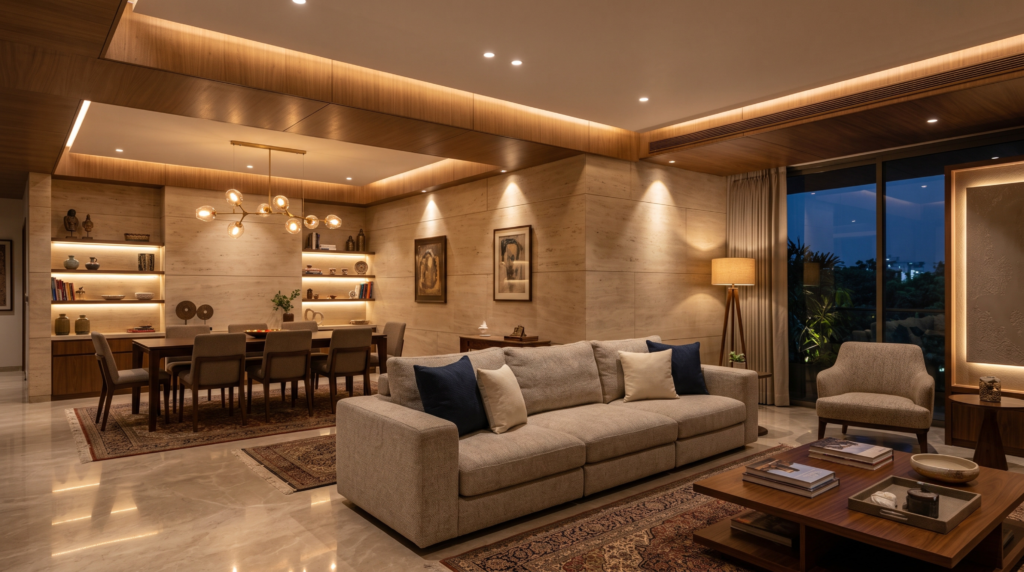
Natural stone, wood veneer, textured finishes, glass, metal and high-quality fabrics can all contribute to a sophisticated home, but too many statement materials in one room can compete with each other.
Luxury spaces often work because the designer establishes a clear material hierarchy.
One surface leads.
Other surfaces support it.
For example, a living room may use a richly textured stone wall as the visual focus while keeping the flooring, furniture and adjacent walls calmer.
In another home, natural wood may become the defining material, supported by neutral upholstery and subtle metal detailing.
Transitions also matter.
The meeting point between stone and wood, the edge of a panel, the alignment between cabinetry and ceiling, or the gap around a door may seem small, but these details often determine whether an interior feels carefully executed.
5. A Strong Colour Palette Creates Continuity
Luxury interiors do not necessarily need dramatic colour.
Some of the most refined homes rely on a controlled palette of:
- Warm whites
- Taupe
- Beige
- Grey
- Timber tones
- Muted greens
- Charcoal
- Soft earthy shades
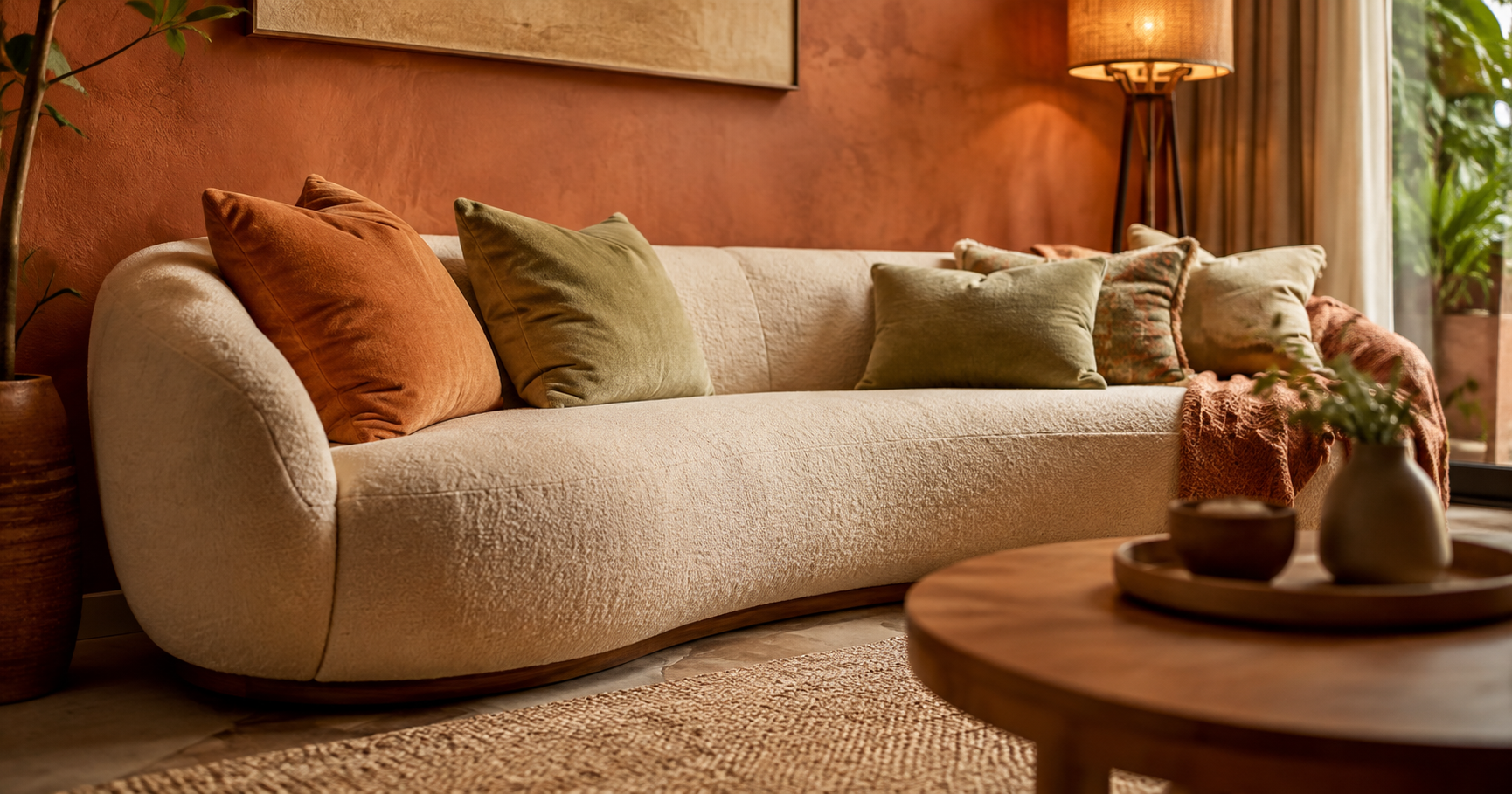
The sophistication comes from layering tones and textures rather than introducing many competing colours.
A consistent base palette also allows individual rooms to have their own identity while still feeling connected to the rest of the home.
For example, the living room may use warm neutrals and wood, while the master bedroom introduces slightly deeper fabric tones without abandoning the overall design language.
This helps prevent the common problem where each room feels like it belongs to a different house.
6. Statement Living and Dining Areas Should Feel Balanced, Not Overdone
The living and dining areas usually carry the strongest visual responsibility in a home.
They are frequently the first major spaces guests experience, but they are also used every day by the family.
A premium living room therefore needs both visual impact and comfort.
Important considerations include:
- Seating proportions
- Television position
- Focal wall
- Ceiling design
- Lighting
- Side tables
- Artwork
- Rugs
- Curtains
- Circulation
- Relationship with the dining area
The most effective statement is often a single strong architectural idea rather than several decorative features competing at once.
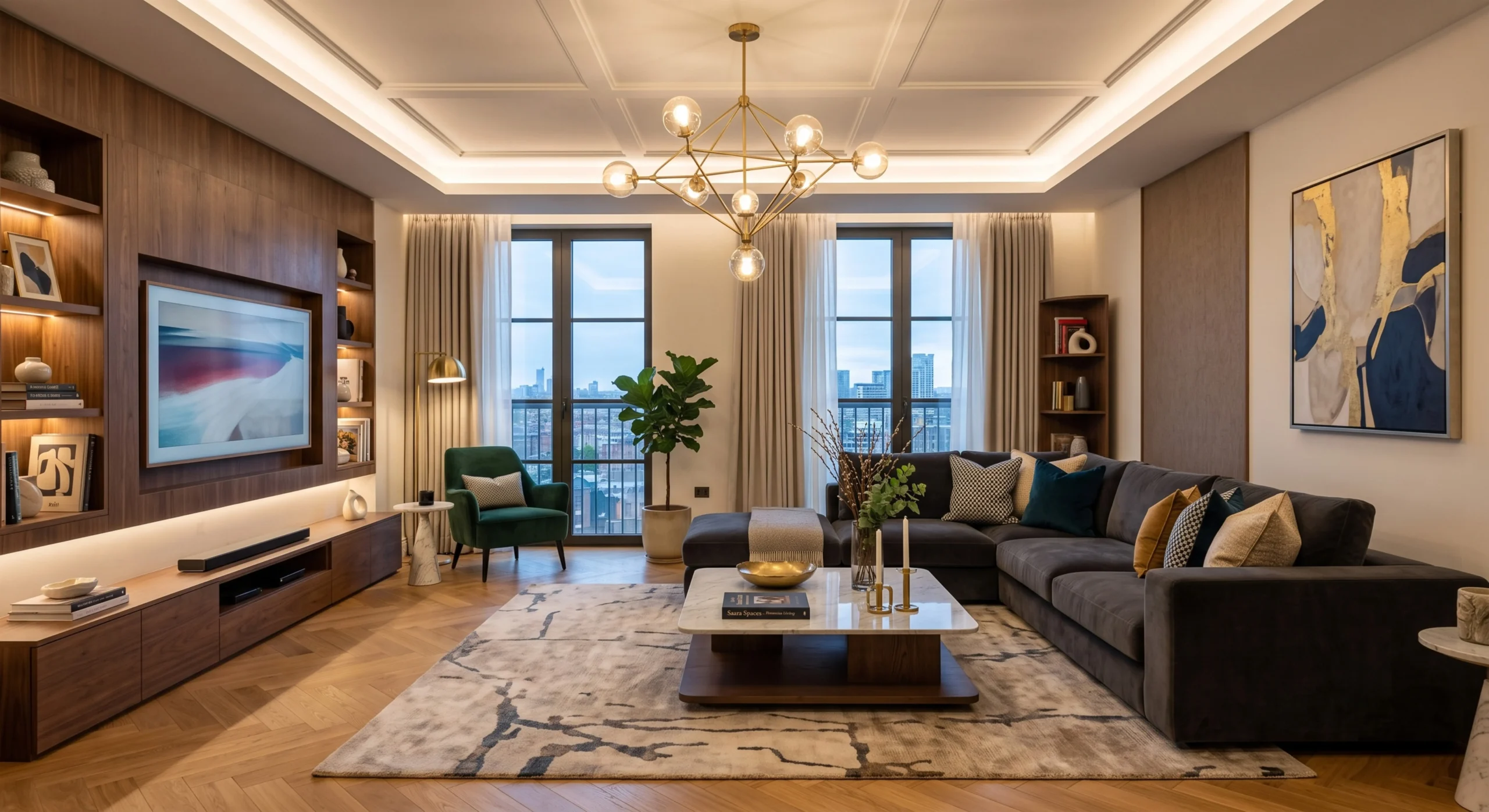
A beautifully proportioned wall treatment, an elegant light fixture or a well-composed TV wall can give a room identity without filling every surface.
For more inspiration, explore the latest residential ideas on the Saara Spaces blog.
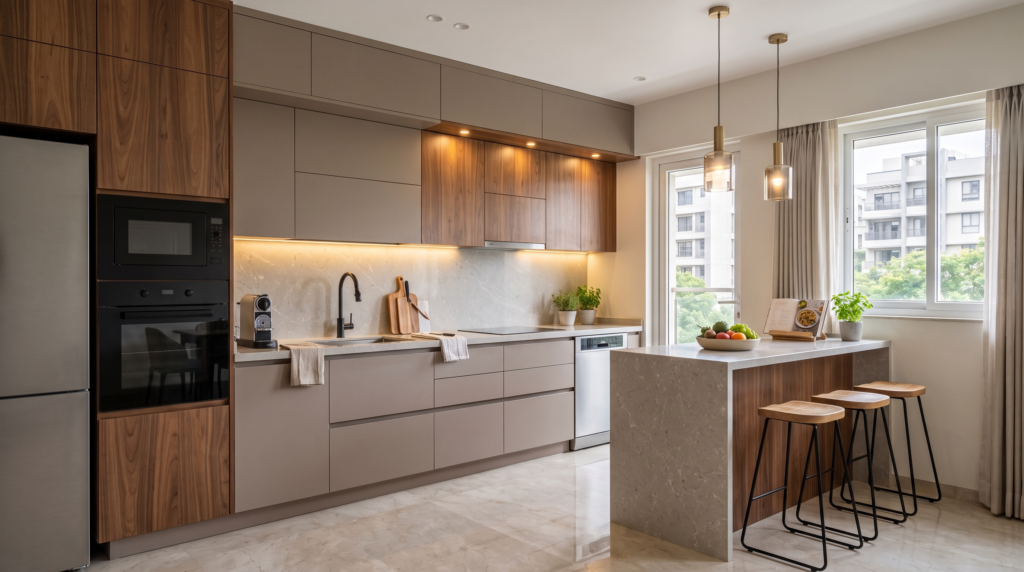
7. A Premium Kitchen Should Feel Connected to the Rest of the Home
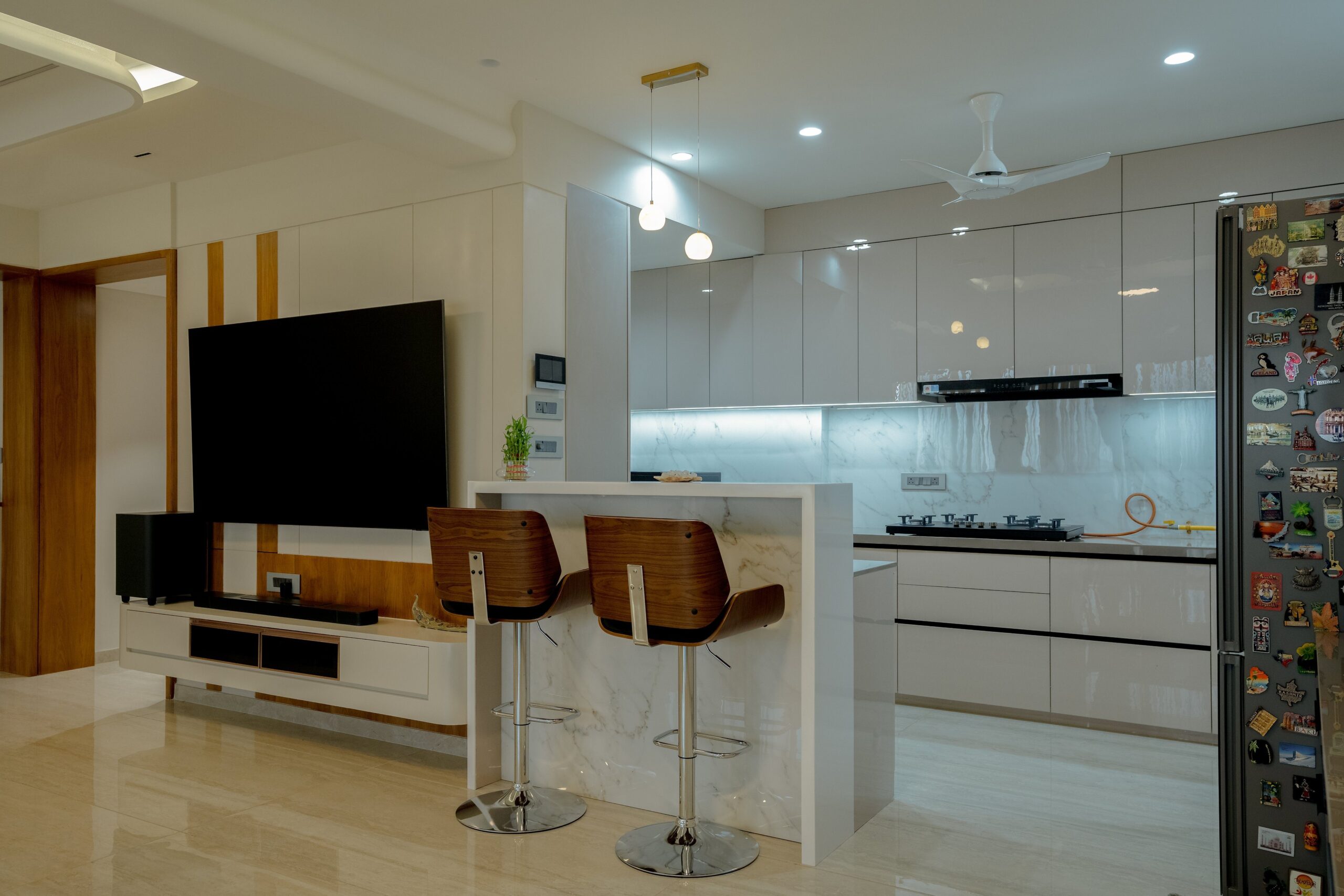
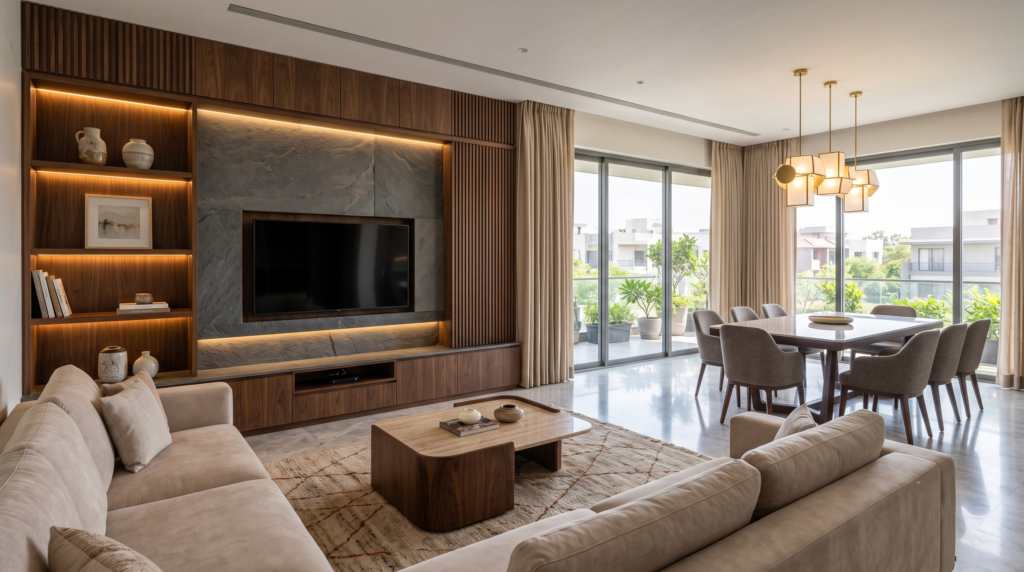
The kitchen has shifted from being a purely utility-driven room to becoming an important part of the overall interior experience.
This is especially true in modern apartments where the kitchen may be visible directly from the dining or living area.
A premium kitchen therefore needs to balance:
- Workflow
- Storage
- Appliance planning
- Lighting
- Cabinet proportions
- Finish coordination
- Countertop selection
- Hardware
- Visual simplicity
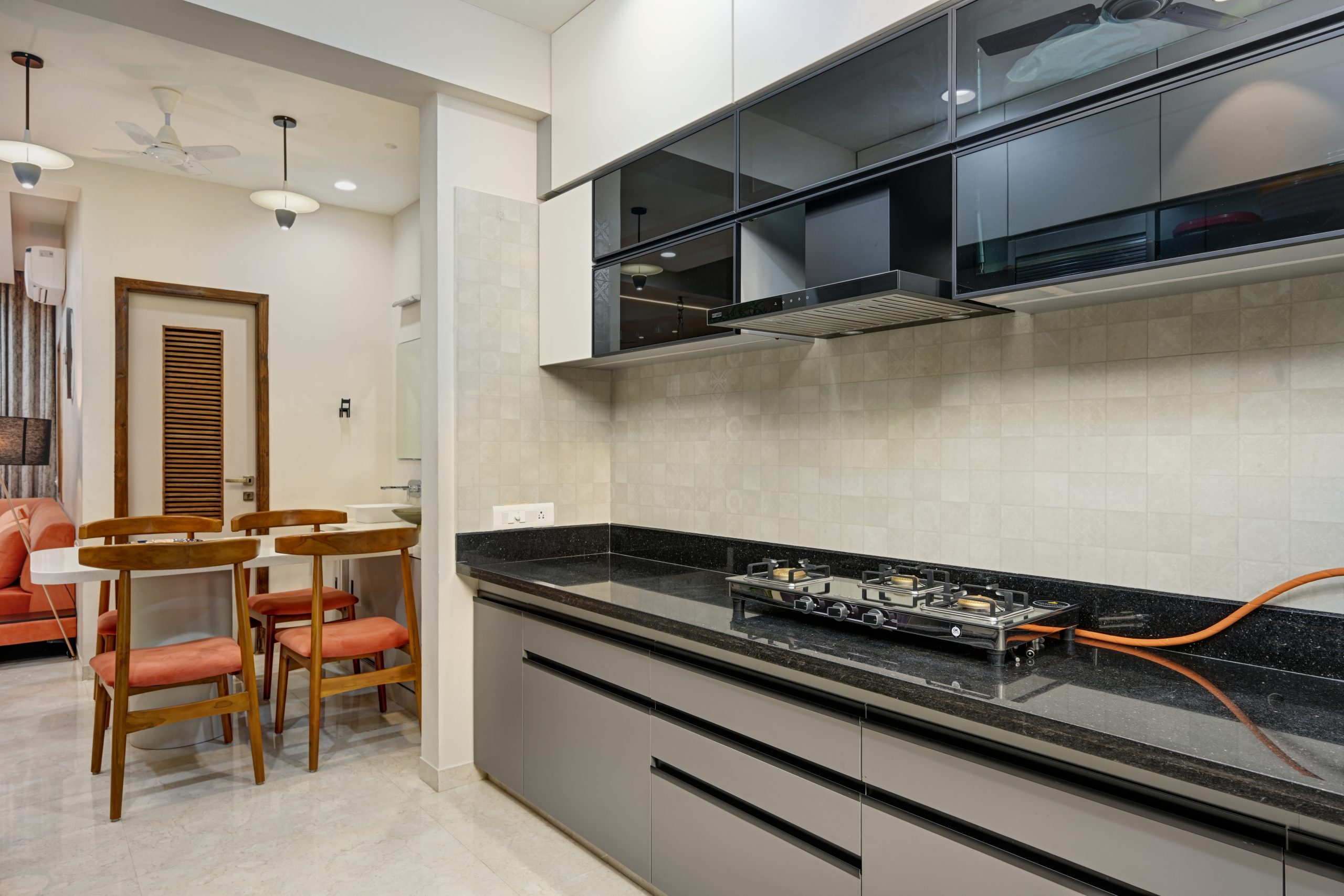
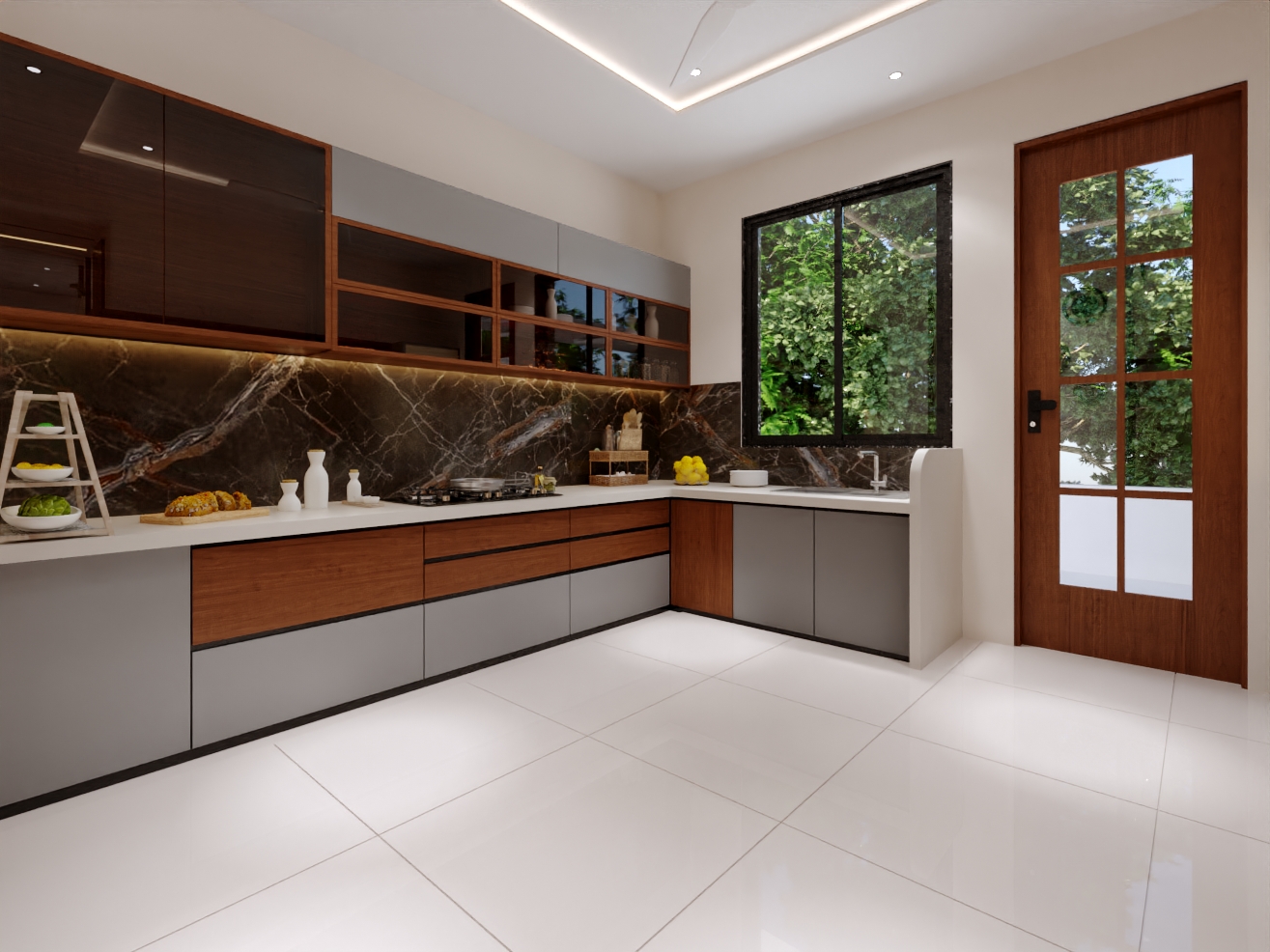
Good modular kitchen design starts with work zones.
The position of the refrigerator, sink, hob and preparation areas should support how the kitchen is actually used.
Storage should also be based on habits rather than simply creating as many cabinets as possible.
Tall units, drawers, overhead cabinets and pantry storage should each have a clear purpose.
Visually, kitchen finishes should relate to the rest of the home so the kitchen does not feel like a separate catalogue display.
For additional planning ideas, browse the Saara Spaces interior design blog.
8. Bedrooms Should Prioritise Calm Over Visual Drama
The bedroom has a different purpose from the living room.
It does not need to impress visitors.
It needs to support rest, storage and daily routines.
Luxury bedrooms often feel sophisticated because they avoid unnecessary visual noise.
Elements such as a custom headboard wall, integrated bedside lighting, well-planned wardrobes and soft textiles can create a stronger result than excessive decoration.
Storage design is particularly important.
Wardrobes should reflect actual requirements for:
- Hanging
- Folded clothes
- Drawers
- Accessories
- Luggage
- Seasonal storage
A well-designed wardrobe contributes as much to everyday luxury as the decorative part of the bedroom.
9. Ceiling and Wall Detailing Should Support the Architecture
False ceilings, wall mouldings, fluted panels and decorative finishes can add considerable depth to a room.
They can also make a home look unnecessarily busy when overused.
In a premium interior, detailing should normally have a reason.
A ceiling element may help:
- Frame a seating area
- Conceal services
- Integrate lighting
- Reinforce room geometry
- Visually connect two spaces
Similarly, wall panelling can help create a focal point or introduce texture without requiring additional furniture.
The strongest detailing often becomes almost invisible because it feels like a natural part of the architecture.
For more design inspiration, visit the Saara Spaces blog.
10. Smart Technology Should Disappear Into the Design
Technology adds value to a premium home when it improves daily life without dominating the visual experience.
Depending on the homeowner’s requirements, integrated systems may include:
- Lighting control
- Curtains or blinds
- Climate control
- Entertainment systems
- Access control
- Security
- Selected appliances
The key is early coordination.
If technology requirements are identified after furniture, ceiling and electrical layouts are finalised, the result may require visible wiring, additional switches or compromises.
When considered during design planning, these systems can feel like part of the home rather than an afterthought.
Luxury is often about reducing friction.
Being able to control lighting scenes or curtains easily can contribute more to the experience of a premium home than an unnecessary decorative feature.
11. Art, Decor and Personal Objects Prevent the Home From Feeling Like a Showroom
A perfectly coordinated interior can still feel impersonal.
The homes people remember usually contain something about the people who live there.
That may come through:
- Art
- Books
- Travel objects
- Photography
- Sculptures
- Heirloom furniture
- Collections
- Plants
- Custom decor
A designer’s role is not necessarily to remove personality in favour of visual consistency.
It is to integrate that personality into the overall design.
The result should feel curated rather than staged.
This is particularly important in luxury interiors because there is a risk of relying too heavily on showroom styling.
Personalisation helps transform a polished interior into an actual home.
12. Consistency Across the Entire Home Is What Creates Real Luxury
A luxury home should not peak in the living room and then lose its design language elsewhere.
Consistency matters across:
- Foyer
- Living room
- Dining area
- Kitchen
- Bedrooms
- Wardrobes
- Bathrooms
- Passages
- Utility areas
This does not mean every room needs the same materials.
It means that decisions should feel connected.
Door finishes, hardware tones, lighting temperatures, wood shades, ceiling language and general detailing should relate to each other.
When this happens, the house feels intentionally designed as one complete environment.
When it does not, even expensive individual rooms can feel disconnected.
Luxury Interior Design for Apartments, Villas and Bungalows in Ahmedabad
The principles of luxury interior design remain similar across property types, but the way they are applied changes.
Premium Apartments
Apartments often require particularly efficient space planning because the envelope of the home is fixed.
Furniture proportions, integrated storage and visual continuity become extremely important.
In larger apartments such as 4 BHK residences, designers can also create stronger zoning between formal and private areas.
Saara Spaces showcases residential projects including large-format apartment interiors within its portfolio.
You can explore more completed work in the Saara Spaces projects section.
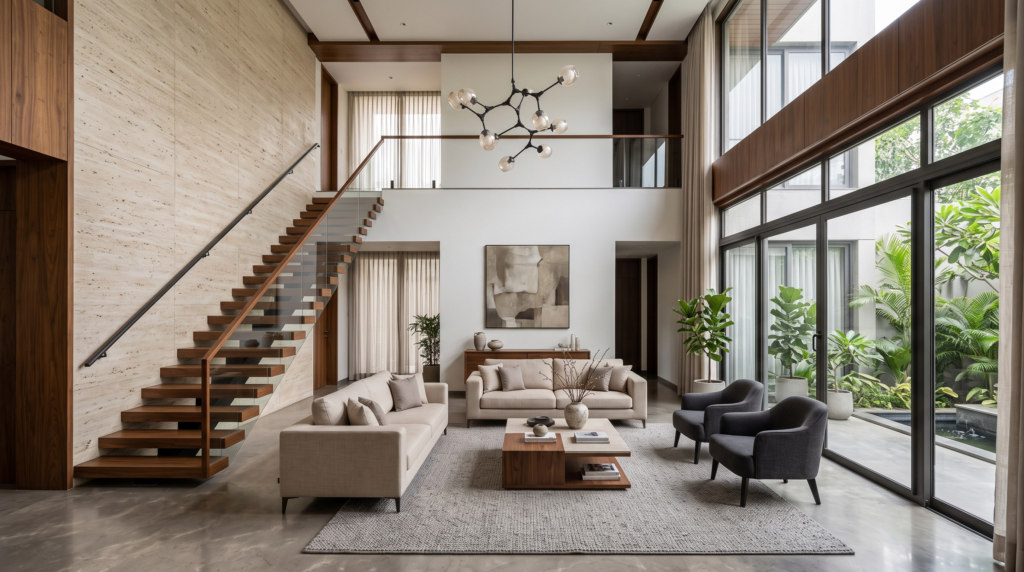
Villas and Bungalows
Bungalows introduce a different level of spatial coordination.
Larger room sizes, multiple floors, staircases, double-height spaces, larger windows and outdoor relationships may all influence the design direction.
The challenge is not simply filling more area.
Large homes can feel empty or fragmented if the design lacks proportion and continuity.
A successful villa or bungalow interior requires consistency between rooms while still allowing each space to have its own character.
What Homeowners Should Prepare Before Meeting an Interior Designer
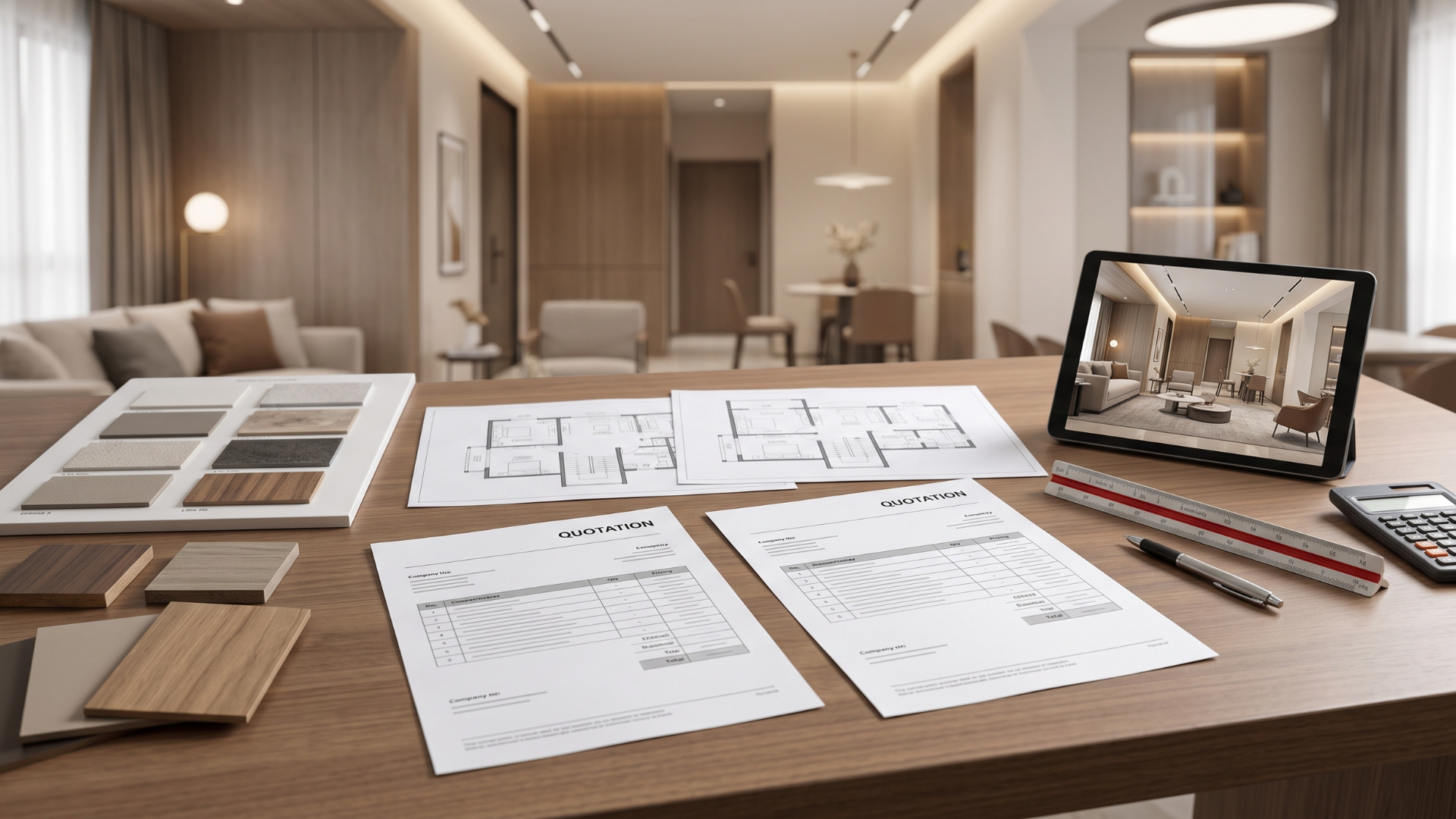
The first design discussion becomes much more productive when homeowners arrive with a clear understanding of how they want to live.
You do not need to know the final design.
That is what the design process is for.
But it helps to prepare several things in advance.
Floor Plan
Share the latest available architectural or builder plan.
Family Requirements
Explain who will live in the home and how individual rooms will be used.
Storage Requirements
Think about wardrobes, kitchen storage, books, documents, luggage and utility needs.
Existing Furniture
Identify pieces that must remain.
Appliances
Kitchen and home appliances can influence cabinetry and electrical planning.
Lifestyle
Consider entertaining, working from home, children, elderly family members, hobbies and daily routines.
Design References
Reference images are useful for communicating preferences, even if you do not want to replicate them.
Smart-Home Requirements
If automation is important, discuss it early.
Priorities
Identify the features that matter most to you rather than giving equal importance to every decorative element.
A thoughtful initial brief helps the designer create a home that responds to your lifestyle instead of simply following current trends.
How Real Project Experience Improves Luxury Residential Design
Residential interiors involve hundreds of connected decisions.
A layout affects furniture.
Furniture affects electrical points.
Electrical planning affects ceiling design.
Material selection affects joinery detailing.
Appliance selection affects cabinetry.
Lighting affects how every finish eventually looks.
This is why design and execution experience matter.
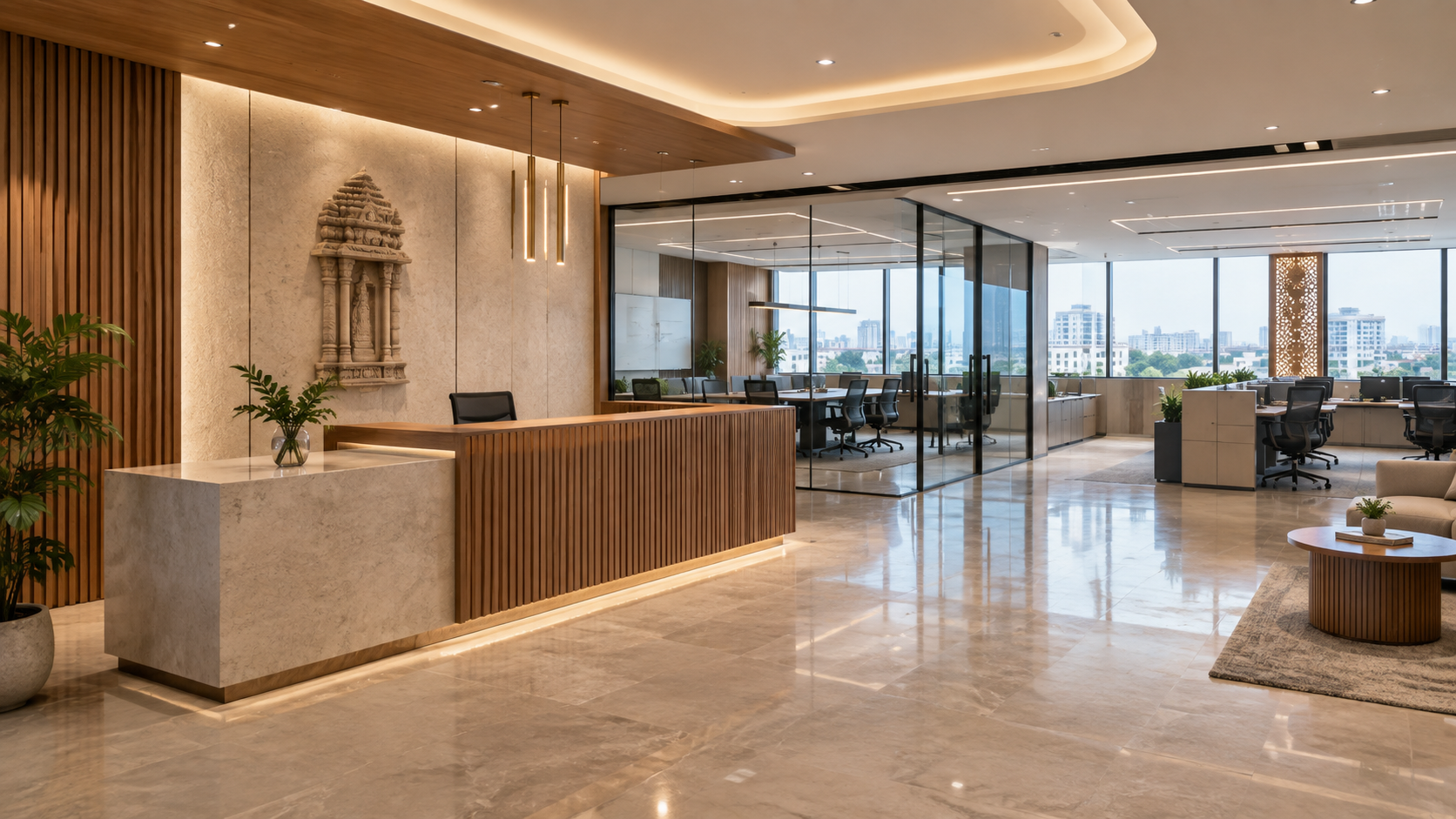
Saara Spaces works across design and execution for residential and commercial environments.
For readers who want to understand how design and execution can be coordinated through one process, see the detailed guide on Interior Turnkey Solutions in Ahmedabad.
The advantage of an integrated approach is that design decisions can be considered alongside how they will actually be implemented on site.
Frequently Asked Questions About Luxury Interior Design in Ahmedabad
What makes an interior design feel luxurious?
Luxury usually comes from good proportions, thoughtful planning, high-quality detailing, appropriate materials, layered lighting, customisation and visual consistency rather than simply using expensive products.
What is modern luxury interior design?
Modern luxury interiors combine contemporary forms with refined materials, tailored furniture, subtle detailing and comfortable everyday functionality. They are generally less decorative than traditional luxury interiors.
How do I choose a luxury interior designer in Ahmedabad?
Review the designer’s completed projects, design language, ability to handle execution, level of detailing, project process and experience with properties similar to yours.
Where possible, look at completed spaces rather than relying only on renders.
You can explore current work through the Saara Spaces portfolio.
Can luxury interiors still be minimal?
Yes.
Minimal luxury can be highly sophisticated.
It relies on proportion, materials, craftsmanship, lighting and carefully selected furniture rather than excessive decoration.
Are custom interiors useful for 4 BHK homes and villas?
They can be particularly useful because larger homes often have more storage, furniture and functional requirements.
Bespoke elements can help maintain continuity while responding to specific dimensions and family needs.
What materials work well in premium interiors?
There is no single correct material palette.
Natural wood, veneer, stone, glass, metal, textured surfaces and high-quality fabrics can all work well when chosen according to the design concept and intended use.
Why is lighting important in luxury home interiors?
Lighting influences atmosphere, visual depth and how materials appear.
A combination of ambient, task and accent lighting generally creates a more flexible and refined environment than relying only on general ceiling lights.
When should smart-home systems be planned?
Ideally, technology requirements should be discussed early because they may affect electrical planning, ceilings, curtains, furniture and networking.
Planning a Premium Home Interior in Ahmedabad?
A beautiful home does not need to prove that it is luxurious.
The strongest interiors usually reveal their quality gradually through proportion, comfort, materials, lighting, craftsmanship and the way the space responds to everyday life.
Whether you are planning a premium apartment, 4 BHK residence, villa or bungalow in Ahmedabad, the objective should be to create a home that reflects your lifestyle rather than simply reproduce a trend.
If you are planning a new residential interior project, explore the Saara Spaces portfolio or contact Saara Spaces to discuss your requirements.