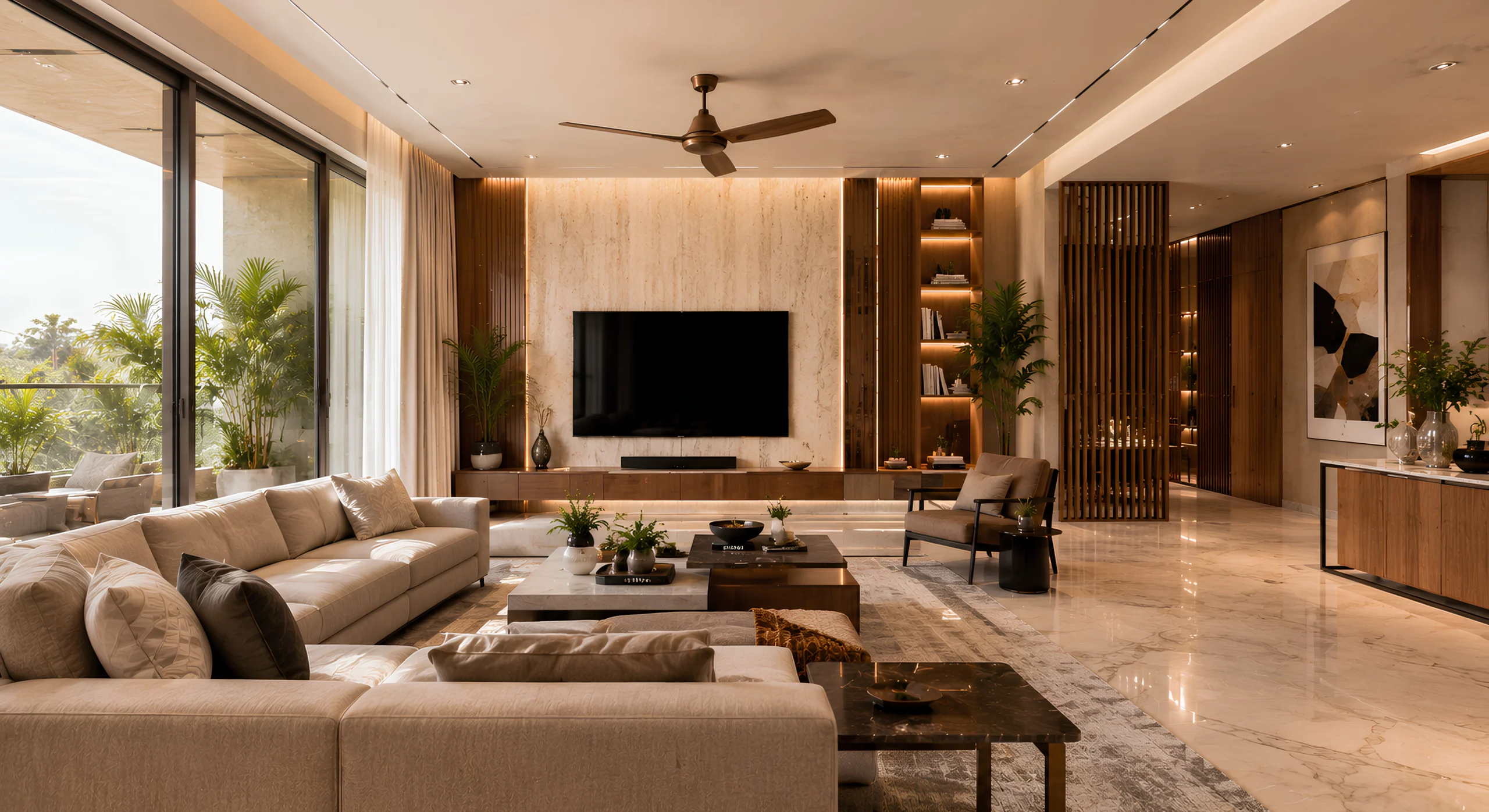
Looking for the Best Interior Designer in Ahmedabad? Start Here.
Choosing an interior designer isn’t just about beautiful designs—it’s about trusting someone with one of your biggest investments. Whether you’re designing your first apartment, renovating your family home, building a luxury villa, or planning a commercial workspace, the right design partner can save you time, money, and unnecessary stress.
Ahmedabad has become one of India’s fastest-growing cities for modern residential and commercial development. With new apartments, villas, offices, restaurants, retail stores, and hospitality projects launching across areas like Bodakdev, Thaltej, South Bopal, Science City, SG Highway, and Prahlad Nagar, the demand for experienced interior designers has grown rapidly. Along with this growth, the number of firms offering interior design services has also increased—making the decision more challenging for homeowners and business owners alike.
A quick Google search for Best Interior Designer in Ahmedabad returns dozens of companies, online directories, review websites, and sponsored listings. Almost every business claims to offer premium designs, turnkey execution, and exceptional service. Yet once you start comparing proposals, you’ll often notice significant differences in pricing, project timelines, materials, and the overall design process.
That’s why choosing an interior designer should never be based solely on attractive portfolio images or the lowest quotation.
The right interior design company should understand how you live, work, and use your space. They should guide you through planning, budgeting, material selection, project execution, and quality control while maintaining complete transparency throughout the journey.
This guide has been created to help homeowners and business owners make informed decisions before hiring an interior designer in Ahmedabad. Rather than promoting one company over another, we’ll explain:
- How to identify a reliable interior designer.
- What qualities truly matter beyond beautiful designs.
- Questions every client should ask before signing a contract.
- Common mistakes that often increase project costs.
- The difference between freelancers, contractors, and turnkey interior companies.
- How to compare quotations fairly.
- What a professional interior design process should actually look like.
By the end of this guide, you’ll have a clear framework for evaluating any interior design company with confidence and selecting the one that’s best suited for your project, budget, and long-term expectations.
Why Choosing the Right Interior Designer Matters More Than You Think
Many homeowners assume that interior design is mainly about selecting colours, furniture, or decorative elements. In reality, professional interior design influences almost every aspect of how a space functions—from storage planning and lighting to ergonomics, durability, and long-term maintenance.
A well-designed home doesn’t just look attractive on the day it’s completed. It should continue to support your lifestyle comfortably for years to come.
The right interior designer helps you:
- Maximise available space without making rooms feel crowded.
- Plan storage intelligently for everyday living.
- Recommend materials that balance aesthetics, durability, and budget.
- Coordinate electrical, plumbing, carpentry, and civil work efficiently.
- Avoid expensive design mistakes before execution begins.
- Maintain consistency across every room in the home.
On the other hand, hiring the wrong team can result in poor planning, hidden costs, delays, inconsistent workmanship, and design choices that become difficult or expensive to correct later.
Interior design is not simply an expense—it’s an investment in the quality, functionality, and long-term value of your property.

What Makes an Interior Designer the Best? 10 Qualities Every Homeowner Should Look For
Finding the best interior designer in Ahmedabad isn’t about choosing the company with the biggest office, the largest Instagram following, or even the lowest quotation. A successful interior project depends on much more than attractive designs—it requires thoughtful planning, technical expertise, transparent communication, and consistent execution from start to finish.
Before making your decision, evaluate every interior designer using the following criteria.
1. Experience That Matches Your Type of Project
Not every interior designer specializes in the same kind of work.
Some firms primarily design luxury villas, while others focus on compact apartments, office spaces, retail stores, or hospitality projects. A company that excels in commercial interiors may not necessarily be the best fit for a residential renovation.
When reviewing a designer’s portfolio, ask yourself:
- Have they completed projects similar to mine?
- Do they understand the challenges of my property type?
- Can they show completed projects rather than only 3D renders?
- Have they worked on homes within my budget range?
Experience in projects similar to yours often results in smoother execution, fewer design changes, and better budgeting throughout the project.
2. A Strong Portfolio That Shows Real Completed Projects
Beautiful renders can be impressive, but they don’t always reflect the final outcome.
A reliable interior design company should be able to present photographs of completed projects that demonstrate:
- Design consistency
- Material quality
- Finishing standards
- Lighting execution
- Space planning
- Furniture detailing
Whenever possible, ask to see completed project photos or request a site visit to an ongoing project. This gives you a clearer understanding of workmanship than digital visualizations alone.
3. Transparent Pricing Without Hidden Costs
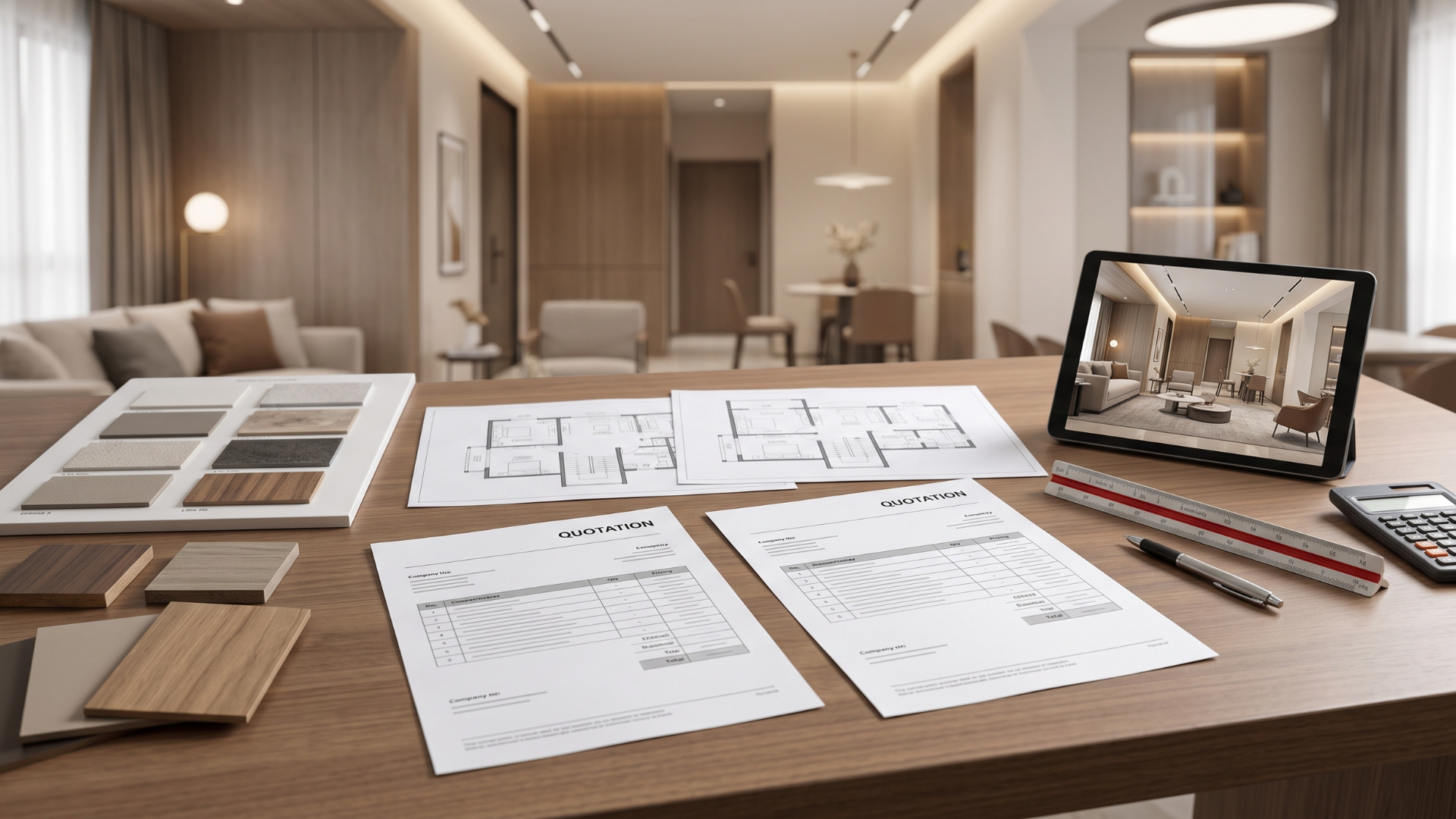
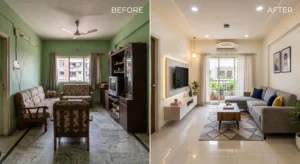
Interior design quotations can vary significantly—even for similar homes.
A professional quotation should clearly explain what is included and what is not. Instead of providing only a single total amount, a transparent estimate typically separates costs for:
- Modular kitchen
- Wardrobes
- TV unit
- False ceiling
- Electrical work
- Painting
- Furniture
- Lighting
- Hardware
- Project management
This level of detail allows homeowners to compare proposals fairly and understand where their investment is going.
Be cautious of unusually low quotations that lack specifications, as additional charges often appear later during execution.
Comparison Table
| Poor Quotation | Professional Quotation |
|---|---|
| Single total price | Detailed room-wise costing |
| Generic material names | Complete material specifications |
| No brand information | Hardware and material brands clearly mentioned |
| Hidden additional charges | Transparent inclusions and exclusions |
| Unclear execution timeline | Defined project schedule and milestones |
4. Material Knowledge Makes a Huge Difference
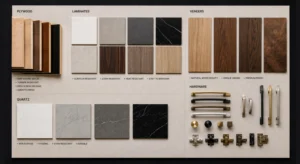
Many homeowners focus only on the appearance of finishes, but the quality of materials determines how well your interiors perform over time.
A knowledgeable interior designer should confidently explain the advantages and limitations of different materials, such as:
- BWR plywood vs. commercial plywood
- Laminate vs. acrylic finishes
- Quartz vs. granite countertops
- MDF vs. HDHMR boards
- Soft-close hardware vs. standard fittings
Rather than recommending the most expensive option, a good designer suggests materials that suit your budget, lifestyle, and maintenance preferences.
5. Clear Communication Throughout the Project
Interior projects often involve multiple stages, approvals, and technical decisions.
Without regular communication, even well-designed projects can face unnecessary delays.
Look for a designer who provides:
- Regular project updates
- Clear timelines
- Design review meetings
- Budget discussions
- Site progress reports
- Quick responses to client queries
Strong communication helps avoid misunderstandings and keeps the project moving smoothly.
6. Turnkey Project Management
Many homeowners underestimate the complexity of coordinating carpenters, electricians, plumbers, painters, and furniture installers separately.
A turnkey interior design company manages every stage under one roof—from concept development and material procurement to execution and final handover.
This approach offers:
- Better coordination
- Consistent quality
- Faster execution
- Reduced stress
- Single-point accountability
For homeowners with busy schedules, turnkey execution often proves more efficient than managing multiple contractors independently.

7. Genuine Client Reviews and Testimonials
Client reviews provide valuable insight into how a company performs beyond the design phase.
Instead of focusing only on star ratings, pay attention to comments about:
- Professionalism
- Communication
- Timely completion
- Budget transparency
- Problem-solving
- After-sales support
Consistently positive feedback across multiple platforms usually indicates reliable service.
8. Realistic Timelines Instead of Unrealistic Promises
Every project has unique requirements, and quality work takes time.
While extremely short timelines may sound appealing, they can sometimes lead to rushed execution and compromised finishing.
As a general guideline:
| Project Type | Typical Timeline |
|---|---|
| 2 BHK Apartment | 8–10 Weeks |
| 3 BHK Apartment | 10–14 Weeks |
| Luxury Apartment | 12–16 Weeks |
| Villa Interior | 16–24 Weeks |
| Commercial Office | Depends on project scope |
A professional designer will explain the timeline clearly and outline each stage before work begins.
9. Design That Reflects Your Lifestyle
The best interiors are not simply beautiful—they’re functional.
A thoughtful designer takes time to understand:
- Family size
- Daily routines
- Storage requirements
- Future needs
- Preferred design style
- Maintenance preferences
Instead of following temporary trends, they create spaces that remain practical and timeless for years to come.

10. After-Sales Support Matters More Than Most People Realize
Even after project completion, small adjustments or maintenance requests may arise.
Reliable interior designers continue supporting clients through:
- Minor adjustments
- Hardware servicing
- Warranty assistance
- Maintenance guidance
- Future upgrades
Choosing a company that stands behind its work provides peace of mind long after the project is completed.
Key Takeaway
The best interior designer in Ahmedabad isn’t necessarily the one offering the lowest quotation or the most extravagant portfolio. The right choice is a team that combines thoughtful design, transparent communication, quality materials, technical expertise, and dependable project management.
When these qualities come together, the result is more than just a beautiful home—it becomes a space that’s functional, durable, and designed around the way you live.
Turnkey Interior Design vs Traditional Interior Execution: Which Is the Better Choice?
One of the biggest decisions homeowners make before starting an interior project isn’t about colours or furniture—it’s about how the project will be managed.
Should you hire one company to handle everything from design to final handover, or should you coordinate separate designers, carpenters, electricians, painters, and contractors yourself?
Both approaches can work, but they offer very different experiences in terms of budget, timelines, quality control, and accountability.
Understanding the difference can help you choose the option that best matches your lifestyle, project size, and expectations.
What Is Turnkey Interior Design?
Turnkey interior design is an end-to-end service where a single company manages the complete project from concept to completion.
Instead of coordinating multiple vendors, homeowners work with one dedicated team responsible for planning, design, material selection, execution, quality checks, and final handover.
A typical turnkey interior project may include:
- Space planning
- 2D layouts
- 3D design visualisations
- Material selection
- Modular kitchen
- Wardrobes
- TV unit and storage
- False ceiling
- Electrical work
- Painting
- Furniture planning
- Lighting design
- Site supervision
- Project management
- Final quality inspection
This approach offers a streamlined experience because every stage of the project is planned and executed under one roof.

What Is Traditional Interior Execution?
In a traditional setup, homeowners hire different professionals for different parts of the project.
For example:
- Interior Designer
- Carpenter
- Electrician
- Painter
- Civil Contractor
- Plumber
- Furniture Vendor
- False Ceiling Contractor
Each professional works independently, and the homeowner usually becomes the coordinator between them.
While this approach may offer flexibility, it also requires significantly more involvement throughout the project.
Scheduling, communication, budgeting, and quality control become the homeowner’s responsibility.
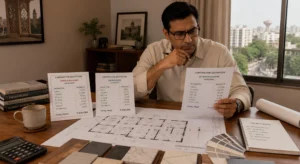
Turnkey vs Traditional Interior Design
| Feature | Turnkey Interior Design | Traditional Execution |
|---|---|---|
| Project Management | Single company | Homeowner manages multiple vendors |
| Design Consistency | High | Depends on coordination |
| Timeline Control | Better coordinated | Higher risk of delays |
| Quality Responsibility | One accountable team | Shared across different contractors |
| Communication | Single point of contact | Multiple people to coordinate |
| Budget Tracking | Structured quotations | Separate quotations from each vendor |
| Convenience | High | Moderate to low |
| Best For | Busy homeowners, complete renovations | Experienced homeowners managing their own projects |
When Does Turnkey Make the Most Sense?
Turnkey interiors are often the preferred choice when:
- You’ve recently purchased a new home.
- You want a single team managing the complete project.
- You have limited time to supervise daily work.
- Design consistency is important.
- You prefer fixed planning and organised execution.
- You’re investing in a premium home where quality control matters.
For many homeowners, the biggest advantage isn’t simply convenience—it’s accountability. When one team is responsible for the entire project, communication becomes simpler and decisions are made more efficiently.
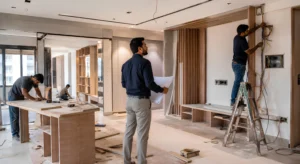
When Can Traditional Execution Be a Good Option?
Hiring separate contractors may be suitable if:
- You’re renovating only one room.
- You already have trusted contractors.
- You’re handling a phased renovation over several months.
- You have the time and experience to coordinate multiple vendors.
- Your project scope is relatively small.
However, homeowners should remember that lower initial quotations don’t always translate into lower overall project costs. Delays, design revisions, coordination issues, or material mismatches can increase both time and expenses during execution.
Which Option Is Better for Most Ahmedabad Homeowners?
There isn’t a universal answer because every project is different.
For a simple renovation or a small upgrade, working with individual contractors may be perfectly suitable.
However, for complete home interiors, new apartments, villas, or office fit-outs, many homeowners prefer turnkey interior design because it offers:
- Better coordination
- Greater accountability
- More predictable timelines
- Consistent design language
- Centralised quality control
- Reduced day-to-day involvement
Ultimately, the right choice depends on your project scope, available time, budget, and how involved you want to be throughout the execution process.
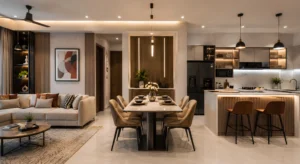
Section Summary
Before comparing interior designers, it’s important to decide how you want your project to be executed. Whether you choose a turnkey solution or coordinate individual contractors, understanding the strengths and trade-offs of each approach helps you plan more confidently and avoid unexpected challenges during your interior journey.
10 Essential Questions to Ask Before Hiring an Interior Designer in Ahmedabad
Hiring an interior designer is more than selecting someone with an impressive portfolio—it’s about choosing a professional who understands your vision, respects your budget, and can deliver quality work on time.
A consultation meeting is the perfect opportunity to understand how an interior design company works. Asking the right questions early can help you avoid misunderstandings, unexpected costs, and project delays later.
Below are ten practical questions every homeowner should ask before making a final decision.
1. Have You Completed Projects Similar to Mine?
Every property has different design challenges.
Designing a compact 2 BHK apartment requires a different approach than planning a luxury villa, office, café, or retail showroom.
Instead of asking how many years a company has been in business, ask whether they have successfully completed projects that match your property type, budget, and design expectations.
This gives you greater confidence that the team understands the practical requirements of your project rather than relying solely on generic design concepts.

2. What Exactly Is Included in the Quotation?
Many homeowners compare quotations based only on the final price.
Instead, ask for a detailed breakdown of the proposed work.
A professional quotation should clearly explain:
- Scope of work
- Materials included
- Brand specifications
- Labour charges
- Installation costs
- Warranty information
- Payment milestones
- Exclusions, if any
A clear quotation reduces confusion and helps both parties begin the project with shared expectations.
3. Who Will Supervise My Project?
A beautiful design alone doesn’t guarantee a successful outcome.
Execution quality depends on proper supervision throughout the project.
Ask whether a dedicated project manager or site supervisor will regularly monitor progress, coordinate different teams, and ensure that the approved design is executed correctly.
Knowing who your primary point of contact will be also makes communication much smoother throughout the project.
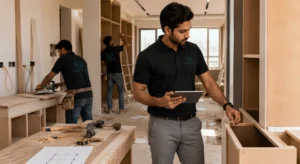
4. Which Materials and Brands Do You Recommend?
Material quality has a direct impact on durability, maintenance, and long-term performance.
Rather than asking for the “best” material, ask why a particular material has been recommended for your project.
An experienced designer should be able to explain the advantages of different options based on your lifestyle, maintenance preferences, and budget.
This conversation also helps you understand whether recommendations are based on performance rather than simply increasing project costs.
5. How Will Changes Be Managed During Execution?
It’s common for homeowners to request small design changes once work begins.
Before the project starts, ask how revisions will be handled.
Clarify:
- Design revisions
- Material substitutions
- Additional work
- Timeline adjustments
- Cost implications
Understanding this process in advance helps prevent misunderstandings later.
6. What Is the Expected Project Timeline?
Every interior project progresses through multiple stages, including design development, material procurement, manufacturing, installation, and final finishing.
Ask your designer to explain the overall timeline and major project milestones rather than only providing a completion date.
This helps set realistic expectations and allows you to plan your move-in schedule more effectively.

7. What Kind of Warranty or After-Completion Support Do You Provide?
Even after handover, homeowners may occasionally require adjustments or maintenance support.
Discuss warranty coverage before signing the agreement.
Ask whether support is available for:
- Hardware
- Modular furniture
- Installation issues
- Minor adjustments
- Manufacturing defects
A company that offers structured after-project support demonstrates confidence in the quality of its work.
8. Can I Visit an Ongoing or Recently Completed Project?
A portfolio showcases the final result, but visiting an actual project offers a more complete understanding of execution quality.
If possible, request permission to see an ongoing or recently completed project.
During the visit, observe:
- Finishing quality
- Site organisation
- Attention to detail
- Material handling
- Overall workmanship
Seeing real execution often provides greater confidence than photographs alone.

9. How Will Communication Be Handled Throughout the Project?
A successful project depends on timely communication.
Before work begins, understand how updates will be shared.
Ask questions such as:
- How often will I receive progress updates?
- Will I receive photographs of site progress?
- Who should I contact if I have questions?
- How quickly can I expect responses?
Clear communication reduces uncertainty and keeps the project moving efficiently.
10. What Makes Your Process Different?
Rather than asking, “Why should I hire you?”, ask the company to explain how they work.
Listen for answers related to:
- Design approach
- Planning process
- Material selection
- Quality checks
- Client involvement
- Project management
- Handover process
A well-defined workflow often indicates an organised and experienced interior design company.
Quick Consultation Checklist
Before leaving your consultation meeting, make sure you have clarity on the following:
✔ Scope of work
✔ Material specifications
✔ Estimated timeline
✔ Payment schedule
✔ Warranty details
✔ Site supervision
✔ Revision policy
✔ Communication process
✔ Project milestones
✔ Final deliverables
Expert Tip
Don’t choose an interior designer simply because they answered every question confidently. Choose the one who answered them clearly, transparently, and with supporting details. A professional consultation should leave you with confidence—not confusion.
Common Mistakes Homeowners Make When Hiring an Interior Designer
Designing a home is an exciting milestone, but it also involves dozens of important decisions. In the excitement of creating a dream space, many homeowners unknowingly make choices that lead to unnecessary expenses, delays, or disappointing results.
Fortunately, most of these issues can be avoided with careful planning and informed decision-making.
Here are some of the most common mistakes homeowners make—and how you can avoid them.
1. Choosing Based Only on the Lowest Price
A lower quotation doesn’t always mean better value.
Interior quotations often differ because of material quality, hardware brands, workmanship standards, warranty coverage, and execution scope.
Instead of comparing only the final amount, understand what you’re actually paying for.
A slightly higher investment in better materials and professional execution can often reduce maintenance costs and increase the lifespan of your interiors.

2. Finalising the Design Without Considering Daily Lifestyle
Beautiful interiors should also be practical.
A design that looks stunning in photographs may not suit your everyday routine.
Before approving layouts, think about:
- Storage requirements
- Family members
- Work-from-home needs
- Children’s activities
- Future lifestyle changes
- Ease of maintenance
A home should support how you live—not just how it looks.
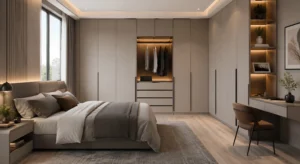
3. Ignoring Future Storage Requirements
One of the biggest regrets homeowners mention after moving in is:
“We should have planned more storage.”
Storage needs usually grow over time.
Planning for additional wardrobes, utility storage, kitchen organization, and hidden storage during the design stage is much easier than modifying interiors later.
4. Making Material Decisions Too Quickly
Choosing finishes based only on colour or appearance can sometimes lead to disappointment later.
Different materials vary in:
- Durability
- Maintenance
- Moisture resistance
- Scratch resistance
- Longevity
Taking time to understand these differences helps homeowners make better long-term decisions rather than short-term aesthetic choices.
5. Frequently Changing Decisions During Execution
Design revisions are a normal part of any project.
However, repeated changes after manufacturing or installation has started can affect:
- Project timelines
- Budget
- Material ordering
- Installation schedules
Spending extra time finalizing layouts and material selections before execution usually results in a smoother project.
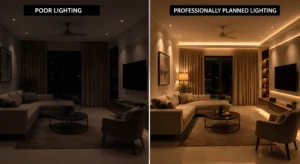
6. Forgetting About Lighting During Planning
Lighting is often treated as the final step.
In reality, it should be planned alongside furniture layouts and electrical points.
Good lighting influences:
- Visual comfort
- Mood
- Functionality
- Space perception
- Energy efficiency
A well-designed lighting plan enhances every other design element in the home.
7. Rushing the Decision-Making Process
Selecting an interior designer is not a decision that should be rushed.
Take time to:
- Compare proposals
- Review completed work
- Clarify expectations
- Understand the process
- Discuss timelines
A little extra research before signing an agreement often prevents much bigger issues later.
Quick Homeowner Checklist
Before starting your interior project, ask yourself:
✅ Is my budget realistic?
✅ Have I finalized my lifestyle requirements?
✅ Do I understand the project timeline?
✅ Have I reviewed material options?
✅ Is storage planning complete?
✅ Are electrical and lighting layouts finalized?
✅ Have I compared quotations carefully?
Expert Insight
The most successful interior projects rarely happen because homeowners spend the most money. They succeed because important decisions are made thoughtfully before execution begins.
Planning well at the beginning almost always leads to a smoother, more enjoyable design experience.
How to Compare Interior Design Quotations Like an Expert
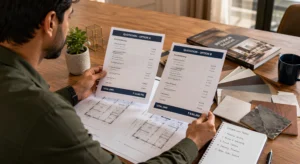
Receiving multiple quotations from different interior design companies is a positive step—it gives you options. However, many homeowners make the mistake of comparing quotations based only on the final price.
In reality, two quotations with similar project costs can differ significantly in terms of material quality, workmanship, execution standards, warranty, and the overall scope of work.
Instead of asking “Which quotation is cheaper?”, ask:
“Which quotation offers the best overall value for my investment?”
Learning how to evaluate quotations properly helps you make a confident decision while avoiding unexpected costs during the project.
1. Compare the Scope of Work, Not Just the Total Price
The first thing to verify is whether every quotation includes the same scope of work.
For example, one company may include:
- Modular kitchen
- Wardrobes
- TV unit
- False ceiling
- Electrical work
- Painting
- Site supervision
- Project management
While another quotation may only cover furniture and basic carpentry.
A lower price often reflects a smaller project scope rather than better pricing.
Always compare similar deliverables before evaluating costs.
2. Check Material Specifications Carefully
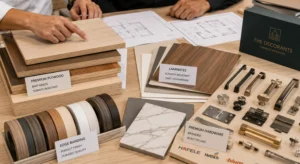
Materials have one of the biggest impacts on both quality and long-term durability.
Instead of accepting generic descriptions such as:
- Premium plywood
- High-quality laminate
- Imported hardware
Ask for specific material details.
A professional quotation should clearly mention:
- Board type (BWR, HDHMR, Marine Plywood, etc.)
- Laminate finish
- Hardware brand
- Edge banding
- Countertop material
- Glass specifications
- Paint finish
Clear specifications reduce misunderstandings and help ensure you receive exactly what was discussed.
3. Review What Is Excluded
One of the most overlooked parts of any quotation is the Exclusions section.
Items commonly excluded may include:
- Decorative lighting
- Loose furniture
- Appliances
- Curtains
- Civil modifications
- Smart home automation
- GST (if not mentioned separately)
Knowing these exclusions in advance helps prevent unexpected expenses later in the project.
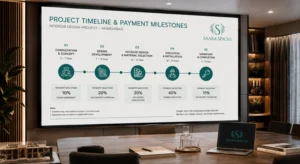
4. Understand the Payment Schedule
Rather than paying a large amount upfront, review how payments are linked to project milestones.
A structured payment plan generally reflects a well-organised project.
Typical stages may include:
| Project Stage | Payment Milestone |
|---|---|
| Design Confirmation | Initial Advance |
| Production Begins | Second Installment |
| Installation Starts | Third Installment |
| Project Completion | Final Balance |
A milestone-based payment schedule creates transparency for both the homeowner and the interior design company.
5. Compare Warranty and After-Sales Support
A quotation should not only explain what is being built—it should also clarify what happens after the project is completed.
Review:
- Product warranties
- Hardware warranty
- Manufacturing warranty
- Service support
- Minor adjustment policy
Reliable after-sales support provides additional confidence that the company stands behind the quality of its work.
6. Evaluate the Project Timeline
Completion dates can vary depending on project size, design complexity, and manufacturing requirements.
Instead of simply asking “When will the project finish?”, understand:
- Design approval timeline
- Manufacturing duration
- Site preparation
- Installation schedule
- Final inspection
A realistic timeline is usually more dependable than an overly ambitious promise.
Expert Comparison Checklist
Before selecting any quotation, confirm that you understand:
✔ Scope of work
✔ Material specifications
✔ Hardware brands
✔ Warranty coverage
✔ Project timeline
✔ Payment milestones
✔ Exclusions
✔ Site supervision
✔ After-sales support
✔ Final deliverables
Comparison Table
| Comparison Factor | Quotation A | Quotation B | What to Look For |
|---|---|---|---|
| Scope of Work | ✔ | ✔ | Are all services included? |
| Material Specifications | ✔ | ✘ | Are materials clearly mentioned? |
| Hardware Brands | ✔ | ✘ | Are branded products specified? |
| Warranty | ✔ | ✔ | Is the duration clearly defined? |
| Payment Schedule | ✔ | ✔ | Are payments milestone-based? |
| Timeline | ✔ | ✔ | Is the schedule realistic? |
| Exclusions | ✔ | ✘ | Are exclusions transparent? |
| Project Supervision | ✔ | ✘ | Who is responsible on-site? |
Pro Tip
The best quotation is rarely the cheapest or the most expensive. It is the one that clearly explains what you are receiving, how it will be executed, what materials will be used, and what level of support you can expect after completion.
Transparency creates confidence, and confidence leads to better project outcomes.
Final Thoughts
Choosing an interior design company is not simply a financial decision—it is a long-term investment in your home or workspace.
By comparing quotations thoughtfully rather than focusing only on price, homeowners can make better decisions, reduce unexpected surprises, and enjoy a smoother interior design journey from planning to final handover.
Why Homeowners Across Ahmedabad Choose Saara Spaces
Choosing an interior design company is about more than selecting attractive designs—it’s about finding a team you can trust throughout one of the most important investments in your home or business.
At Saara Spaces, every project begins with understanding the people who will use the space. Rather than following a one-size-fits-all approach, the team focuses on creating interiors that balance aesthetics, functionality, and long-term practicality.
Whether it’s a modern apartment, luxury villa, office, retail showroom, or commercial workspace, each project is planned with attention to detail, thoughtful space planning, and a commitment to quality execution.
A Design Process Built Around Your Lifestyle
Every family, business, and property has different requirements.
Instead of adapting clients to predefined design templates, Saara Spaces develops solutions based on:
- Daily lifestyle and routines
- Functional requirements
- Available space
- Design preferences
- Budget expectations
- Future flexibility
This personalised planning process helps create interiors that not only look elegant but also remain practical for everyday living.

End-to-End Project Coordination
Managing multiple contractors can quickly become overwhelming, particularly during full home renovations or commercial fit-outs.
Saara Spaces follows a structured project workflow where planning, coordination, execution, and quality checks are managed through an organised process.
Clients benefit from:
- A single point of communication
- Coordinated project scheduling
- Regular progress updates
- Professional site supervision
- Streamlined execution
This organised approach helps minimise confusion and keeps projects progressing efficiently from concept to completion.
Thoughtful Material Selection
Selecting materials involves much more than choosing finishes that look attractive.
Each recommendation considers factors such as:
- Durability
- Maintenance requirements
- Everyday usability
- Design compatibility
- Budget
- Long-term performance
By balancing aesthetics with practicality, the goal is to create interiors that continue to perform well long after the project is completed.

Quality Is Maintained Throughout Execution
The success of an interior project depends not only on good design but also on consistent execution.
Throughout the project, attention is given to:
- Workmanship
- Installation quality
- Finishing standards
- Material consistency
- Site coordination
- Final detailing
Regular supervision and quality checks help ensure that the completed space reflects the approved design and meets the expected standards.
Transparent Planning Creates Better Experiences
Clear communication is an important part of every successful project.
Clients are guided through:
- Initial consultation
- Design planning
- Material selection
- Project scheduling
- Execution stages
- Final handover
Maintaining transparency throughout the process helps homeowners make informed decisions and creates a smoother project experience from beginning to end.

Residential and Commercial Interior Expertise
Saara Spaces has experience working across a variety of interior design projects, including:
- Apartments
- Independent homes
- Luxury villas
- Office interiors
- Retail spaces
- Commercial environments
This diverse experience allows the team to adapt design solutions to different property types while maintaining consistency in planning, execution, and quality.
A Collaborative Design Journey
Every successful project is built on collaboration.
Rather than making decisions in isolation, the design process encourages regular discussions with clients, allowing ideas to evolve through planning, visualisation, and material selection.
This collaborative approach ensures that the final outcome reflects both professional expertise and the client’s personal vision.
Why Clients Continue to Recommend Saara Spaces
Many homeowners and businesses value an interior partner who combines creativity with organised execution.
Clients often appreciate:
- Personalised design solutions
- Professional communication
- Structured project planning
- Attention to detail
- Quality craftsmanship
- Transparent working process
- Long-term value
Together, these qualities contribute to a design experience that is both enjoyable and dependable.
More Than Beautiful Interiors
A thoughtfully designed space should improve the way people live and work—not just the way a room looks.
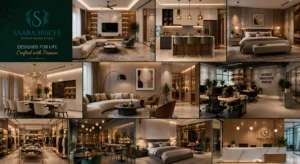
At Saara Spaces, the focus remains on creating interiors that are functional, timeless, and tailored to the unique needs of every client. By combining careful planning, quality execution, and a client-first approach, each project is designed to deliver lasting value and everyday comfort.
Frequently Asked Questions About Interior Designers in Ahmedabad
Choosing an interior designer often raises practical questions about costs, timelines, services, and project planning. Below are answers to some of the most common questions homeowners and businesses ask before starting an interior project.
1. How much does it cost to hire an interior designer in Ahmedabad?
Interior design costs vary depending on several factors, including the size of the property, project scope, design complexity, material selection, and level of customization.
Rather than focusing only on price, homeowners should compare the overall value, including design quality, execution standards, materials, and after-sales support.
2. Is hiring an interior designer worth it?
For most homeowners, yes.
An experienced interior designer helps optimise space planning, improve functionality, reduce costly mistakes, coordinate execution, and create interiors that are both visually appealing and practical for everyday living.
3. What is the difference between an interior designer and an interior decorator?
An interior designer focuses on space planning, layouts, lighting, materials, furniture planning, and overall functionality.
An interior decorator primarily enhances the appearance of an existing space through furniture, colours, décor accessories, artwork, and styling without making structural or layout changes.
4. How long does a complete home interior project usually take?
The timeline depends on the size and complexity of the project.
Smaller apartments generally require less time than luxury villas or commercial spaces. Design approvals, material availability, manufacturing, and installation all influence the overall schedule.
A detailed project timeline is typically prepared before execution begins.
5. Can I hire an interior designer for a single room?
Yes.
Many interior designers offer services for individual spaces such as:
- Living rooms
- Bedrooms
- Modular kitchens
- Home offices
- Children’s rooms
- Entertainment areas
The level of customization depends on the project requirements.
6. What information should I prepare before meeting an interior designer?
A productive consultation becomes easier when you have:
- Property layout or floor plan
- Approximate budget
- Design preferences
- Lifestyle requirements
- Family size
- Expected completion timeline
- Reference images or inspiration
Providing this information helps designers recommend solutions that better match your expectations.
7. Do interior designers help with furniture and material selection?
Yes.
Most full-service interior design firms assist clients in selecting suitable materials, finishes, furniture, lighting, hardware, fabrics, colours, and accessories to ensure a cohesive design throughout the project.
8. Should I choose customised furniture or ready-made furniture?
Both options have advantages.
Custom furniture offers better space utilisation and personalised designs, while ready-made furniture may be suitable for quicker installations or specific budget requirements.
The right choice depends on your available space, design goals, and long-term needs.
9. What is the advantage of turnkey interior design?
Turnkey interior design offers a single point of responsibility for planning, design, procurement, execution, quality checks, and final handover.
For homeowners who prefer a coordinated and structured process, turnkey execution often provides greater convenience and accountability.
10. How do I know if an interior designer is the right fit for my project?
The right designer understands your goals, communicates clearly, provides transparent planning, demonstrates relevant project experience, and explains the design process confidently.
A consultation should leave you with clarity about the project—not confusion.
11. Do interior designers work only on luxury homes?
No.
Interior designers work on a wide range of projects, including compact apartments, family homes, luxury villas, offices, retail spaces, cafés, and commercial interiors.
The design approach is typically adapted to the project’s size, functionality, and budget.
12. How can I book a consultation with Saara Spaces?
If you’re planning a residential or commercial interior project in Ahmedabad, you can contact Saara Spaces through the website, phone, or enquiry form to discuss your requirements and schedule an initial consultation.
During this meeting, you’ll have the opportunity to share your vision, understand the design process, and explore solutions that suit your space and budget.
Why this FAQ section works
These questions target high-intent search queries that people commonly ask before hiring an interior designer. They are concise, practical, and avoid repeating the detailed advice already covered earlier in the guide, making them suitable for FAQ Schema and increasing the likelihood of appearing in Google’s People Also Ask results.
Conclusion: Choosing the Right Interior Designer Starts with the Right Decision
Designing a home or workspace is one of the most meaningful investments you’ll make. Beyond selecting colours, furniture, or finishes, it’s about creating a space that supports your lifestyle, reflects your personality, and continues to serve your needs for years to come.
As you’ve seen throughout this guide, choosing an interior designer involves much more than comparing prices or browsing portfolios. The right decision comes from understanding the design process, evaluating project planning, comparing quotations carefully, asking the right questions, and partnering with professionals who value quality, transparency, and long-term client satisfaction.
Whether you’re planning the interiors for a modern apartment, an independent home, a luxury villa, a commercial office, or a retail space, investing time in the selection process today can help you avoid unnecessary challenges tomorrow.
At Saara Spaces, we believe every project deserves thoughtful planning, creative design, and meticulous execution. Our approach focuses on understanding each client’s unique vision and transforming it into spaces that are functional, timeless, and crafted with attention to detail.
From the initial consultation to the final handover, our goal is to create interiors that not only look exceptional but also enhance the way people live and work every day.
Ready to Start Your Interior Design Journey?
If you’re planning a residential or commercial interior project in Ahmedabad and would like professional guidance tailored to your space, we’re here to help.
Whether you’re still exploring ideas, comparing options, or ready to begin your project, our team is happy to discuss your requirements, answer your questions, and help you make informed decisions.
Get in Touch with Saara Spaces
📍 Location: Ahmedabad, Gujarat
🏠 Services: Residential Interiors • Commercial Interiors • Office Design • Luxury Homes • Villas • Turnkey Interior Solutions
📞 Schedule a Consultation
Connect with our team to discuss your project goals, explore design possibilities, and take the first step toward creating a space that truly reflects your vision.
Great interiors don’t begin with furniture—they begin with thoughtful planning, clear communication, and the right design partner.