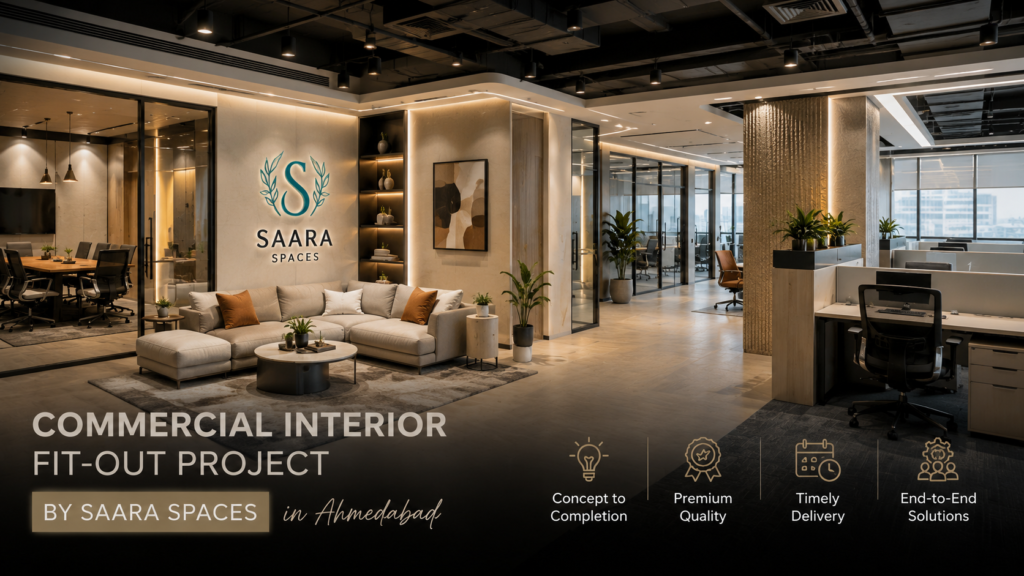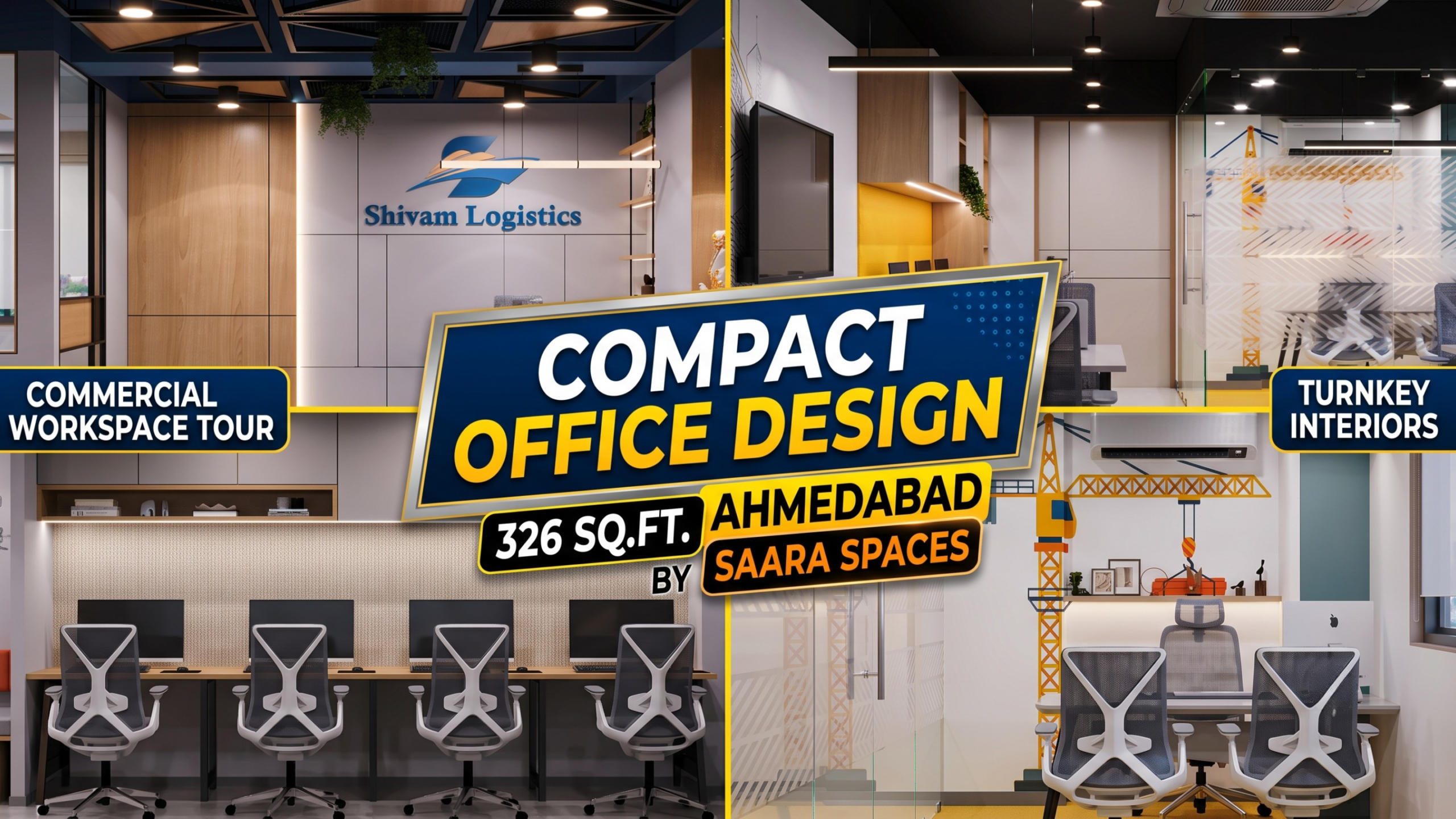
How to Design a Compact Office in Ahmedabad: 9 Smart Lessons from Real 283–326 Sq Ft Workspaces

A small office should feel purposeful, not packed. That is the starting point for effective compact office design in Ahmedabad, where a business may need workstations, storage, visitor seating, and a professional brand presence within a limited footprint.

A 283 sq ft office and a 326 sq ft office may sound restrictive on paper. Yet thoughtful planning can turn a modest area into a workspace that supports daily operations and creates the right impression when clients walk in.

Two Ahmedabad projects by Saara Spaces offer useful examples: MK Construction in Bopal and Shivam Logistics in Jagatpur. Both demonstrate how design decisions can help a compact commercial space work harder without making it feel unnecessarily complicated.

This guide explores nine practical space-planning lessons, along with common mistakes to avoid and questions to ask before starting your own office interior project.

Table of Contents

  1. Start with how the business actually works
  2. Plan movement before placing furniture
  3. Choose workstations that suit the footprint
  4. Create privacy without closing off the office
  5. Give storage a defined place
  6. Use lighting to improve comfort and clarity
  7. Make branding part of the interior
  8. Design the reception for its real purpose
  9. Coordinate execution from the beginning
  10. Lessons from two real Ahmedabad offices
  11. Compact office design checklist
  12. Frequently asked questions

Why Compact Office Design in Ahmedabad Needs a Different Approach

Designing a small office is not simply a matter of choosing smaller furniture.

In a compact commercial interior, every decision affects something else. A larger reception desk may reduce circulation space. An enclosed cabin may limit daylight reaching the workstations. A storage unit in the wrong corner can interrupt movement throughout the day.

The aim is not to squeeze the maximum number of desks into the floor plan. It is to create a workspace where people can move, focus, communicate, and welcome visitors comfortably.

This is especially important for businesses planning offices in Ahmedabad’s commercial areas, including Bopal and Jagatpur, where the available premises may need to accommodate several functions within one compact layout.

1. Start with How the Business Actually Works

Before discussing colours, furniture finishes, or ceiling designs, map the activities that happen in the office.

Does the team spend most of its day at individual computers? Do clients visit regularly? Does a senior manager need a private space for confidential discussions? How much paperwork, equipment, or physical storage is required?

The answers should determine the layout.

For example, a client-facing office may need a clearly defined visitor experience, while a team-focused workspace may benefit more from an efficient workstation arrangement.

Practical lesson: Write down the essential activities before allocating floor area. Separate genuine requirements from features that would merely be nice to have.

This simple exercise prevents a common problem: creating an attractive office that looks complete but does not fully support the business.

2. Plan Movement Before Placing Furniture

One of the most important small office space-planning decisions is how people move through the room.

A circulation route should connect the entrance, workstations, private areas, and any shared facilities without forcing people to squeeze around furniture.

Start by identifying the natural path from the entrance. Then position furniture around that route rather than treating circulation as whatever space remains.

Consider how often employees need to stand, pull out chairs, access storage, or walk past one another.

A plan that looks spacious when every chair is tucked under a desk may feel very different during a normal working day.

Practical lesson: Test the layout with chairs pulled out and doors open. Review the movement of both staff and visitors before finalising furniture dimensions.

Accessibility, safe movement, and any applicable building requirements should be reviewed for the specific premises rather than assumed from a generic floor plan.

3. Choose Workstations That Suit the Footprint

In compact office design, furniture proportions matter as much as furniture style.

Oversized desks can consume valuable floor space without adding meaningful functionality. Conversely, desks that are too small can make everyday work uncomfortable.

The right approach is to understand the equipment and working habits of each user.

A workstation used for a laptop and occasional paperwork may have different requirements from one supporting multiple monitors, drawings, or frequent document handling.

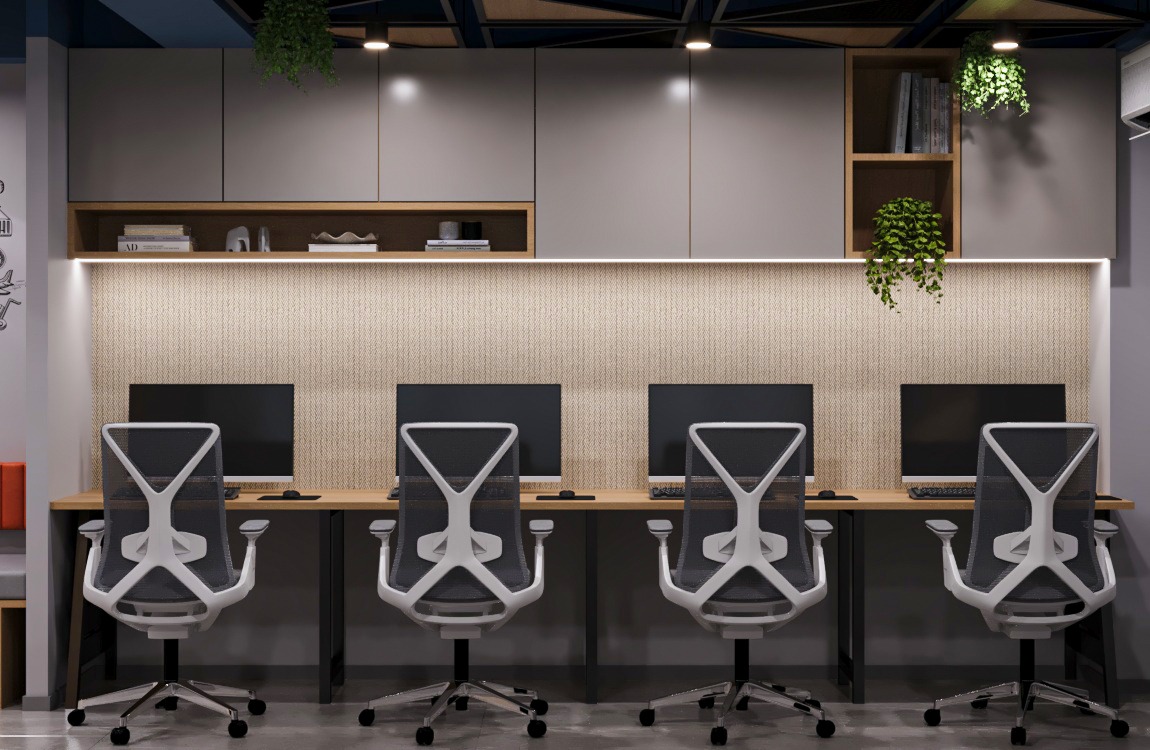
Linear workstation arrangements can be useful when the room geometry supports them. They help organise desks along a clear direction and can simplify the relationship between seating, movement, and shared services.

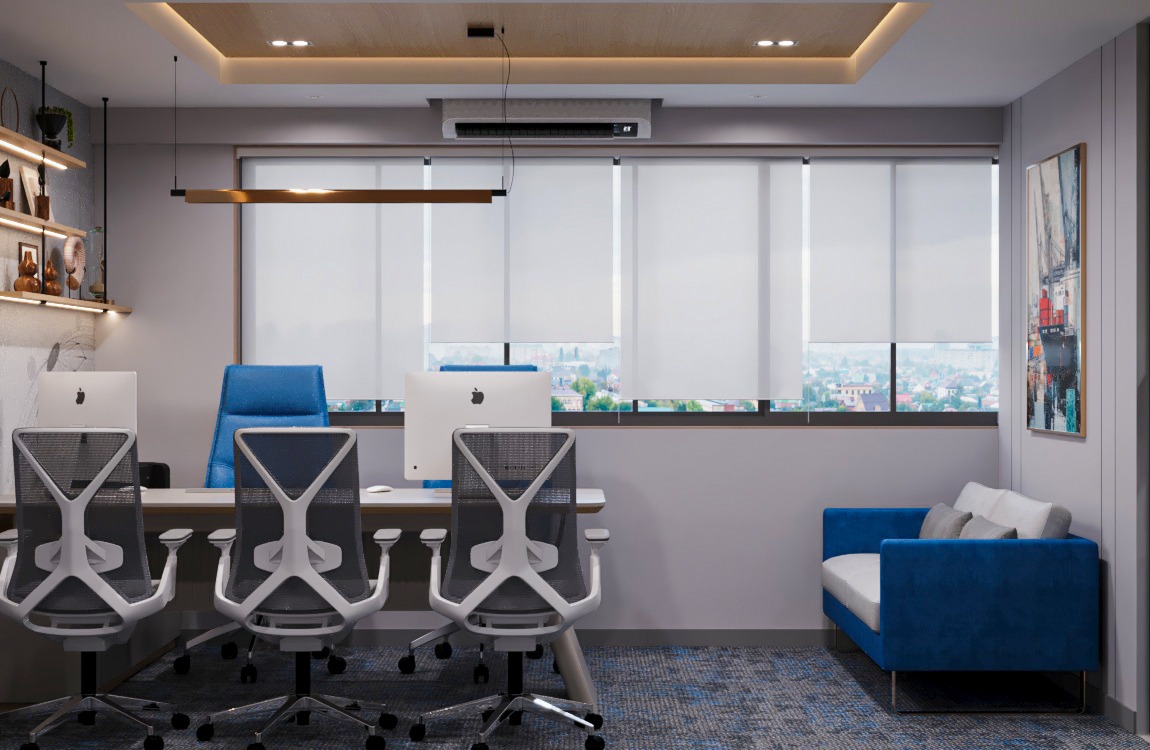
At Shivam Logistics, Saara Spaces used streamlined linear workstations as part of the 326 sq ft office design.

Practical lesson: Select furniture after testing the working clearances, not simply from a catalogue image. Plan power points, data connections, and cable management alongside the desks.

4. Create Privacy Without Closing Off the Office

Some businesses need a private executive cabin, meeting space, or area for confidential calls.

The challenge is creating that separation without making the remaining office feel enclosed.

Transparent or partially glazed partitions can help maintain visual continuity while defining different work zones.

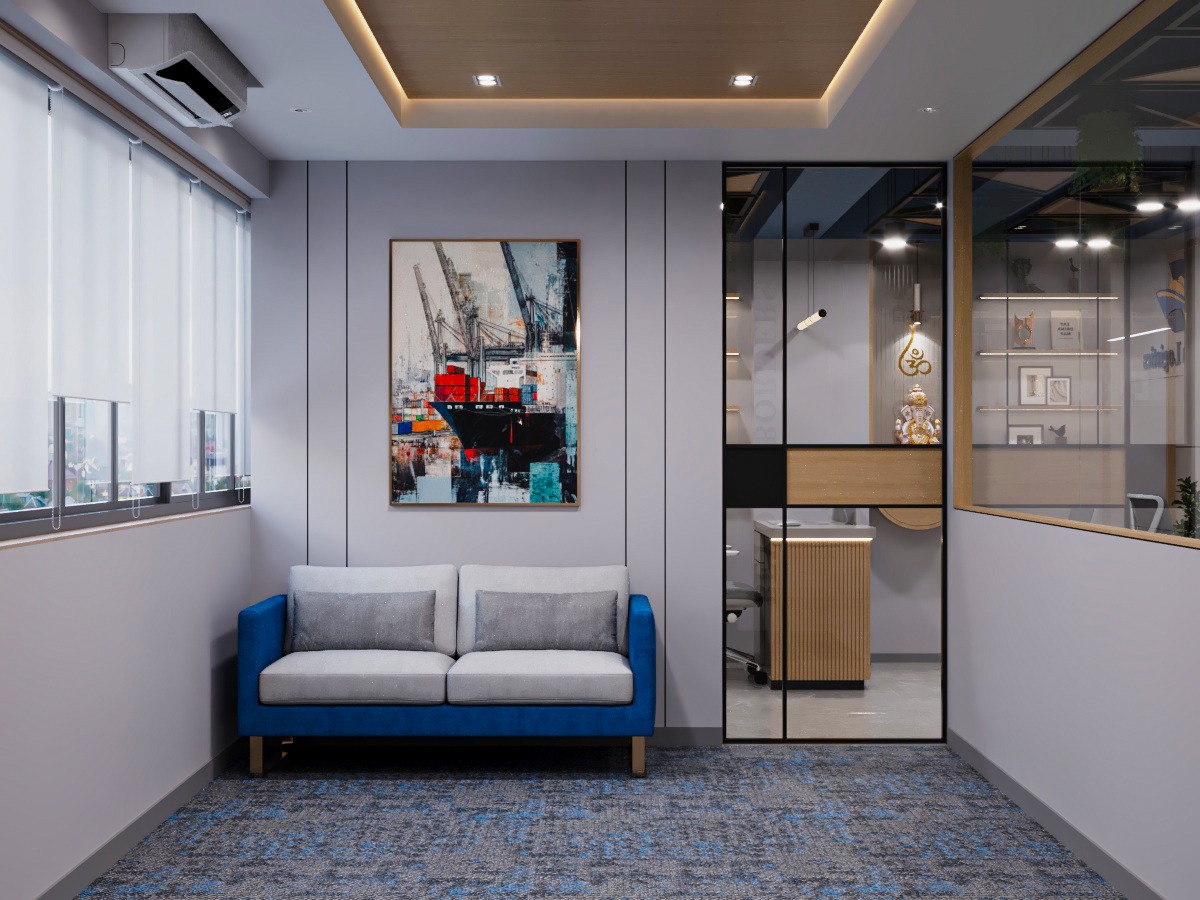
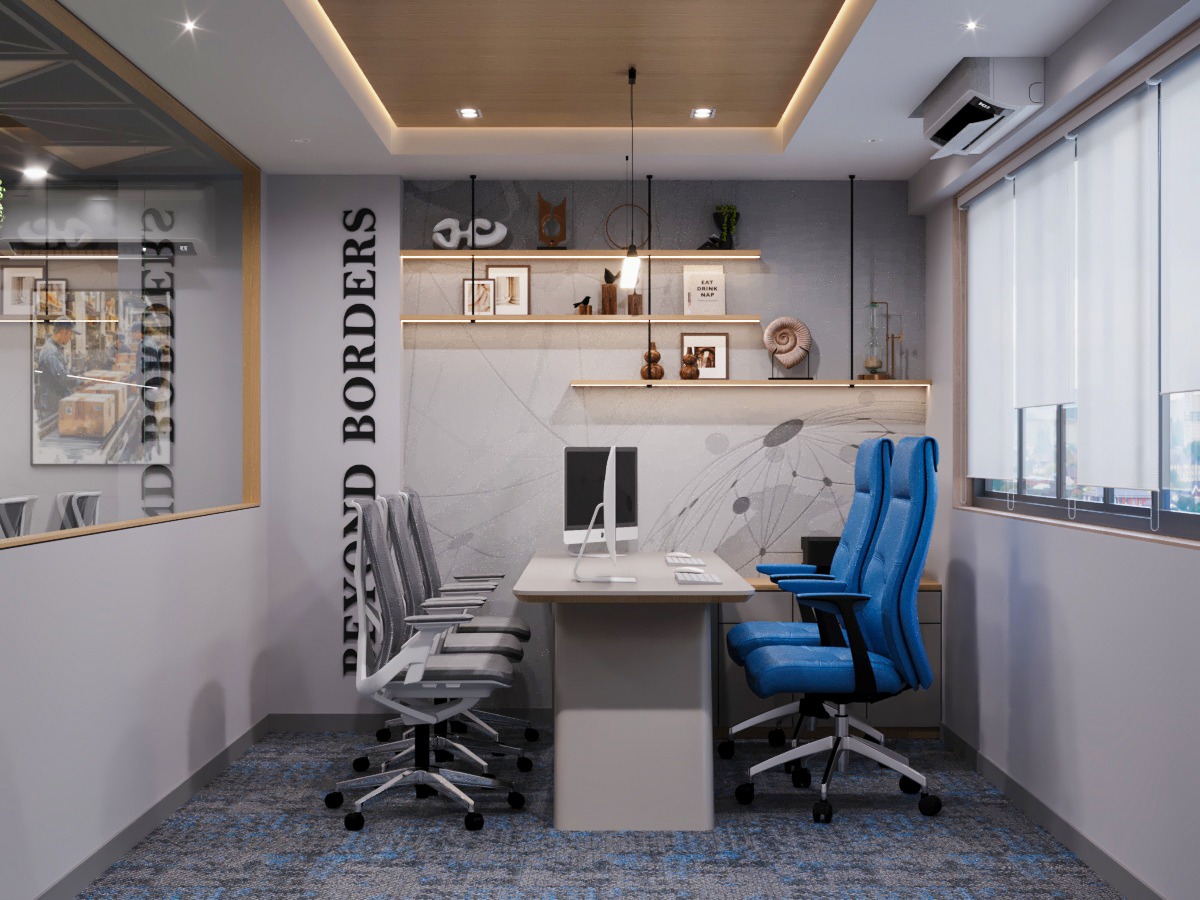
This approach is visible in the Shivam Logistics office, where glass partitions help distinguish the private executive cabin from the wider workspace.

However, glass is not a complete acoustic solution. If conversations must remain confidential, the partition specification, door detailing, and sound control need separate consideration.

Practical lesson: Decide what kind of privacy is needed—visual, acoustic, or both—before choosing a partition system.

A cabin that looks private but allows every conversation to be heard may not meet the business’s actual requirements.

5. Give Storage a Defined Place

Storage is easy to underestimate during the early stages of office planning.

Files, stationery, printers, cleaning supplies, personal belongings, and networking equipment all need appropriate locations.

Without a storage plan, these items gradually occupy desktops, visitor areas, and circulation routes.

For a compact office layout, storage should be designed around what the team genuinely uses and how frequently each item needs to be accessed.

Consider integrated cabinets, organised drawers, or suitable vertical storage where the dimensions allow.

Avoid filling every wall with overhead units. Too much visual weight can make a small room feel crowded.

Practical lesson: Create a storage inventory before approving the furniture layout. Reserve accessible space for frequently used items and keep the work surfaces as clear as possible.

6. Use Lighting to Improve Comfort and Clarity

Lighting influences how a compact office looks, but it also affects how comfortably people can work.

A small room does not automatically benefit from placing more lights across the ceiling. The important questions are where light is needed, whether screens will experience glare, and how natural and artificial light work together.

Where daylight is available, avoid blocking it unnecessarily with tall furniture or opaque partitions.

Use general lighting for overall visibility and consider task lighting where particular activities require it.

Furniture finishes also matter. Highly reflective surfaces can create distracting glare under certain lighting conditions.

The U.S. General Services Administration’s workplace lighting guidance highlights the relationship between furniture placement, daylight, glare control, and task lighting.

Practical lesson: Review lighting with the actual workstation positions and monitor directions in place. A ceiling plan should support the layout rather than be designed independently.

7. Make Branding Part of the Interior

A professional office does not need to rely on a large logo behind reception to communicate its identity.

Branding can appear through carefully chosen colours, materials, graphics, and the overall character of the space.

The goal is consistency, not decoration for its own sake.

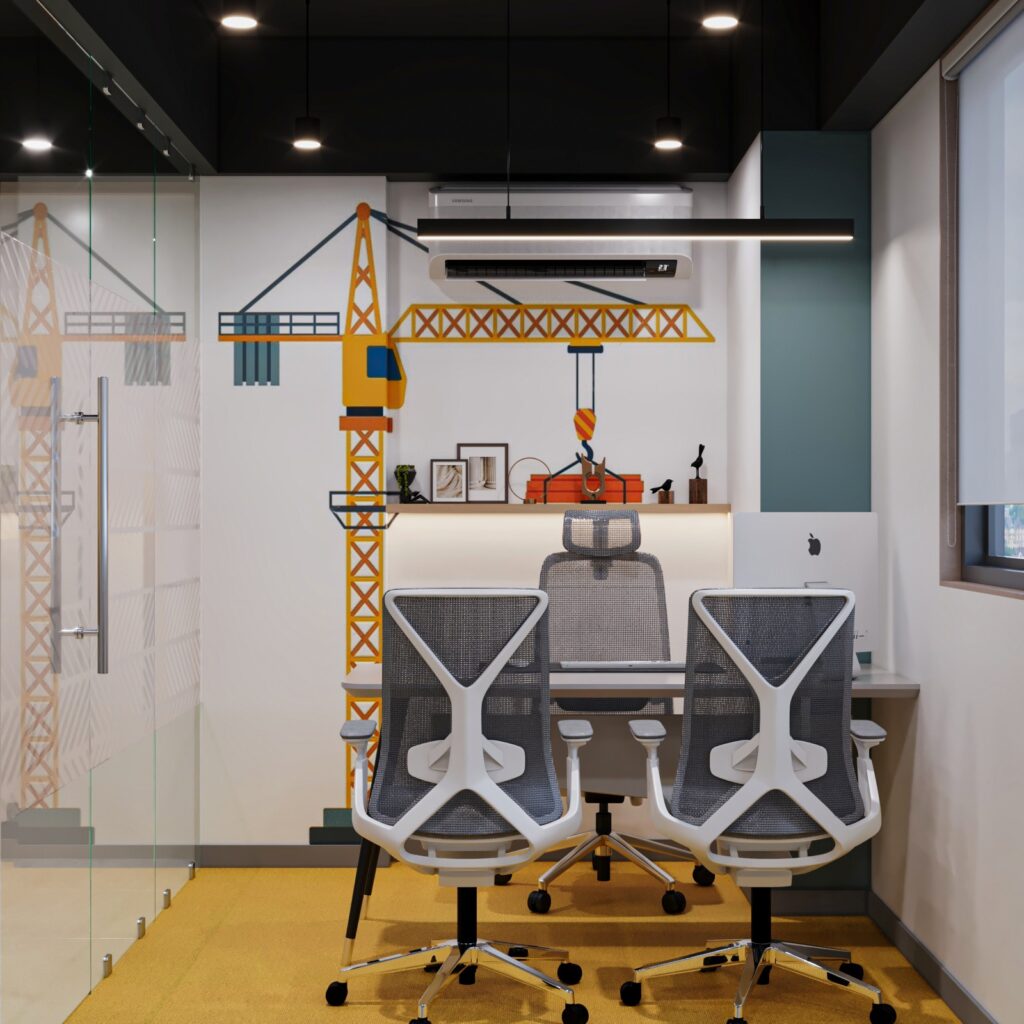
At MK Construction, the 283 sq ft office combines contemporary workstations with warm wood accents and bold brand-inspired elements.

At Shivam Logistics, bespoke wall graphics reflect the company’s global logistics identity, while the interior also uses warm wood details and a distinctive geometric ceiling treatment.

The businesses have different identities, and their offices express those differences.

Practical lesson: Identify two or three visual cues that genuinely represent the business. Integrate them into the design instead of adding unrelated decorative features.

8. Design the Reception for Its Real Purpose

A reception area can establish an immediate professional impression, but it should not dominate a compact floor plan.

Think about what actually happens when someone arrives.

Does a visitor need to check in with an employee? Wait briefly? Sign a document? Meet a team member before entering another area?

The reception design should answer those needs without disrupting daily work.

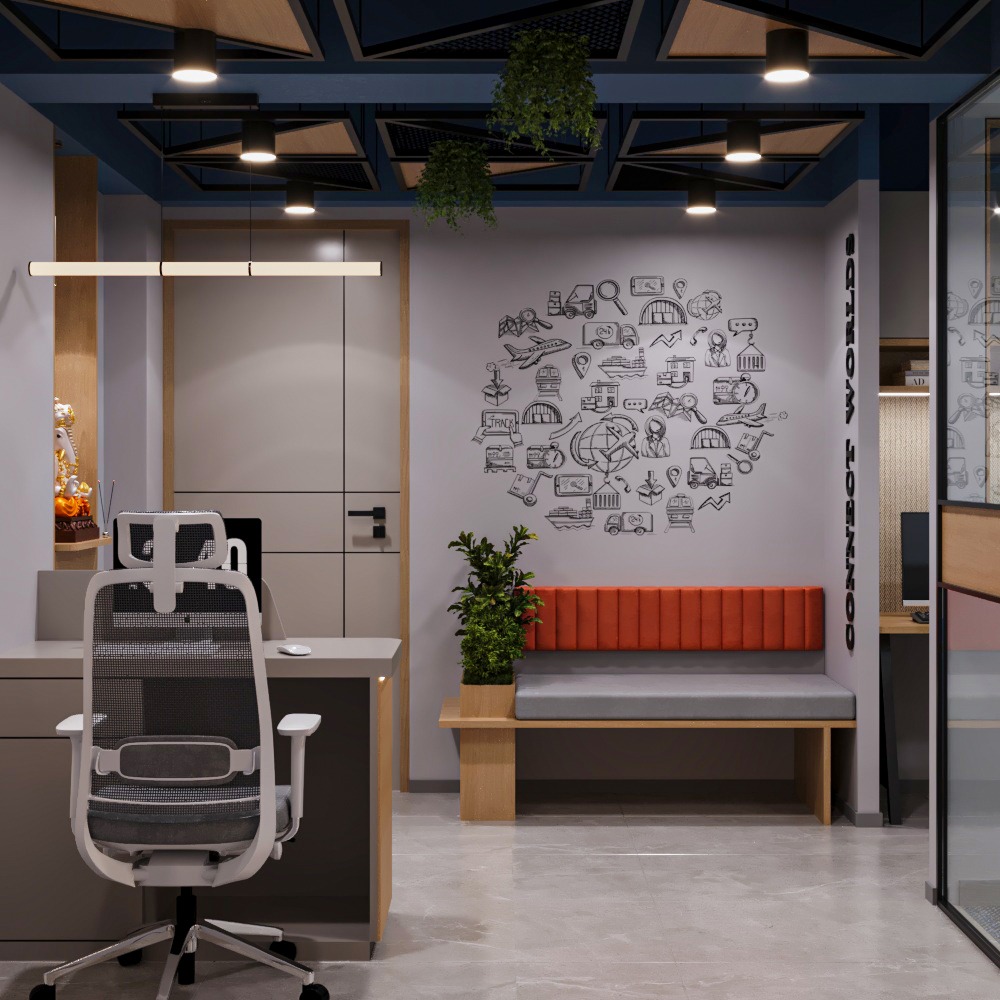
The Shivam Logistics project includes an impactful reception area within its 326 sq ft footprint, alongside workstations and a private cabin.

That combination shows why the reception cannot be planned in isolation. It must be considered as part of the complete office experience.

Practical lesson: Give the entrance a clear purpose and identity, but allocate space according to how frequently it is used.

9. Coordinate Design and Execution from the Beginning

In a small office, late-stage changes can have an outsized effect.

Moving a workstation may alter electrical locations. Changing a partition can affect lighting, air-conditioning, or access. Adjusting storage dimensions may interfere with a door opening.

That is why compact office design benefits from coordination between space planning, interior detailing, and on-site execution.

Both the MK Construction and Shivam Logistics projects are presented by Saara Spaces as turnkey design-and-execution work.

A coordinated approach helps ensure that furniture, finishes, partitions, and building services are considered together rather than as disconnected decisions.

Practical lesson: Review the final layout against electrical, lighting, HVAC, storage, and furniture drawings before execution begins.

A compact space leaves little room for unresolved clashes.

Two Real Compact Office Projects in Ahmedabad

These projects offer a useful comparison because they share a similar size range but have different design requirements and visual identities.

MK Construction: A 283 Sq Ft Office in Bopal

Project: MK Construction
Location: Bopal, Ahmedabad
Area: 283 sq ft
Scope: Turnkey interior design and execution
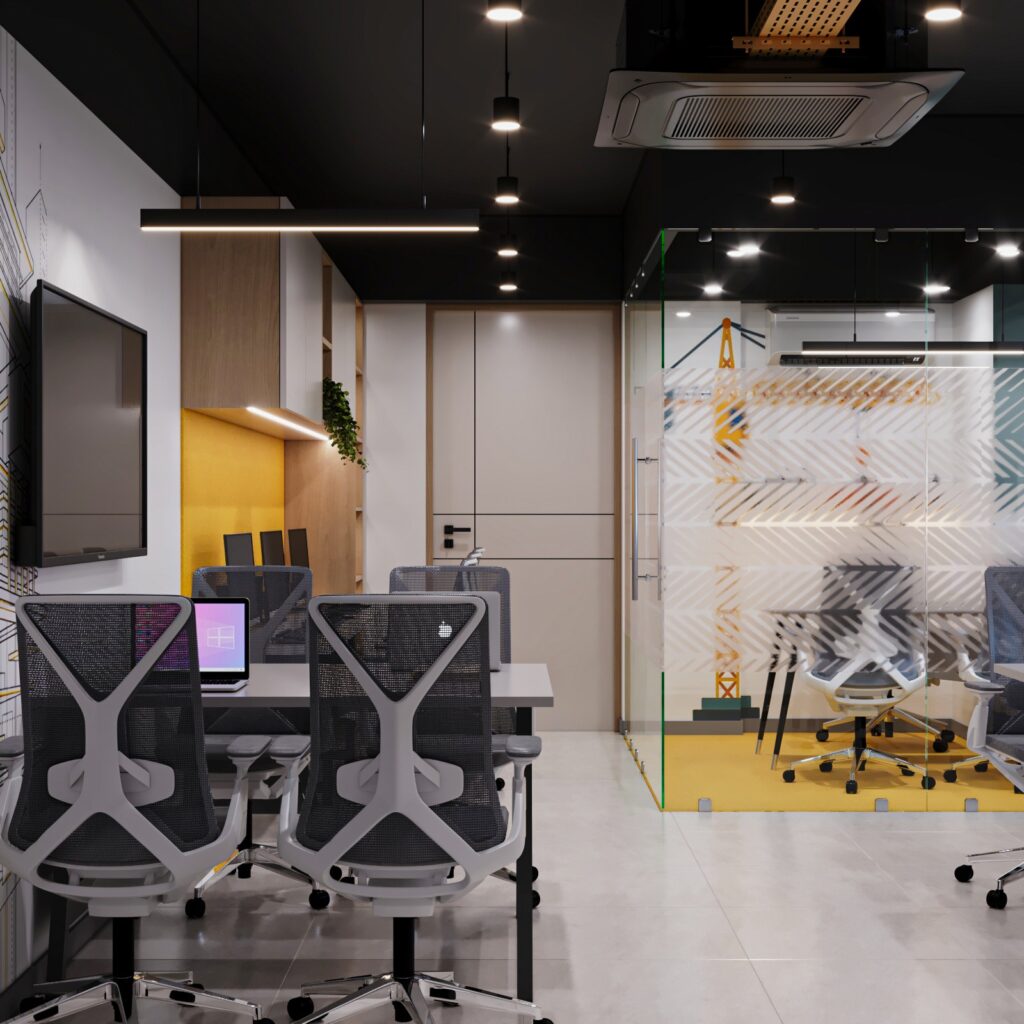
283 sq ft small office interior design at MK Construction in Bopal, Ahmedabad

The MK Construction office demonstrates how a small commercial footprint can support a contemporary, professional workspace.

Its design brings together smart space planning, modern workstations, warm wood accents, and brand-inspired visual elements.

The key takeaway is not a particular furniture style. It is the value of making functionality and professional presentation work together.

For businesses planning a similar office, this project is a reminder to think beyond the number of desks. The overall environment should also reflect the organisation using it.

Explore the project: MK Construction office interior, Bopal

Shivam Logistics: A 326 Sq Ft Office in Jagatpur

Project: Shivam Logistics
Location: Jagatpur, Ahmedabad
Area: 326 sq ft
Scope: Turnkey design and execution
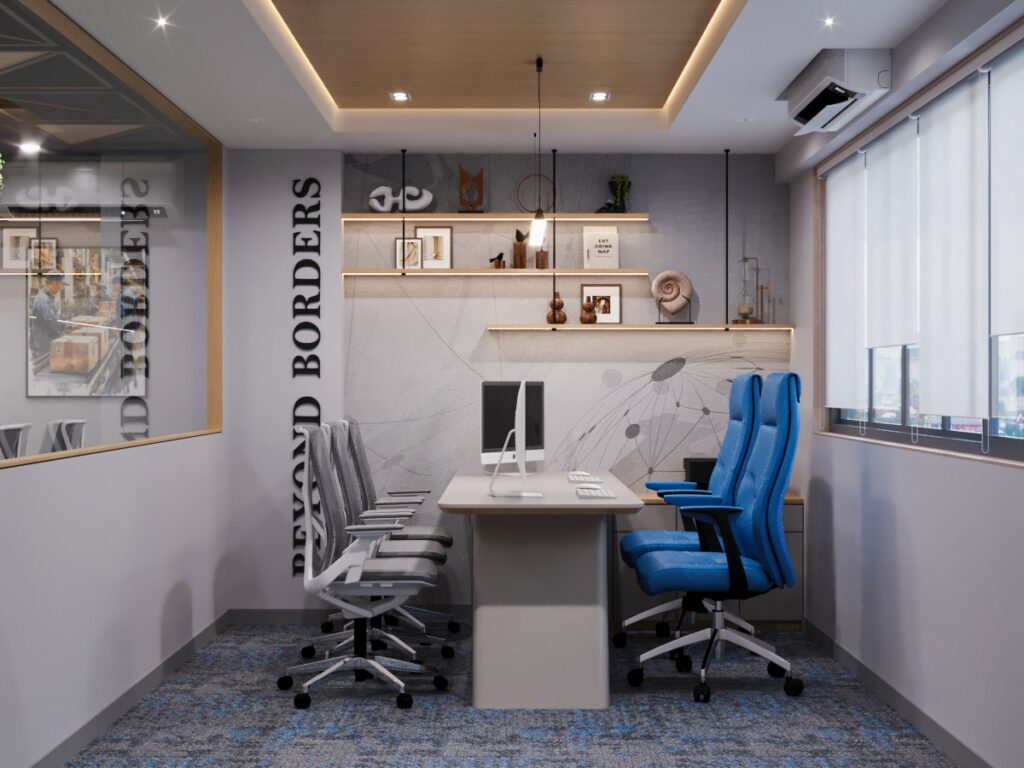
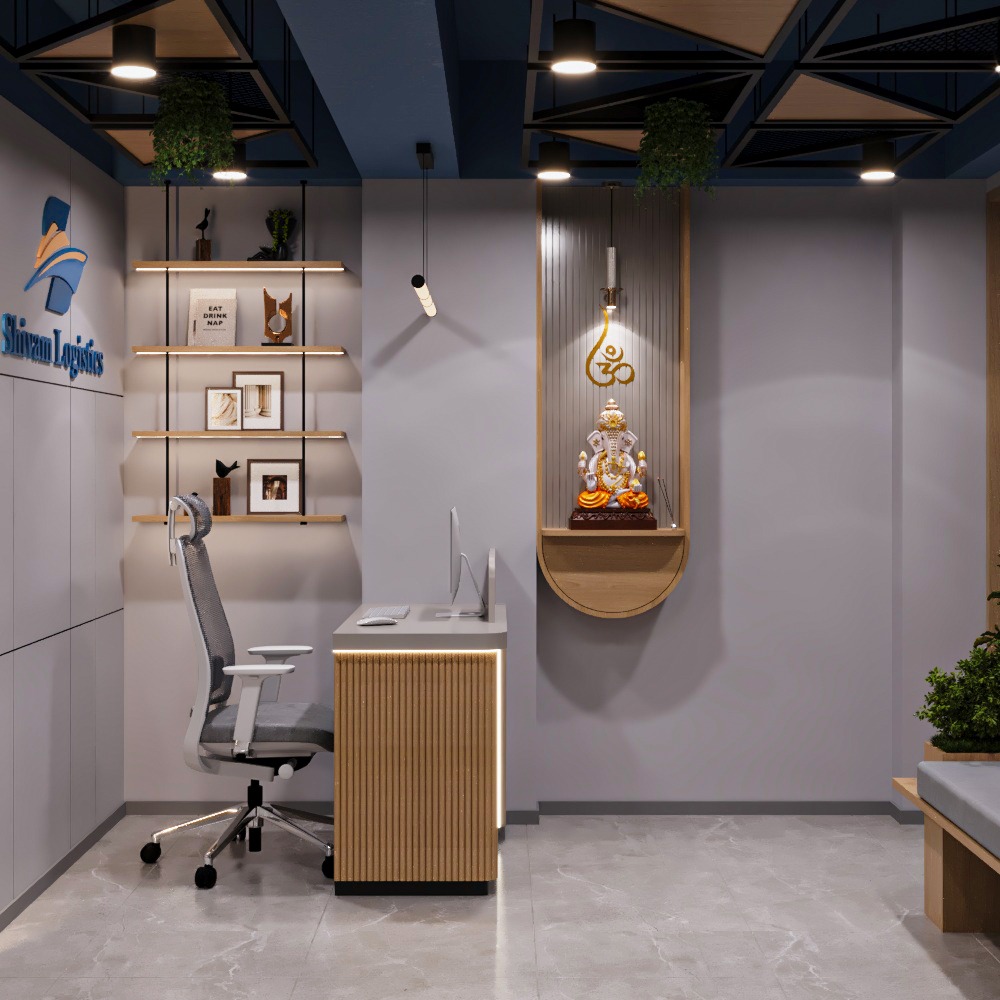
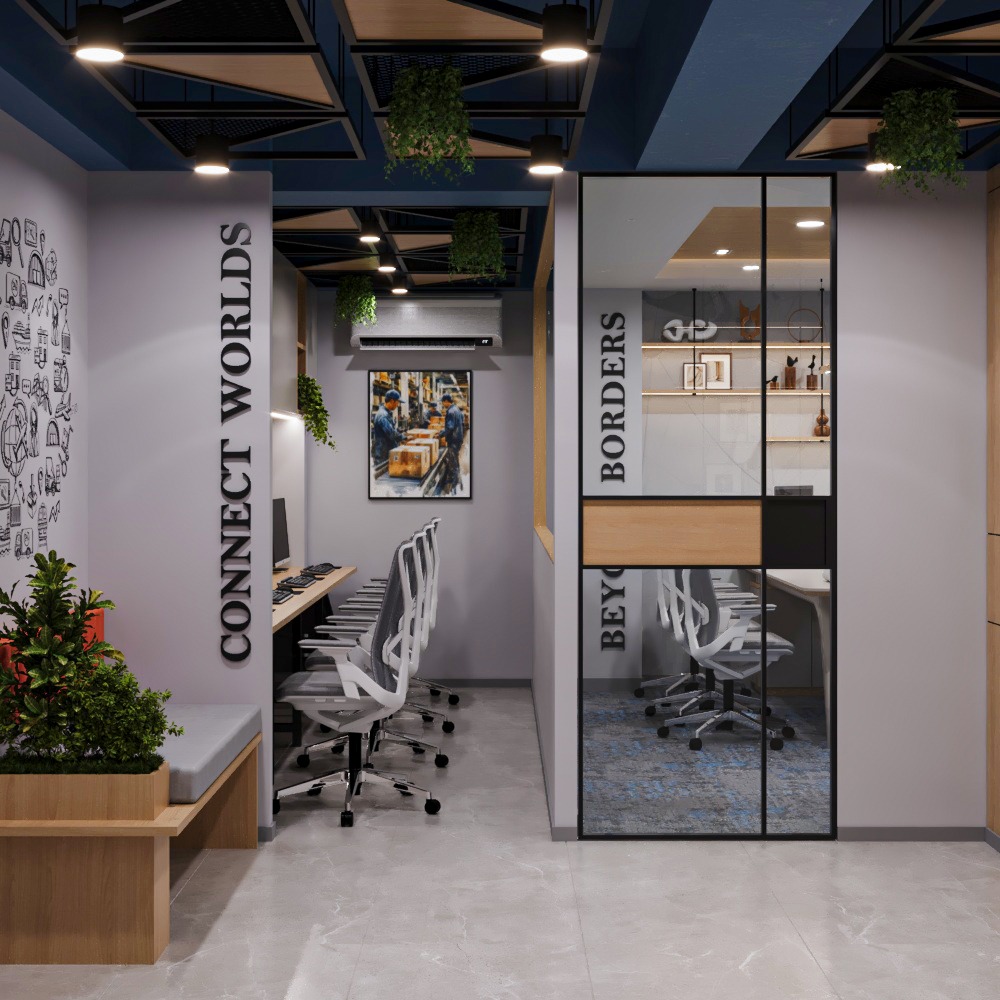
326 sq ft compact office design Ahmedabad by Saara Spaces

The Shivam Logistics office brings several distinct functions into a compact commercial space.

Its layout includes a reception area, linear workstations, and a private executive cabin. Glass partitions help maintain visual openness, while the geometric ceiling, wood accents, and logistics-inspired graphics create a recognisable corporate character.

This project illustrates a particularly useful lesson: a small office can have separate functional zones without every zone needing to feel visually isolated.

Explore the project: Shivam Logistics office interior, Jagatpur

What the Two Projects Teach Us

Planning consideration MK Construction — 283 sq ft Shivam Logistics — 326 sq ft
Main design emphasis Efficient workspace and professional identity Multiple functional zones within a compact office
Workstations Contemporary workstations Linear workstation arrangement
Visual character Warm wood and brand-inspired elements Warm wood, geometric ceiling, logistics-themed graphics
Distinctive lesson Align the workspace with the business identity Balance reception, workstations, and executive privacy

The published project descriptions do not specify desk counts, exact circulation dimensions, or seating capacities. Those details should not be assumed from the total floor area.

Compact Office Design Checklist Before You Start
Compact office layout with efficient workstations and circulation

Before approving your small office interior design in Ahmedabad, review these questions:

  • Daily operations: What work takes place here, and how many people use the space at the same time?
  • Visitor experience: How often do clients arrive, and where will they be received?
  • Circulation: Can people move comfortably when chairs are occupied and doors are open?
  • Privacy: Which conversations or activities require separation?
  • Workstations: Are desk sizes appropriate for the equipment and tasks?
  • Storage: Where will documents, supplies, and equipment be kept?
  • Lighting: Will daylight or artificial lighting create glare on screens?
  • Services: Have power, internet, HVAC, and lighting been coordinated with the layout?
  • Brand identity: Does the office look and feel appropriate for the business?
  • Future needs: Can the space adapt if the way the team works changes?

If several answers are unclear, it is worth resolving them during space planning rather than after installation.

Common Small Office Design Mistakes to Avoid

Choosing furniture before preparing a layout. A desk may look compact in a showroom but still interrupt circulation once chairs and storage are added.

Treating glass partitions as soundproof. Visual openness and acoustic privacy are different design requirements.

Overdesigning the ceiling. Decorative features should complement the room’s scale, lighting, and services rather than overwhelm them.

Ignoring everyday clutter. Without adequate storage, even a carefully designed office can quickly lose its sense of order.

Prioritising appearance over work habits. An impressive reception or executive desk has limited value if the rest of the team struggles to work comfortably.

The best compact office interiors balance visual identity with the practical details people encounter every day.

Frequently Asked Questions

How can I make a 300 sq ft office look spacious?

Start with a clear layout, appropriately sized furniture, organised storage, and a consistent material palette. Where suitable, transparent partitions can preserve visual openness. Avoid assuming that fewer walls alone will solve problems with movement, privacy, or clutter.

Can a 283–326 sq ft office include a private cabin?

It may be possible, depending on the room’s dimensions, entrances, required workstations, and circulation. The 326 sq ft Shivam Logistics office includes a private executive cabin, but its arrangement should not be treated as a universal template for every property.

What is the best layout for a small office in Ahmedabad?

There is no single best layout. Linear, clustered, and zoned arrangements each have advantages depending on the business’s workflow, equipment, visitor needs, and room geometry. A measured site plan and a clear operational brief are essential.

Are glass partitions suitable for compact offices?

They can help maintain visual openness and define work zones. However, acoustic privacy, safety glazing, door details, and maintenance requirements should be evaluated before selection.

Why choose turnkey execution for a compact office?

A turnkey design-and-execution approach can help coordinate interior planning, furniture, finishes, partitions, and on-site work. This is useful in compact spaces, where a small change in one element can affect several others.

Does Saara Spaces design compact commercial offices in Ahmedabad?

Saara Spaces has completed compact office interior projects including MK Construction in Bopal (283 sq ft) and Shivam Logistics in Jagatpur (326 sq ft). Both are presented as turnkey design-and-execution projects.

Planning a Compact Office in Ahmedabad?

A small office does not have to compromise on functionality or professional identity. The key is to design around the people, activities, and business needs the space must support.

From the 283 sq ft MK Construction office to the 326 sq ft Shivam Logistics workspace, Saara Spaces’ Ahmedabad projects show how thoughtful planning and coordinated execution can give a compact interior a clear purpose.

Have an office space that needs to work harder?

Explore Saara Spaces’ commercial interior design approach and get in touch to discuss your office layout, functional requirements, and design goals.

Saara Spaces — We Design | We Execute | We Deliver.
Luxury Interior Design in Ahmedabad: 12 Elements That Make a Home Feel Truly Premium

Luxury interior design is often misunderstood as the use of expensive marble, oversized furniture, glossy finishes or decorative excess.

A genuinely premium home feels different.

It is usually quieter, better proportioned, more considered and more personal.

The luxury comes from how the rooms connect, how materials meet, how lighting changes throughout the day, how storage disappears into the architecture and how every detail feels intentional rather than added later.

For homeowners exploring luxury interior design in Ahmedabad, this distinction matters.

A premium 4 BHK apartment, villa or bungalow should not feel like a collection of expensive individual elements. It should feel like one complete environment where layout, materials, lighting, furniture and lifestyle requirements have been resolved together.

At Saara Spaces, residential interiors are approached through both design and execution, with the aim of creating homes that balance aesthetics with everyday usability.

So what actually makes a home feel luxurious?

These are twelve elements that matter far more than simply choosing the most expensive finish.


1. Thoughtful Space Planning Comes Before Decoration

A luxury interior begins with the floor plan.

Before selecting upholstery, lighting or wall finishes, the space should answer basic questions properly:

  • How will people move through the home?
  • Where should furniture sit?
  • Which areas should remain visually open?
  • Where is privacy required?
  • How much storage does each room need?
  • Which spaces should connect naturally?
  • Where should the visual focus fall?

Poor planning cannot be corrected later with premium materials.

A living room may have beautiful furniture, but if the seating blocks circulation or feels out of proportion with the room, the space will never feel refined.

The same applies to bedrooms, kitchens and passage areas.

Luxury often comes from restraint and proportion.

A larger room does not need to be filled completely. Allowing breathing space around furniture can make the room feel calmer and more architectural.

In apartments, careful planning can also help create stronger visual connections between the living room, dining area and kitchen without making the home feel overly open or undefined.

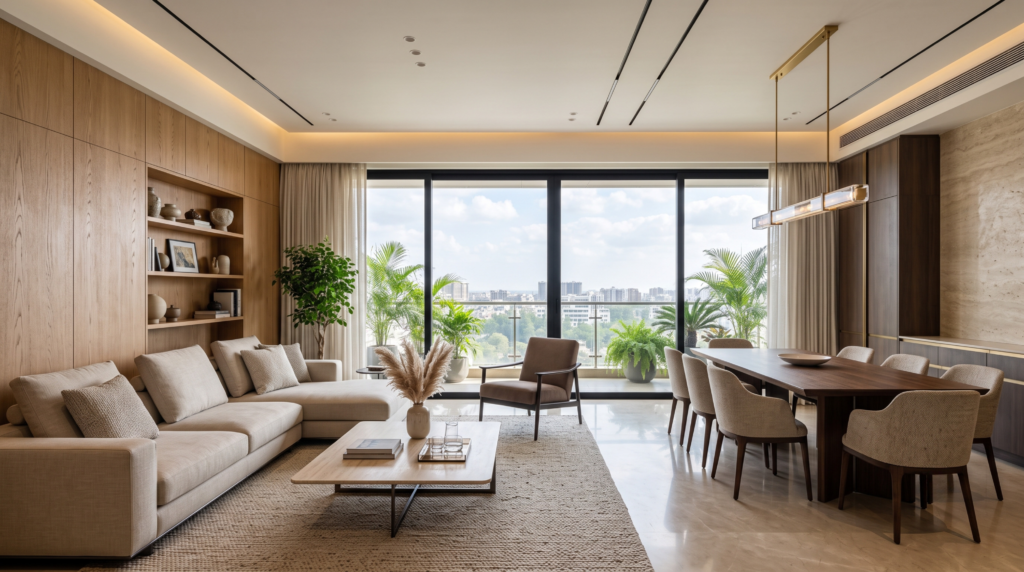
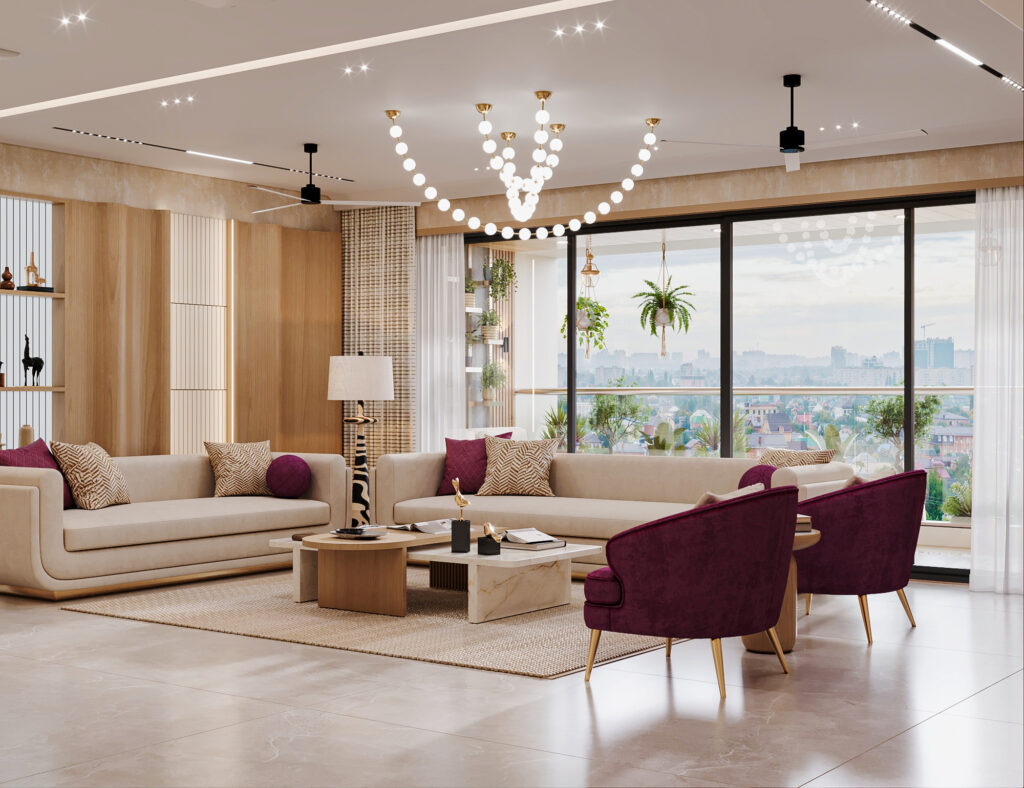
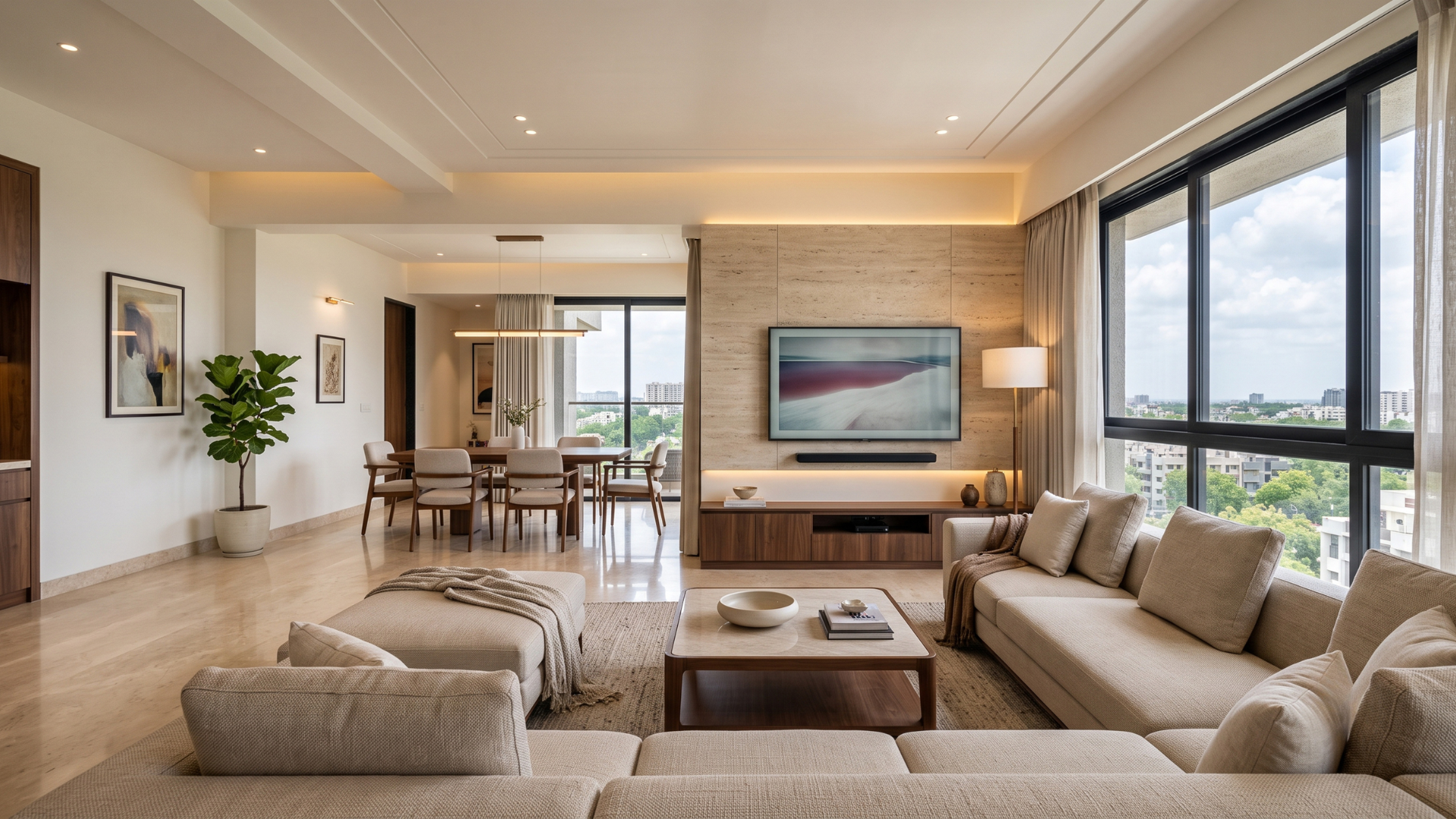
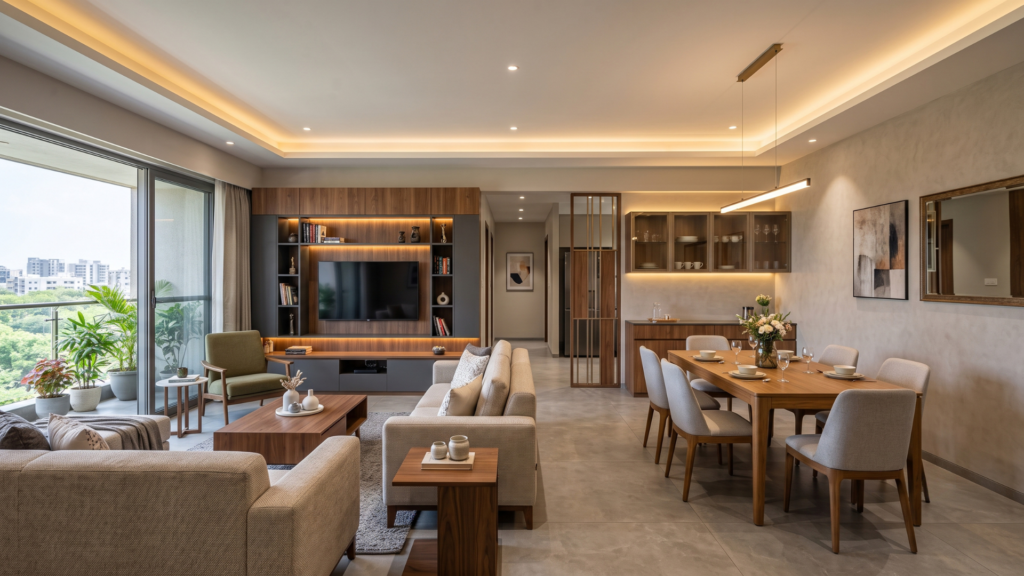
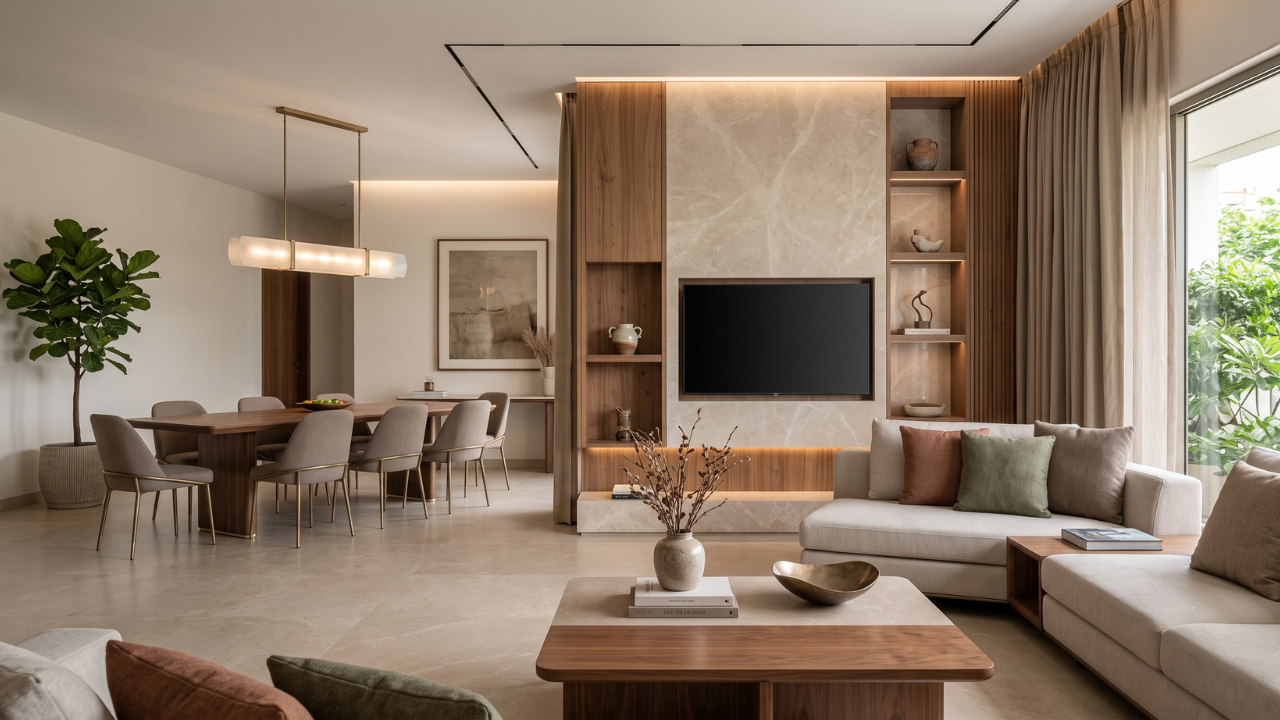
Luxury modern living room interior in Ahmedabad home


2. Bespoke Furniture Makes the Home Feel Designed, Not Furnished

One of the clearest differences between a generic interior and a bespoke interior is the relationship between furniture and architecture.

Ready-made furniture can work well in many homes, but premium interiors often require certain pieces to be designed specifically for the space.

This may include:

  • TV units
  • Feature storage walls
  • Wardrobes
  • Study units
  • Window seating
  • Dining storage
  • Display shelving
  • Bedroom headboards
  • Vanities
  • Bar or crockery units

Custom furniture helps solve awkward dimensions and creates visual continuity.

For example, a wall-to-wall television unit can be designed to integrate storage, display space, lighting and wiring into one composition rather than having separate furniture pieces competing visually.

Similarly, a custom wardrobe can respond to the actual storage habits of the homeowner instead of simply filling a wall.

The goal is not customisation for its own sake.

It is to make the home fit the people who live there.


3. Layered Lighting Creates Depth After Sunset

Many homes are planned mainly for daylight and become visually flat at night.

Luxury interiors behave differently.

Instead of relying on one bright ceiling light, premium spaces use layers of illumination.

These typically include ambient, task and accent lighting.

Ambient lighting establishes the general light level of the room.

Task lighting supports activities such as reading, cooking, dressing or working.

Accent lighting highlights artwork, textures, cabinetry, wall panels or architectural details.

When these layers are planned together, the atmosphere of a room can change without changing the interior itself.

A living room may feel bright and active during the evening and much softer later at night.

A bedroom can use concealed warm lighting to create a relaxed environment without depending on harsh overhead fixtures.

Lighting should therefore be considered during design development rather than treated as an electrical decision at the end of the project.

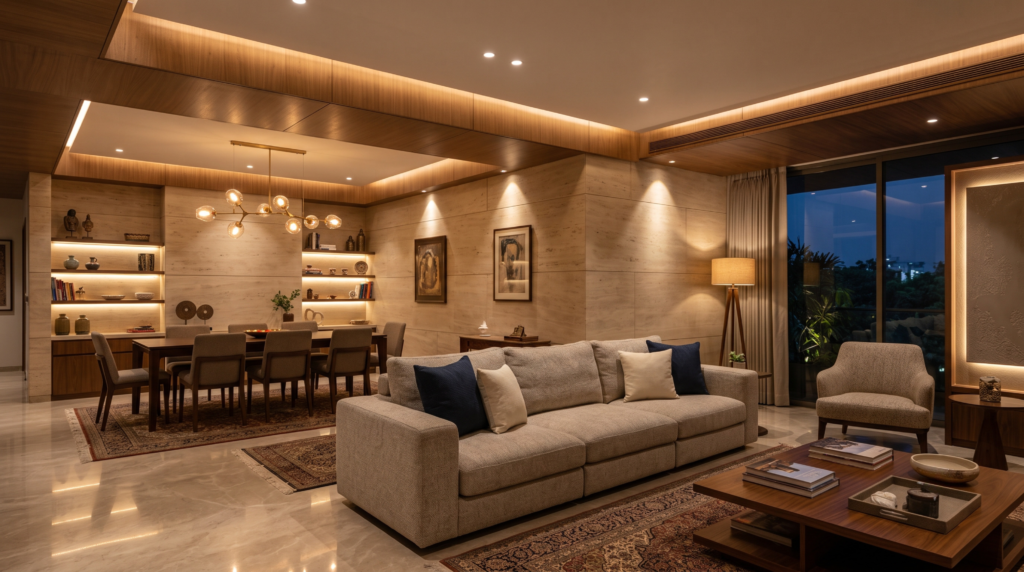
Layered ambient and accent lighting in luxury Ahmedabad interior


4. Premium Materials Work Best When They Are Used With Restraint

A premium material does not automatically create a premium interior.

How the material is used matters more.

Natural stone, wood veneer, textured finishes, glass, metal and high-quality fabrics can all contribute to a sophisticated home, but too many statement materials in one room can compete with each other.

Luxury spaces often work because the designer establishes a clear material hierarchy.

One surface leads.

Other surfaces support it.

For example, a living room may use a richly textured stone wall as the visual focus while keeping the flooring, furniture and adjacent walls calmer.

In another home, natural wood may become the defining material, supported by neutral upholstery and subtle metal detailing.

Transitions also matter.

The meeting point between stone and wood, the edge of a panel, the alignment between cabinetry and ceiling, or the gap around a door may seem small, but these details often determine whether an interior feels carefully executed.


5. A Strong Colour Palette Creates Continuity

Luxury interiors do not necessarily need dramatic colour.

Some of the most refined homes rely on a controlled palette of:

  • Warm whites
  • Taupe
  • Beige
  • Grey
  • Timber tones
  • Muted greens
  • Charcoal
  • Soft earthy shades

The sophistication comes from layering tones and textures rather than introducing many competing colours.

A consistent base palette also allows individual rooms to have their own identity while still feeling connected to the rest of the home.

For example, the living room may use warm neutrals and wood, while the master bedroom introduces slightly deeper fabric tones without abandoning the overall design language.

This helps prevent the common problem where each room feels like it belongs to a different house.


6. Statement Living and Dining Areas Should Feel Balanced, Not Overdone

The living and dining areas usually carry the strongest visual responsibility in a home.

They are frequently the first major spaces guests experience, but they are also used every day by the family.

A premium living room therefore needs both visual impact and comfort.

Important considerations include:

  • Seating proportions
  • Television position
  • Focal wall
  • Ceiling design
  • Lighting
  • Side tables
  • Artwork
  • Rugs
  • Curtains
  • Circulation
  • Relationship with the dining area

The most effective statement is often a single strong architectural idea rather than several decorative features competing at once.

A beautifully proportioned wall treatment, an elegant light fixture or a well-composed TV wall can give a room identity without filling every surface.

For more inspiration, explore the latest residential ideas on the Saara Spaces blog.

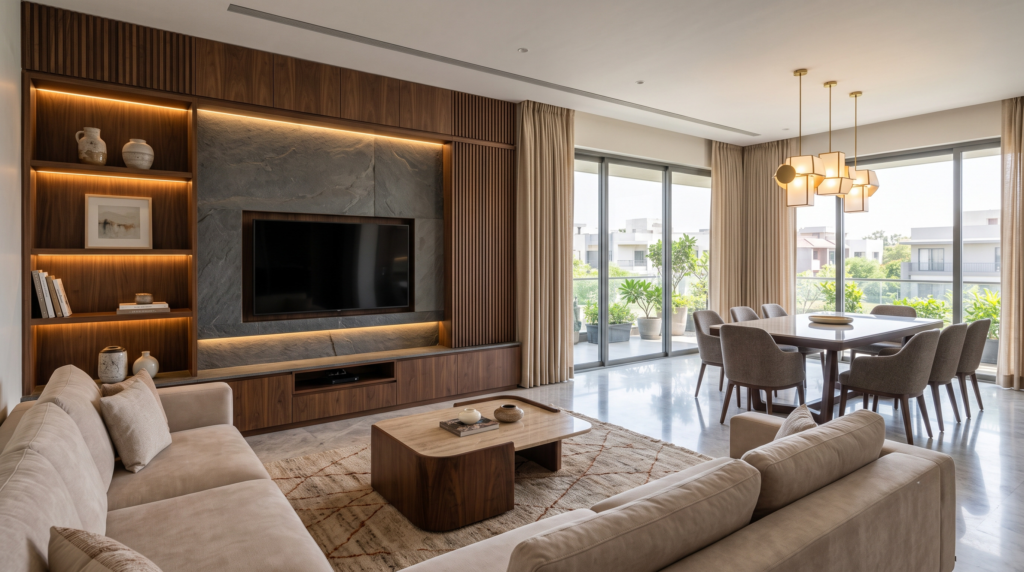
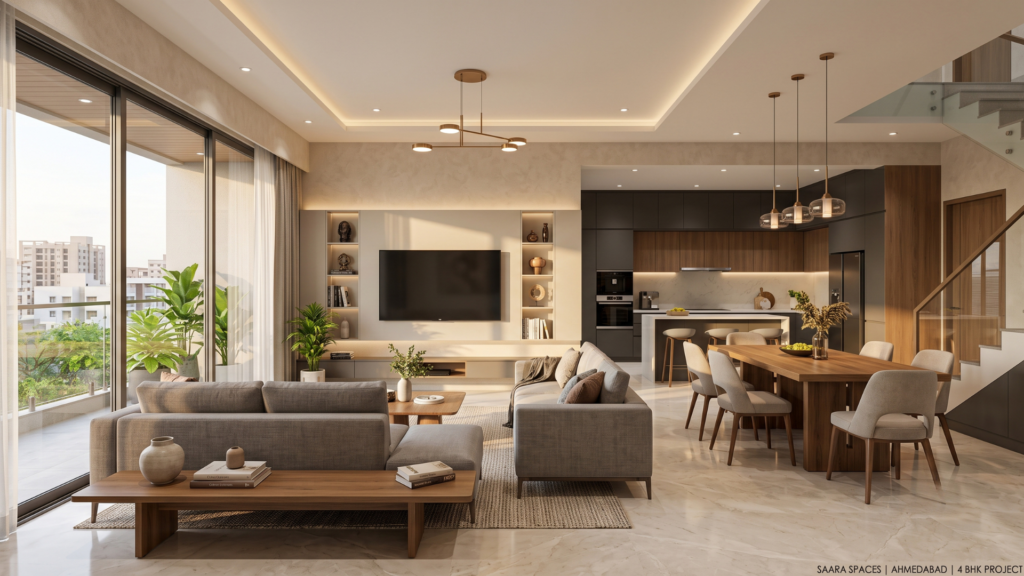
Premium living and dining room interior design in Ahmedabad


7. A Premium Kitchen Should Feel Connected to the Rest of the Home

The kitchen has shifted from being a purely utility-driven room to becoming an important part of the overall interior experience.

This is especially true in modern apartments where the kitchen may be visible directly from the dining or living area.

A premium kitchen therefore needs to balance:

  • Workflow
  • Storage
  • Appliance planning
  • Lighting
  • Cabinet proportions
  • Finish coordination
  • Countertop selection
  • Hardware
  • Visual simplicity

Good modular kitchen design starts with work zones.

The position of the refrigerator, sink, hob and preparation areas should support how the kitchen is actually used.

Storage should also be based on habits rather than simply creating as many cabinets as possible.

Tall units, drawers, overhead cabinets and pantry storage should each have a clear purpose.

Visually, kitchen finishes should relate to the rest of the home so the kitchen does not feel like a separate catalogue display.

For additional planning ideas, browse the Saara Spaces interior design blog.

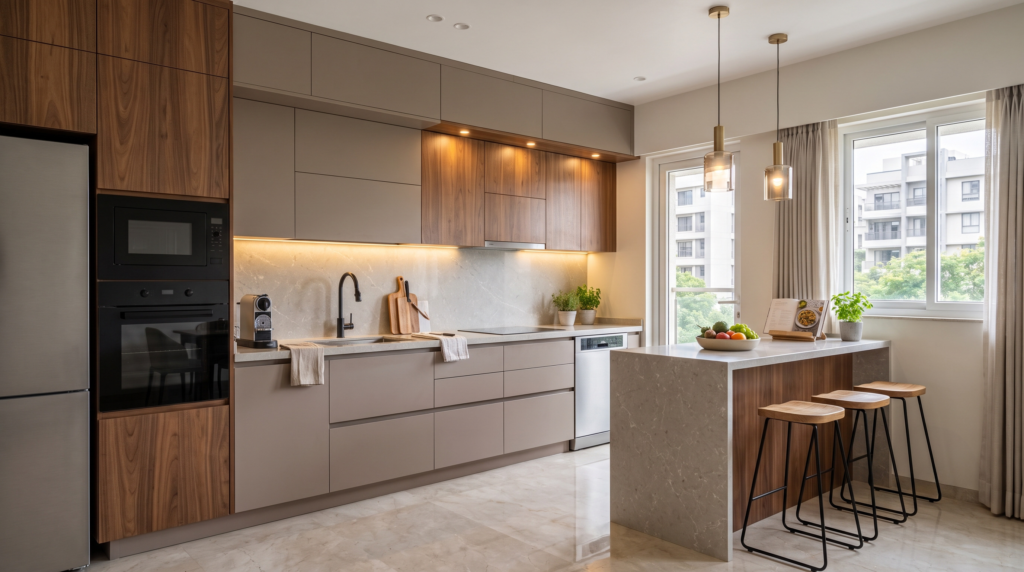
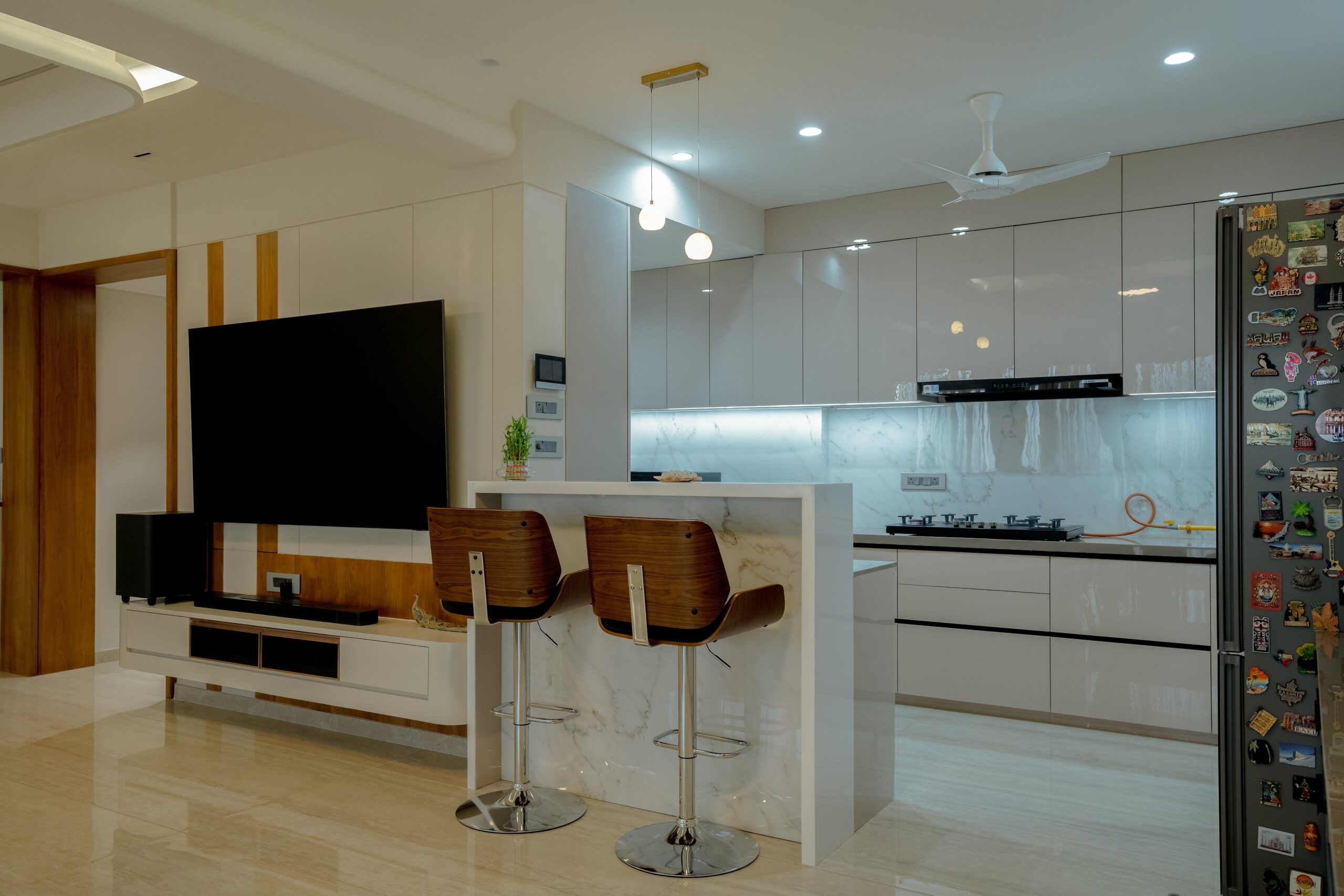
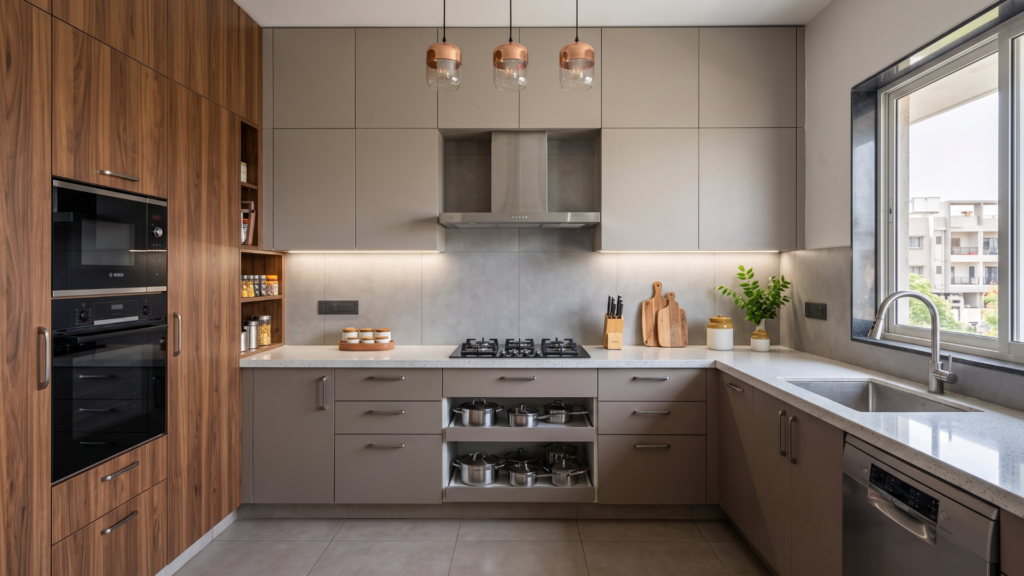
Modern luxury modular kitchen design in Ahmedabad home


8. Bedrooms Should Prioritise Calm Over Visual Drama

The bedroom has a different purpose from the living room.

It does not need to impress visitors.

It needs to support rest, storage and daily routines.

Luxury bedrooms often feel sophisticated because they avoid unnecessary visual noise.

Elements such as a custom headboard wall, integrated bedside lighting, well-planned wardrobes and soft textiles can create a stronger result than excessive decoration.

Storage design is particularly important.

Wardrobes should reflect actual requirements for:

  • Hanging
  • Folded clothes
  • Drawers
  • Accessories
  • Luggage
  • Seasonal storage

A well-designed wardrobe contributes as much to everyday luxury as the decorative part of the bedroom.

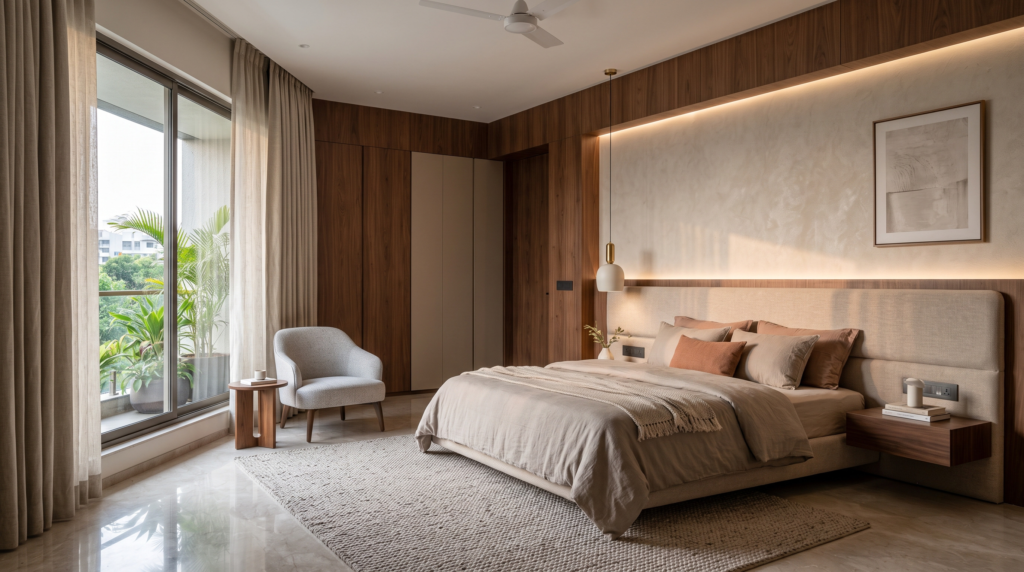
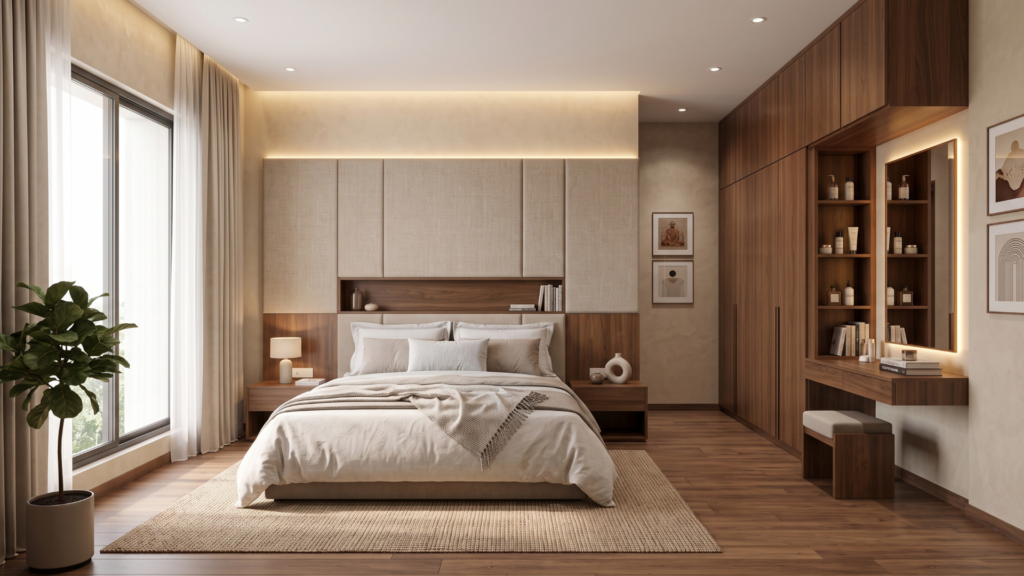
Luxury master bedroom interior in Ahmedabad residence


9. Ceiling and Wall Detailing Should Support the Architecture

False ceilings, wall mouldings, fluted panels and decorative finishes can add considerable depth to a room.

They can also make a home look unnecessarily busy when overused.

In a premium interior, detailing should normally have a reason.

A ceiling element may help:

  • Frame a seating area
  • Conceal services
  • Integrate lighting
  • Reinforce room geometry
  • Visually connect two spaces

Similarly, wall panelling can help create a focal point or introduce texture without requiring additional furniture.

The strongest detailing often becomes almost invisible because it feels like a natural part of the architecture.

For more design inspiration, visit the Saara Spaces blog.


10. Smart Technology Should Disappear Into the Design

Technology adds value to a premium home when it improves daily life without dominating the visual experience.

Depending on the homeowner’s requirements, integrated systems may include:

  • Lighting control
  • Curtains or blinds
  • Climate control
  • Entertainment systems
  • Access control
  • Security
  • Selected appliances

The key is early coordination.

If technology requirements are identified after furniture, ceiling and electrical layouts are finalised, the result may require visible wiring, additional switches or compromises.

When considered during design planning, these systems can feel like part of the home rather than an afterthought.

Luxury is often about reducing friction.

Being able to control lighting scenes or curtains easily can contribute more to the experience of a premium home than an unnecessary decorative feature.


11. Art, Decor and Personal Objects Prevent the Home From Feeling Like a Showroom

A perfectly coordinated interior can still feel impersonal.

The homes people remember usually contain something about the people who live there.

That may come through:

  • Art
  • Books
  • Travel objects
  • Photography
  • Sculptures
  • Heirloom furniture
  • Collections
  • Plants
  • Custom decor

A designer’s role is not necessarily to remove personality in favour of visual consistency.

It is to integrate that personality into the overall design.

The result should feel curated rather than staged.

This is particularly important in luxury interiors because there is a risk of relying too heavily on showroom styling.

Personalisation helps transform a polished interior into an actual home.


12. Consistency Across the Entire Home Is What Creates Real Luxury

A luxury home should not peak in the living room and then lose its design language elsewhere.

Consistency matters across:

  • Foyer
  • Living room
  • Dining area
  • Kitchen
  • Bedrooms
  • Wardrobes
  • Bathrooms
  • Passages
  • Utility areas

This does not mean every room needs the same materials.

It means that decisions should feel connected.

Door finishes, hardware tones, lighting temperatures, wood shades, ceiling language and general detailing should relate to each other.

When this happens, the house feels intentionally designed as one complete environment.

When it does not, even expensive individual rooms can feel disconnected.


Luxury Interior Design for Apartments, Villas and Bungalows in Ahmedabad

The principles of luxury interior design remain similar across property types, but the way they are applied changes.

Premium Apartments

Apartments often require particularly efficient space planning because the envelope of the home is fixed.

Furniture proportions, integrated storage and visual continuity become extremely important.

In larger apartments such as 4 BHK residences, designers can also create stronger zoning between formal and private areas.

Saara Spaces showcases residential projects including large-format apartment interiors within its portfolio.

You can explore more completed work in the Saara Spaces projects section.

Villas and Bungalows

Bungalows introduce a different level of spatial coordination.

Larger room sizes, multiple floors, staircases, double-height spaces, larger windows and outdoor relationships may all influence the design direction.

The challenge is not simply filling more area.

Large homes can feel empty or fragmented if the design lacks proportion and continuity.

A successful villa or bungalow interior requires consistency between rooms while still allowing each space to have its own character.

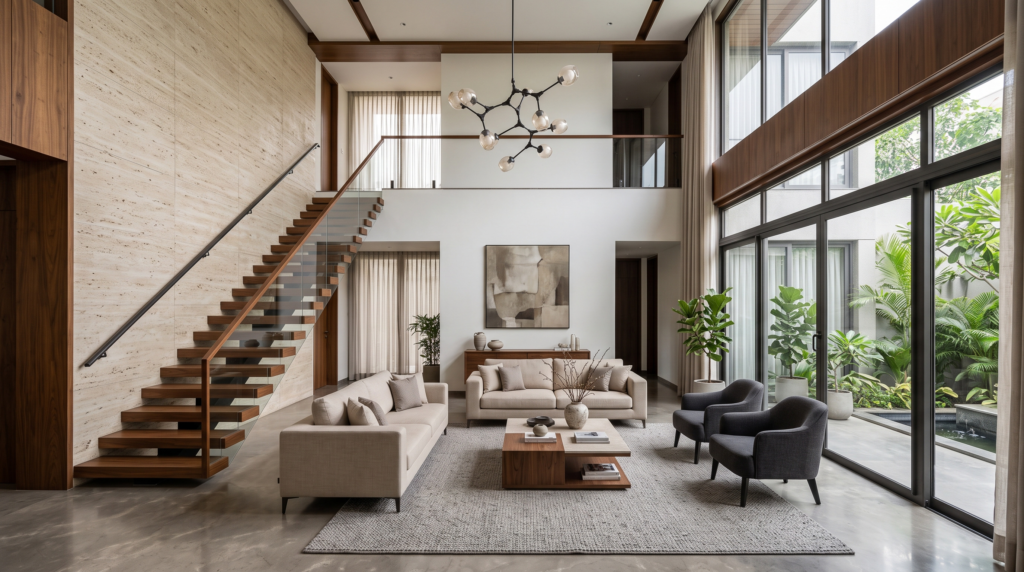
Luxury bungalow living room interior in Ahmedabad


What Homeowners Should Prepare Before Meeting an Interior Designer

The first design discussion becomes much more productive when homeowners arrive with a clear understanding of how they want to live.

You do not need to know the final design.

That is what the design process is for.

But it helps to prepare several things in advance.

Floor Plan

Share the latest available architectural or builder plan.

Family Requirements

Explain who will live in the home and how individual rooms will be used.

Storage Requirements

Think about wardrobes, kitchen storage, books, documents, luggage and utility needs.

Existing Furniture

Identify pieces that must remain.

Appliances

Kitchen and home appliances can influence cabinetry and electrical planning.

Lifestyle

Consider entertaining, working from home, children, elderly family members, hobbies and daily routines.

Design References

Reference images are useful for communicating preferences, even if you do not want to replicate them.

Smart-Home Requirements

If automation is important, discuss it early.

Priorities

Identify the features that matter most to you rather than giving equal importance to every decorative element.

A thoughtful initial brief helps the designer create a home that responds to your lifestyle instead of simply following current trends.


How Real Project Experience Improves Luxury Residential Design

Residential interiors involve hundreds of connected decisions.

A layout affects furniture.

Furniture affects electrical points.

Electrical planning affects ceiling design.

Material selection affects joinery detailing.

Appliance selection affects cabinetry.

Lighting affects how every finish eventually looks.

This is why design and execution experience matter.

Saara Spaces works across design and execution for residential and commercial environments.

For readers who want to understand how design and execution can be coordinated through one process, see the detailed guide on Interior Turnkey Solutions in Ahmedabad.

The advantage of an integrated approach is that design decisions can be considered alongside how they will actually be implemented on site.


Frequently Asked Questions About Luxury Interior Design in Ahmedabad

What makes an interior design feel luxurious?

Luxury usually comes from good proportions, thoughtful planning, high-quality detailing, appropriate materials, layered lighting, customisation and visual consistency rather than simply using expensive products.

What is modern luxury interior design?

Modern luxury interiors combine contemporary forms with refined materials, tailored furniture, subtle detailing and comfortable everyday functionality. They are generally less decorative than traditional luxury interiors.

How do I choose a luxury interior designer in Ahmedabad?

Review the designer’s completed projects, design language, ability to handle execution, level of detailing, project process and experience with properties similar to yours.

Where possible, look at completed spaces rather than relying only on renders.

You can explore current work through the Saara Spaces portfolio.

Can luxury interiors still be minimal?

Yes.

Minimal luxury can be highly sophisticated.

It relies on proportion, materials, craftsmanship, lighting and carefully selected furniture rather than excessive decoration.

Are custom interiors useful for 4 BHK homes and villas?

They can be particularly useful because larger homes often have more storage, furniture and functional requirements.

Bespoke elements can help maintain continuity while responding to specific dimensions and family needs.

What materials work well in premium interiors?

There is no single correct material palette.

Natural wood, veneer, stone, glass, metal, textured surfaces and high-quality fabrics can all work well when chosen according to the design concept and intended use.

Why is lighting important in luxury home interiors?

Lighting influences atmosphere, visual depth and how materials appear.

A combination of ambient, task and accent lighting generally creates a more flexible and refined environment than relying only on general ceiling lights.

When should smart-home systems be planned?

Ideally, technology requirements should be discussed early because they may affect electrical planning, ceilings, curtains, furniture and networking.


Planning a Premium Home Interior in Ahmedabad?

A beautiful home does not need to prove that it is luxurious.

The strongest interiors usually reveal their quality gradually through proportion, comfort, materials, lighting, craftsmanship and the way the space responds to everyday life.

Whether you are planning a premium apartment, 4 BHK residence, villa or bungalow in Ahmedabad, the objective should be to create a home that reflects your lifestyle rather than simply reproduce a trend.

If you are planning a new residential interior project, explore the Saara Spaces portfolio or contact Saara Spaces to discuss your requirements.

Office Interior Design Ahmedabad: Inside the Shivam Logistics Workspace

Designing a corporate office in a compact footprint requires more than selecting attractive furniture and finishes. Every part of the space has to work together — circulation, workstations, privacy, branding and visual openness all need to be considered without making the office feel crowded.

For Shivam Logistics in Jagatpur, Ahmedabad, Saara Spaces transformed a compact 326 sq ft footprint into a functional corporate workspace through a turnkey interior design and execution approach.

The project brings together an impactful reception area, streamlined linear workstations and a private executive cabin within a carefully planned layout. Transparent glass partitions maintain visual openness, while geometric ceiling design, warm wood accents and bespoke wall graphics give the workspace a contemporary corporate identity.

Project: Shivam Logistics
Location: Jagatpur, Ahmedabad
Area: 326 sq ft
Scope: Turnkey interior design and execution


The Challenge of Designing a Compact Corporate Workspace

Office Interior Design Ahmedabad: Inside the Shivam Logistics Workspace

A smaller office does not necessarily mean that the business needs fewer functional zones.

Even within a compact corporate workspace, the interior may need to accommodate:

  • A professional reception area
  • Dedicated workstations
  • A private executive cabin
  • Clear movement between different areas
  • Visual separation between spaces
  • Corporate branding
  • An organised working environment

The challenge is to accommodate these requirements without making the office feel visually heavy.

For the Shivam Logistics office project, the design approach focused on using the available footprint efficiently while maintaining a clean and professional appearance.

Rather than treating the limited area simply as a restriction, the layout was planned around the functions that the workspace needed to accommodate.

This is an important consideration for businesses planning compact office interior design in Ahmedabad. The objective should not simply be to fit more furniture into a smaller area. Each element needs to contribute to the way the workspace functions.


Creating a Functional Office Layout Within 326 Sq Ft

At just 326 sq ft, the Shivam Logistics workspace required careful space planning.

The layout brings together three important areas:

  • Reception
  • Linear workstations
  • Executive cabin

Each zone has a different purpose, so the design needed to create functional separation without making the overall office feel closed.

The reception area establishes the entry experience, while the linear workstation arrangement makes efficient use of the available footprint.

The private executive cabin creates a separate enclosed area for focused work and meetings while remaining visually connected to the rest of the workspace.

This type of planning demonstrates why compact offices benefit from considering circulation and functional requirements before finalising furniture and finishes.

For businesses searching for an office interior designer in Ahmedabad, the planning stage should consider how the available area will function, not only how the finished office will look.


Using Transparent Partitions to Maintain Visual Openness

Glass partition and executive cabin in Shivam Logistics office

One of the defining design decisions in the Shivam Logistics office is the use of transparent glass partitions.

In a compact workspace, solid partitions can visually divide the office into smaller sections. Glass allows the spaces to remain connected while still creating the required separation.

The executive cabin therefore gets its own defined zone without completely disconnecting it from the main workspace.

Transparent partitions also allow sightlines to continue across the office, helping the compact footprint feel more visually connected.

For a small office interior design in Ahmedabad, this type of approach can be useful when privacy and openness both need to be considered.


Linear Workstations for Efficient Space Planning

Linear workstations in Shivam Logistics office Ahmedabad

The workstation arrangement is another important part of the Shivam Logistics office design.

Linear workstations create a straightforward and organised working zone while making efficient use of the available floor area.

In a compact office, furniture placement can have a significant effect on circulation. A well-organised workstation layout can help define the working area without creating unnecessary visual barriers.

The linear arrangement also supports the overall clean character of the workspace.

Instead of introducing multiple large furniture elements, the design keeps the workstation zone structured and aligned with the compact footprint.

This is where office space planning in Ahmedabad becomes particularly relevant for smaller commercial projects. The available area has to be considered as a complete system rather than as individual furniture locations.


Giving the Reception Area a Strong Corporate Identity

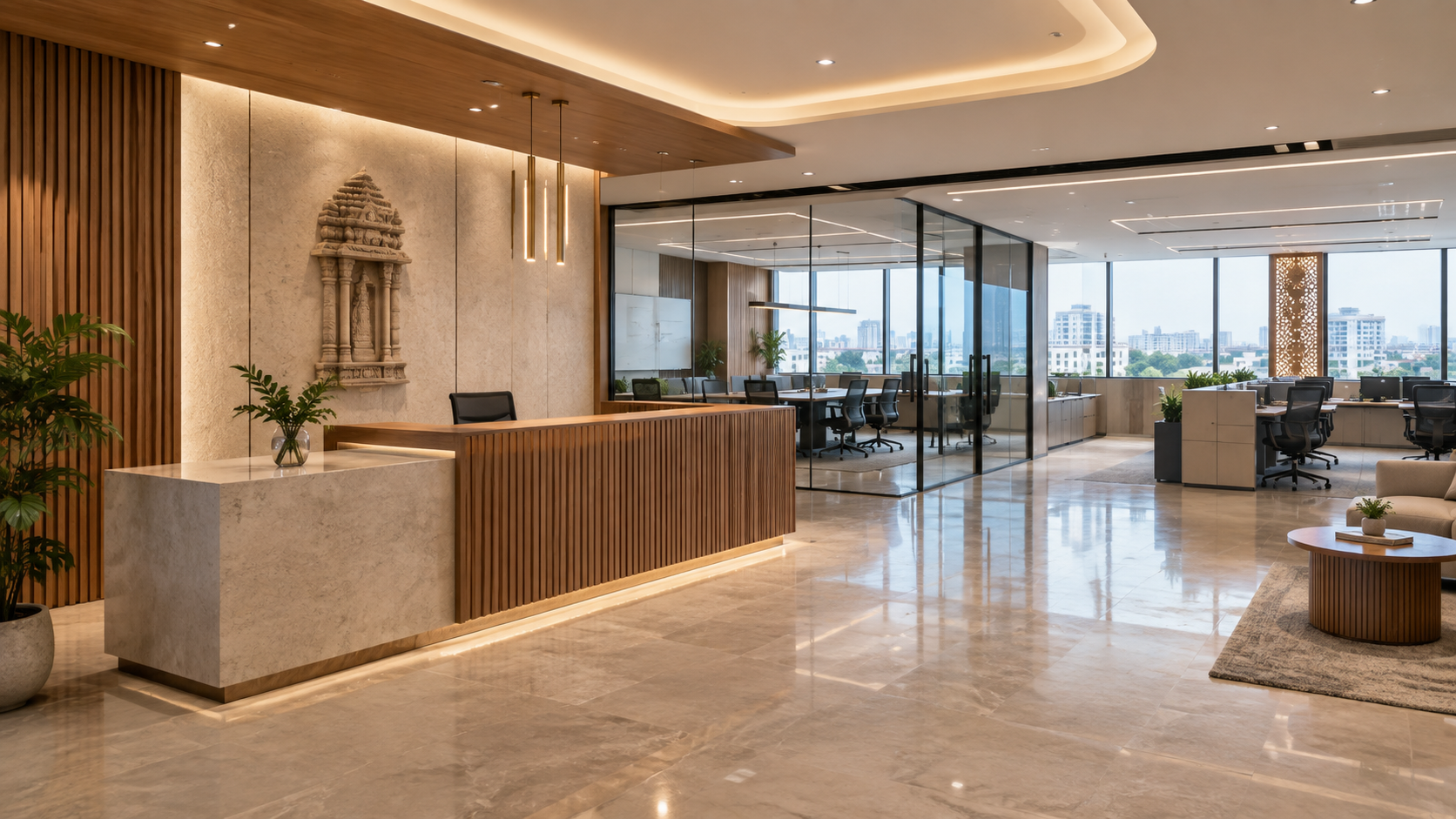
Shivam Logistics reception area in Jagatpur Ahmedabad

The reception is often the first part of an office that visitors experience.

In the Shivam Logistics workspace, the reception area was designed as an important part of the overall corporate interior rather than simply a place to receive visitors.

Its role is both functional and visual: it establishes the character of the office from the moment someone enters.

For a compact workspace, this becomes even more important because every visible element contributes to the perception of the overall space.

A well-defined reception can create a clear entry point without requiring a large amount of floor area.


Bringing the Logistics Brand Into the Interior

Logistics-inspired wall graphics in Shivam Logistics office

An office interior can communicate more than a particular design style. It can also reflect the identity of the business operating within the space.

For Shivam Logistics, bespoke wall graphics inspired by the client’s global logistics mission were incorporated into the workspace.

This gives the interior a stronger connection with the company rather than making the office feel like a generic commercial environment.

Brand-inspired graphics can be particularly useful in compact offices because walls and vertical surfaces can communicate identity without requiring additional floor space.

In this project, the branding elements work alongside the furniture, partitions and architectural details to create a more cohesive corporate environment.


Geometric Ceiling Design Adds Visual Interest

Geometric ceiling design in Shivam Logistics office Ahmedabad

When floor area is limited, the ceiling can become another opportunity to introduce visual character.

The Shivam Logistics office incorporates a geometric ceiling design that adds a distinctive architectural element to the workspace.

The ceiling treatment works as part of the overall interior composition rather than competing with the workstation and reception areas.

In a compact corporate office, details such as ceiling geometry can help create visual interest without occupying additional usable floor space.

This is one reason a complete corporate office interior design in Ahmedabad approach needs to consider the entire three-dimensional environment — floor, walls and ceiling — rather than focusing only on furniture.


Warm Wood Accents Balance the Corporate Look

A purely functional corporate interior can sometimes feel visually rigid.

Warm wood accents introduce another layer into the Shivam Logistics workspace and help balance the contemporary corporate character.

The wood elements work with the architectural environment and add warmth without taking attention away from the functional areas of the office.

For compact workspaces, material selection is especially important because every visible finish contributes to the overall atmosphere.

Instead of adding excessive decorative elements, carefully selected materials can give the space character while maintaining a clean visual language.


Why Turnkey Execution Matters in a Compact Office

Compact corporate workspace designed by Saara Spaces in Ahmedabad

Designing a compact office is only one part of the process. The design also needs to translate into the physical workspace through coordinated execution.

The Shivam Logistics project was delivered through a turnkey interior design and execution approach, bringing the design and execution process together.

This approach is particularly relevant for businesses that want one coordinated process for developing their workspace.

For a compact project, coordination between planning, design elements, furniture, partitions, finishes and execution can be important because there is less room for inefficient use of space.

A turnkey approach can therefore simplify coordination between the design intent and the final built environment.

Businesses exploring turnkey office interior design in Ahmedabad can consider how the design and execution process will be managed together before starting a project.


Designing Small Offices Without Making Them Feel Small

The Shivam Logistics project demonstrates that a compact footprint does not automatically have to translate into a visually crowded workspace.

The key is the relationship between different elements.

The reception establishes the entry point. Linear workstations organise the main working zone. Transparent partitions create separation without completely blocking visual connections. The executive cabin provides a defined private area. Branding adds company identity, while the ceiling and warm wood details introduce architectural character.

Together, these elements create a workspace where each part has a defined role.

This is the core idea behind effective compact office interior design: the goal is not simply to use every available square foot. It is to make each part of the space work appropriately.

For an office interior designer in Ahmedabad, projects with limited footprints require particular attention to scale, circulation, visibility and functional zoning.


What This Shivam Logistics Project Shows About Office Interior Design in Ahmedabad

The Shivam Logistics workspace provides a practical example of how a compact corporate office can be approached through integrated design and execution.

Several principles stand out from the project:

1. Plan around functions first

The reception, workstations and executive cabin each serve different purposes. Defining those requirements helps establish the overall layout.

2. Use partitions strategically

Transparent glass can create functional separation while preserving visual connection across a compact office.

3. Keep workstation planning efficient

Linear workstations can create an organised working zone without unnecessarily dividing the available footprint.

4. Use walls for brand communication

Bespoke graphics can introduce company identity without consuming valuable floor space.

5. Treat the ceiling as part of the design

A geometric ceiling can introduce visual character while keeping the floor plan functional.

6. Balance corporate elements with warmth

Warm wood accents can soften a contemporary office environment and create a more balanced material palette.

7. Coordinate design and execution

A turnkey process connects the design intent with the actual execution of the workspace.

These principles are not a universal formula for every office. Each workplace has different spatial requirements, business functions and brand considerations. The Shivam Logistics project shows how these decisions can come together within one specific 326 sq ft workspace.


Another Compact Office Project by Saara Spaces

The approach to compact workspace planning can also be seen in the MK Construction office project in Bopal, Ahmedabad.

The project covers 283 sq ft and combines smart space planning, contemporary workstations, warm wood accents and brand-inspired elements through a turnkey interior design approach.

Looking at both projects together shows that compact office interiors can be approached according to the specific requirements and identity of each business rather than following a single fixed design formula.


Planning a Compact Office Interior in Ahmedabad?

Planning a small office is not only about deciding where desks should go.

The process begins with understanding the available footprint, the functions the business needs, the desired level of privacy, the visitor experience and the visual identity the workspace should communicate.

Saara Spaces approaches interior design and build projects by combining design planning with execution. Its portfolio includes workspaces alongside residential, hospitality and retail projects.

If you are planning a new office, workspace or commercial interior in Ahmedabad, you can explore the Shivam Logistics project for a closer look at this compact workspace approach.


Frequently Asked Questions

How much area was the Shivam Logistics office?

The Shivam Logistics project covered 326 sq ft in Jagatpur, Ahmedabad.

Where is the Shivam Logistics office located?

The project is located in Jagatpur, Ahmedabad.

Who designed and executed the Shivam Logistics office?

Saara Spaces acted as the turnkey interior design and execution partner for the project.

How were partitions used in the Shivam Logistics office?

Transparent glass partitions were used to create separation while maintaining visual openness across the compact workspace.

What workspaces were included in the project?

The workspace includes an impactful reception area, linear workstations and a private executive cabin.

How was the company’s identity incorporated into the office?

Bespoke wall graphics inspired by the client’s global logistics mission were incorporated into the workspace.

Can a compact office still have a professional corporate design?

The Shivam Logistics project demonstrates how careful space planning, workstation placement, transparent partitions, branding and architectural details can create a complete corporate workspace within a compact footprint.

Why consider a turnkey interior design approach for an office?

A turnkey approach brings design and execution together under one coordinated process, which can simplify coordination for businesses planning a new or renovated workspace.


Build a Better Workspace With Saara Spaces

A well-designed office does not depend only on the size of the space.

It depends on how effectively the available area is planned, how different functions are connected and how the interior reflects the identity of the business.

The Shivam Logistics project in Jagatpur, Ahmedabad is an example of how a 326 sq ft footprint can be organised into a functional corporate workspace through thoughtful planning and integrated design execution.

If you are planning an office, workspace or commercial interior in Ahmedabad, explore Saara Spaces and get in touch with the team to discuss your requirements.

Plan your next workspace with Saara Spaces.

Modular Kitchen Cost in Ahmedabad 2026: Complete Price, Layout & Quotation Guide

If you are planning a new home, renovating your kitchen or moving into a newly purchased apartment in Ahmedabad, one of the first questions you will probably ask is:

How much does a modular kitchen cost in Ahmedabad?

The short answer is: there is no single fixed price.

Two kitchens with similar floor areas can have very different budgets because the final cost depends on the layout, cabinet configuration, carcass material, shutter finish, countertop, hardware, storage accessories, appliances, electrical and plumbing changes, installation and the exact scope included in the quotation.

The ranges in this guide are indicative 2026 Ahmedabad market references compiled from publicly available pricing information. Actual project costs vary based on measurements, materials, hardware, finishes, accessories, site conditions and quotation scope. These figures should not be treated as Saara Spaces pricing.

That is why comparing only the final number can be misleading.

A better question is:

“What exactly am I getting for the quoted amount?”

This guide explains how modular kitchen pricing works in Ahmedabad, what affects the budget, how different layouts influence cost and, most importantly, how to compare two kitchen quotations without comparing two completely different scopes.

What Is the Modular Kitchen Cost in Ahmedabad in 2026?

For initial budget planning, a modular kitchen in Ahmedabad can broadly fall into different investment levels depending on its size, layout, materials, hardware and scope.

Kitchen level Broad market reference Usually suitable for
Basic / Essential ₹1.5 lakh–₹2.5 lakh+ Compact apartments and practical kitchens
Mid-range ₹2.5 lakh–₹4.5 lakh+ Many upgraded apartment kitchens
Premium ₹4.5 lakh–₹6 lakh+ Larger kitchens and higher-grade finishes
Luxury / Bespoke ₹6 lakh–₹8 lakh+ Villas, bungalows and highly customised kitchens

Important: these are indicative market references, not Saara Spaces pricing.

Actual project pricing can move significantly outside these bands depending on cabinet configuration, materials, hardware, accessories, countertop, appliances and civil/electrical requirements.

The most useful way to understand the budget is therefore to break the kitchen into its individual components.

Why Do Modular Kitchen Prices Vary So Much?

The biggest mistake homeowners make is assuming that kitchen pricing is mainly about the size of the room.

It isn’t.

The cost is influenced by several interconnected decisions.

1. Kitchen Layout

A straight kitchen with one cabinet run generally requires fewer cabinets and accessories than a U-shaped or parallel kitchen.

2. Cabinet Configuration

A quotation with only base and wall cabinets can look much cheaper than one that includes lofts, tall pantry units, appliance housing and additional storage.

3. Carcass Material

The material used for the internal cabinet structure affects durability, moisture resistance and price.

4. Shutter Finish

Laminate, acrylic, PU, glass and other finishes sit at different price levels and create different maintenance requirements.

5. Hardware

Hinges and drawer systems can range from basic functional hardware to premium soft-close and full-extension systems.

6. Accessories

Magic corners, bottle pull-outs, tandem drawers, pantry systems and dustbin units can add considerably to the final cost.

7. Countertop

Granite, quartz and other countertop choices can materially change the budget.

8. Site Work

Plumbing, electrical modifications, backsplash work, civil changes and installation requirements may or may not be included.

This is why two quotations for a similar kitchen can look completely different.

Modular Kitchen Cost Per Sq. Ft. in Ahmedabad

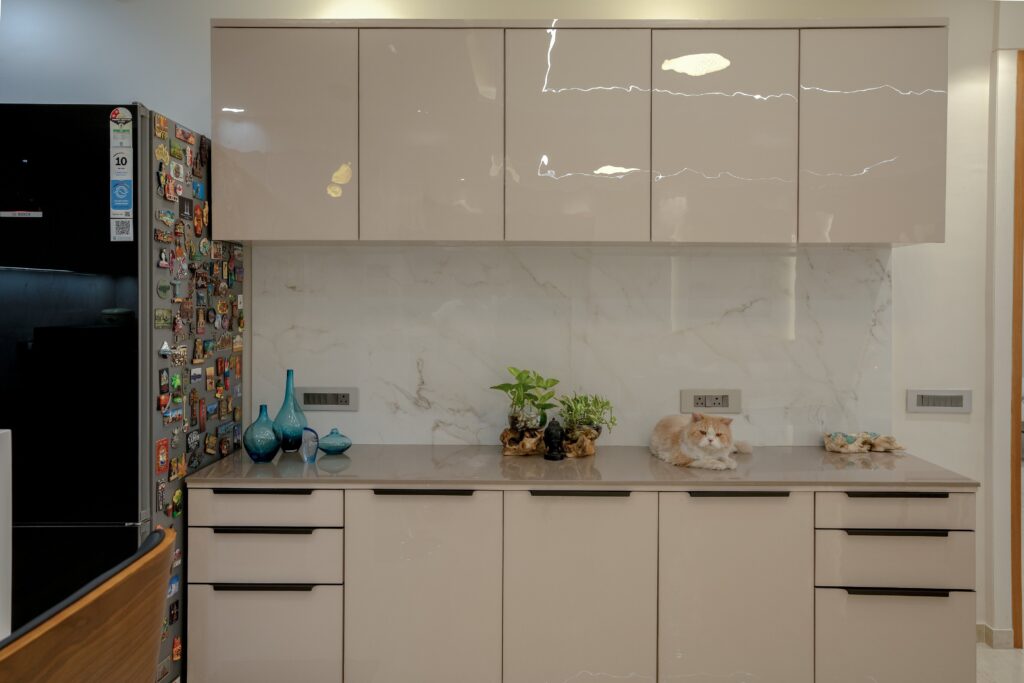
Modular kitchen storage cabinets and drawers in Ahmedabad home
Well-planned modular kitchen storage with overhead cabinets, base units and drawers.

“Cost per sq. ft.” sounds simple, but homeowners should be careful with this number.

What exactly is being measured?

Some estimates calculate cabinet area. Others use running feet. Some suppliers discuss only cabinetry while others include additional components in their package.

Current Ahmedabad market estimates vary substantially depending on the measurement method, materials and scope being included.

That means a per-square-foot figure should never be considered a complete quotation by itself.

Before comparing a per-sq.-ft. price, ask:

  • Is it cabinet area or floor area?
  • Are wall cabinets included?
  • Are lofts included?
  • Is a tall pantry unit included?
  • Is the countertop included?
  • Is hardware included?
  • Are accessories included?
  • Is installation included?
  • Is GST included?
  • Are electrical and plumbing changes included?

If these questions aren’t answered, the per-square-foot figure is not enough to make a purchasing decision.

If you are comparing complete interior quotations rather than only the kitchen component, read our detailed guide on how to compare interior design quotations in Ahmedabad before signing a contract.

Modular Kitchen Cost by Layout in Ahmedabad

Layout is one of the easiest ways to understand why kitchen quotations differ.

Straight Kitchen

A straight kitchen keeps the working area along one wall.

It is commonly suitable for compact apartments where floor space is limited.

Because the configuration is relatively straightforward, the overall investment can be lower than more complex layouts.

The final cost still depends on cabinet length, wall units, finish, hardware and storage requirements.

Best suited for: compact kitchens, studio apartments and smaller homes.

L-Shaped Modular Kitchen

An L-shaped kitchen uses two adjoining walls.

It is one of the most practical configurations for many apartment homes because it provides a good balance between countertop space, movement and storage.

Current Ahmedabad market guides commonly place many L-shaped configurations in the approximate ₹2.4 lakh–₹4.2 lakh range, although actual quotations vary with specifications.

The corner area deserves particular attention.

A basic corner cabinet may cost less, while a specialised corner storage mechanism can improve accessibility but increase the budget.

Best suited for: medium-sized apartments and family kitchens.

Parallel Kitchen

A parallel kitchen places cabinets and work areas on two opposing sides.

This can provide excellent workflow and storage, but it generally involves more cabinetry and hardware.

Current market guides place many parallel-kitchen configurations around the ₹2.9 lakh–₹5 lakh range, depending on size and specifications.

The most important consideration isn’t simply price.

You need enough clear movement space between the two sides.

Best suited for: longer kitchens where two-sided planning is practical.

U-Shaped Kitchen

A U-shaped kitchen uses three sides and can provide substantial storage and countertop area.

It is more commonly considered for larger homes, spacious apartments, villas and bungalow projects.

Because cabinet quantity, corner solutions and countertop area increase, the budget can rise significantly.

Some current Ahmedabad market estimates place U-shaped kitchens around ₹3.5 lakh–₹6.2 lakh for typical configurations.

Best suited for: larger kitchens where storage and workspace are priorities.

Kitchen With Island

An island can add preparation space, seating and visual impact.

But it isn’t automatically useful in every kitchen.

An island can require:

  • Additional cabinetry
  • Countertop material
  • Electrical planning
  • Lighting
  • Circulation space
  • Seating clearance
  • Additional installation

The correct question isn’t:

“Does an island look premium?”

It is:

“Does the kitchen have enough space for an island without damaging the workflow?”

What Materials Affect Modular Kitchen Cost?

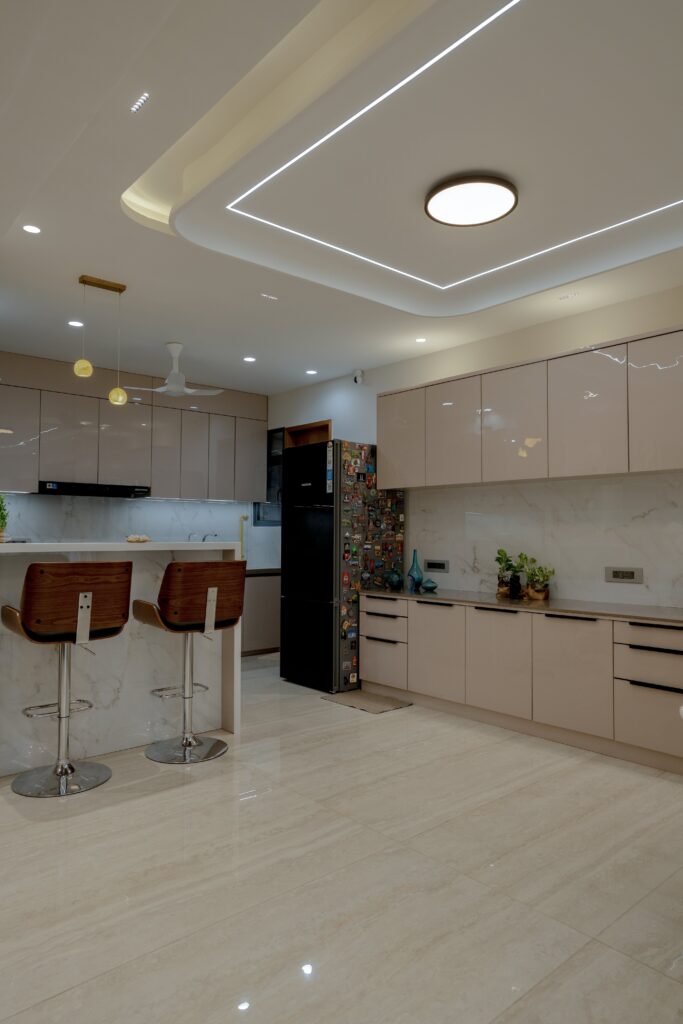
Glossy modular kitchen cabinets and countertop in Ahmedabad home
Cabinet finishes, storage design, countertop selection and hardware can significantly influence the final kitchen budget.

The internal structure and external appearance of a kitchen serve different purposes.

A good kitchen specification should therefore consider both.

Carcass / Internal Structure

The carcass forms the main cabinet structure.

Commonly discussed options include:

  • MR plywood
  • BWR plywood
  • HDHMR
  • Other engineered-board configurations

For kitchens exposed to moisture and frequent use, the material specification deserves careful attention.

Do not choose a carcass simply because the quotation says “plywood”.

Ask for:

Brand + grade + thickness + application + warranty, where applicable.

Kitchen Shutter Finishes

The shutter is the visible face of the kitchen, so finish selection has a major effect on both appearance and price.

Laminate

Practical, versatile and available in many colours and textures. It is often considered when durability and budget are both important.

Acrylic

Provides a smooth, glossy appearance and can create a premium modern look.

PU

PU finishes can offer a highly customised appearance and are commonly associated with premium interiors.

Glass

Glass shutters can be used selectively for display units and feature areas.

The most expensive-looking finish isn’t automatically the most suitable.

Your kitchen should balance:

Durability + maintenance + aesthetics + budget.

How Much Do Kitchen Hardware and Accessories Add?

Hardware is one of the most underestimated parts of a kitchen quotation.

A kitchen may look similar from outside but behave very differently when you open the drawers and cabinets.

Important items include:

  • Hinges
  • Drawer channels
  • Tandem drawers
  • Bottle pull-outs
  • Corner mechanisms
  • Tall pantry systems
  • Dustbin pull-outs
  • Cutlery organisers
  • Lift-up shutters
  • Internal organisers

Premium hardware can significantly increase the quotation.

This is not necessarily a problem.

The important thing is knowing where the money is going.

Instead of asking only:

“Why is this kitchen ₹50,000 more expensive?”

ask:

“Which hardware, accessories or construction specifications account for the additional ₹50,000?”

That gives you a much more useful comparison.

Countertop Cost: Granite vs Quartz

The countertop is another major part of the kitchen budget.

Granite

Granite is widely used and can provide a practical combination of durability and appearance.

Quartz

Quartz is often selected when homeowners want a more uniform and contemporary appearance.

The final countertop cost depends on:

  • Material selection
  • Thickness
  • Edge profile
  • Total area
  • Cut-outs
  • Installation
  • Sink integration

Therefore, don’t compare a quotation with a granite countertop against one with premium quartz simply by looking at the final kitchen price.

Are Appliances Included in Modular Kitchen Cost?

Usually, you should verify this explicitly.

Potential appliances include:

  • Chimney
  • Hob
  • Built-in oven
  • Microwave
  • Dishwasher
  • Refrigerator
  • Water purifier

A quotation may include an appliance shutter or housing while excluding the actual appliance.

That distinction matters.

For example:

“Oven unit included”

does not necessarily mean:

“Oven included.”

Always check the quotation line by line.

Hidden Costs to Check Before Finalising Your Kitchen

The cheapest-looking quotation can become expensive if important items are excluded.

Before signing, check whether the following are included.

Electrical Work

  • New points
  • Rewiring
  • Appliance points
  • LED lighting
  • Under-cabinet lighting

Plumbing

  • Sink connection
  • RO point
  • Dishwasher point
  • Concealed plumbing
  • Drainage modifications

Civil Work

  • Wall breaking
  • Platform modification
  • Tile removal
  • Backsplash
  • Masonry changes

Installation

  • Transportation
  • Assembly
  • Fitting
  • Alignment
  • Final adjustments

Taxes

Ask whether GST is already included in the quoted total.

How to Compare Two Modular Kitchen Quotations

Imagine you receive two quotations.

Quotation A

₹3.20 lakh

Quotation B

₹3.75 lakh

At first glance, A appears cheaper.

But after opening both quotations, you discover:

Item Quotation A Quotation B
Carcass Basic specification BWR plywood
Shutters Laminate Acrylic
Hinges Standard Soft-close
Drawers Standard Premium system
Pantry Excluded Included
Corner unit Basic Premium mechanism
Countertop Excluded Included
Installation Included Included
GST Extra Included

Now the ₹55,000 difference becomes much easier to understand.

This is why quotation comparison should happen at component level, not just total-price level.

If you’re also budgeting the rest of your home, see our guides to 2 BHK interior design cost in Ahmedabad and 3 BHK interior design cost in Ahmedabad for broader project-budget planning.

15 Questions to Ask Before Signing a Modular Kitchen Quotation

  1. What exact carcass material and thickness are being used?
  2. What shutter material and finish are specified?
  3. Which hardware brand and model are included?
  4. Are soft-close hinges included?
  5. Which drawer system is included?
  6. Are lofts included?
  7. Is the tall pantry included?
  8. Are corner accessories included?
  9. Is the countertop included?
  10. Is backsplash work included?
  11. Are electrical modifications included?
  12. Are plumbing modifications included?
  13. Is installation included?
  14. Is GST included?
  15. What exactly is excluded from the quotation?

If a quotation cannot answer these questions clearly, don’t compare it purely on price.

Modular Kitchen Cost for Ahmedabad Apartments vs Villas

The type of property can influence kitchen planning.

Apartment Kitchens

Apartment kitchens often have tighter dimensions and predefined plumbing and electrical locations.

The focus is usually on:

  • Storage efficiency
  • Compact appliances
  • Corner utilisation
  • Vertical storage
  • Workflow

Villas and Bungalows

Larger homes may allow:

  • U-shaped kitchens
  • Islands
  • Breakfast counters
  • Tall storage
  • Larger pantry systems
  • Premium appliance integration
  • Separate utility areas

The larger footprint doesn’t automatically mean better design.

Good kitchen planning means using the available space efficiently.

How to Reduce Modular Kitchen Cost Without Compromising Function

You don’t always need to downgrade everything to reduce the budget.

A smarter approach is to prioritise.

Spend More On:

  • Core construction quality
  • Frequently used hardware
  • Drawer systems
  • Moisture-sensitive areas
  • Essential storage mechanisms

Consider Saving On:

  • Excessive decorative accessories
  • Unnecessary premium finishes
  • Rarely used mechanisms
  • Oversized feature elements
  • Duplicate storage systems

One useful approach is to create three levels:

Must-have → Useful upgrade → Luxury upgrade

This gives you control over the budget without sacrificing the kitchen’s core functionality.

Modular Kitchen Designer vs Carpenter: Which Approach Should You Consider?

This depends on the project.

A carpenter-led kitchen can offer flexibility for unusual site conditions and highly customised work.

A professionally designed modular kitchen can provide greater manufacturing precision, repeatable components and a more structured installation process.

Instead of assuming that one method is always better, compare:

  • Material specification
  • Manufacturing quality
  • Hardware
  • Installation
  • Design responsibility
  • Warranty
  • Project management
  • After-sales support

The company responsible for the project should be able to explain exactly what it is delivering.

If you’re considering a complete design-and-execution approach, you can also explore our guide to interior turnkey solutions in Ahmedabad.

What Should a Good Modular Kitchen Quotation Contain?

A professional quotation should make the scope understandable.

Design

  • Layout
  • Elevations
  • Storage planning
  • Appliance integration

Materials

  • Carcass
  • Shutters
  • Hardware
  • Countertop

Quantities

  • Cabinet dimensions
  • Drawers
  • Shutters
  • Tall units
  • Accessories

Site Work

  • Electrical
  • Plumbing
  • Civil work
  • Installation

Commercial Terms

  • Total price
  • GST
  • Payment schedule
  • Delivery timeline
  • Exclusions
  • Warranty / after-sales terms

The clearer the quotation, the easier it becomes for the homeowner to compare suppliers fairly.

So, What Is a Realistic Modular Kitchen Budget in Ahmedabad?

There is no single number that applies to every home.

For 2026 planning, current Ahmedabad market sources show everything from approximately ₹1.5 lakh-level basic configurations to ₹5 lakh+ premium apartment kitchens and ₹8 lakh+ higher-specification projects.

But the final number should only be considered meaningful after you know:

Layout + measurements + carcass + shutters + hardware + accessories + countertop + appliances + site work + installation + taxes.

That is the real cost equation.

A ₹2.5 lakh quotation and a ₹3.5 lakh quotation may actually represent two very different kitchens.

Planning a Modular Kitchen in Ahmedabad?

If you’re planning a new kitchen, don’t start by asking only for the lowest price.

Start with a clear brief:

  • Kitchen dimensions
  • Preferred layout
  • Storage requirements
  • Appliance list
  • Material preference
  • Finish preference
  • Approximate budget
  • Timeline
  • Site constraints

Then request a written, itemised quotation.

If you’re researching interior companies before starting your project, you can also explore our guide to choosing an interior designer in Ahmedabad and browse our completed interior design projects.

Final Checklist

Before approving your modular kitchen, make sure you know:

  • ☐ Exact kitchen measurements
  • ☐ Layout and cabinet configuration
  • ☐ Carcass material and thickness
  • ☐ Shutter material and finish
  • ☐ Hardware specification
  • ☐ Drawer systems
  • ☐ Storage accessories
  • ☐ Countertop material
  • ☐ Appliance scope
  • ☐ Electrical work
  • ☐ Plumbing work
  • ☐ Civil work
  • ☐ Installation
  • ☐ GST
  • ☐ Warranty
  • ☐ Exclusions

Compare the scope, not just the price.

That one principle can prevent many expensive surprises during a kitchen project.

Frequently Asked Questions

What is the modular kitchen cost in Ahmedabad in 2026?

Current market guides show a broad range from around ₹1.5 lakh to ₹8 lakh or more depending on kitchen size, layout, materials, hardware and scope. Apartment-focused estimates commonly fall around ₹2 lakh–₹5 lakh, but an actual quotation requires site-specific measurements and specifications.

What is the modular kitchen cost per sq. ft. in Ahmedabad?

Published 2026 Ahmedabad estimates vary substantially depending on whether the supplier is quoting cabinet area, running feet, semi-modular or fully modular construction and which materials are included. Therefore, a per-square-foot price should always be checked against the complete quotation scope.

How much does an L-shaped modular kitchen cost in Ahmedabad?

Current market guides place many L-shaped apartment kitchens around ₹2.4 lakh–₹4.2 lakh, although the final cost depends on dimensions, materials, hardware, accessories and countertop specifications.

Is a modular kitchen better than a carpenter-made kitchen?

Neither approach is automatically right for every project. Compare construction quality, materials, hardware, design responsibility, installation, warranty and after-sales support rather than choosing purely by the label.

Does modular kitchen cost include appliances?

Not necessarily. Always confirm whether the quotation includes the actual appliances or only the cabinets and shutters required to house them.

Why are two modular kitchen quotations so different?

The quotations may use different materials, hardware, measurement methods and inclusions. One may include countertop, accessories, installation and GST while another may exclude some or all of them.

How can I reduce my modular kitchen budget?

Prioritise durable core materials and frequently used hardware, then control the number of premium finishes and accessories. A good design can often reduce unnecessary expenditure without reducing essential functionality.

Should I compare modular kitchens by running feet or square feet?

Neither measurement should be used alone. Ask the designer to explain exactly what is being measured and request a complete component-wise quotation.

Do I need a modular kitchen designer in Ahmedabad?

If your kitchen involves multiple layouts, custom storage, appliance integration, material decisions or significant renovation work, professional planning can help coordinate design, materials, services and execution.

What should I check before accepting a modular kitchen quotation?

Check the carcass, shutters, hardware, drawers, accessories, countertop, appliances, electrical work, plumbing, civil work, installation, GST, warranty and exclusions before comparing the final price.

Conclusion

A modular kitchen is not just a collection of cabinets.

It is a combination of space planning, storage, materials, hardware, appliances, services and execution.

That is why the most useful question isn’t:

“Who is giving me the cheapest modular kitchen?”

It is:

“Which quotation gives me the clearest scope and the right specifications for my home?”

Once you compare kitchens on that basis, the price becomes much easier to understand — and much harder to misinterpret.

Planning a Modular Kitchen in Ahmedabad?

Discuss your kitchen layout, storage requirements, materials and overall interior scope with the Saara Spaces team.

Talk to Saara Spaces about your interior project

Looking for examples of completed work? Explore the Saara Spaces interior design projects portfolio.

How to Compare Interior Design Quotations in Ahmedabad: 15 Checks Before You Sign

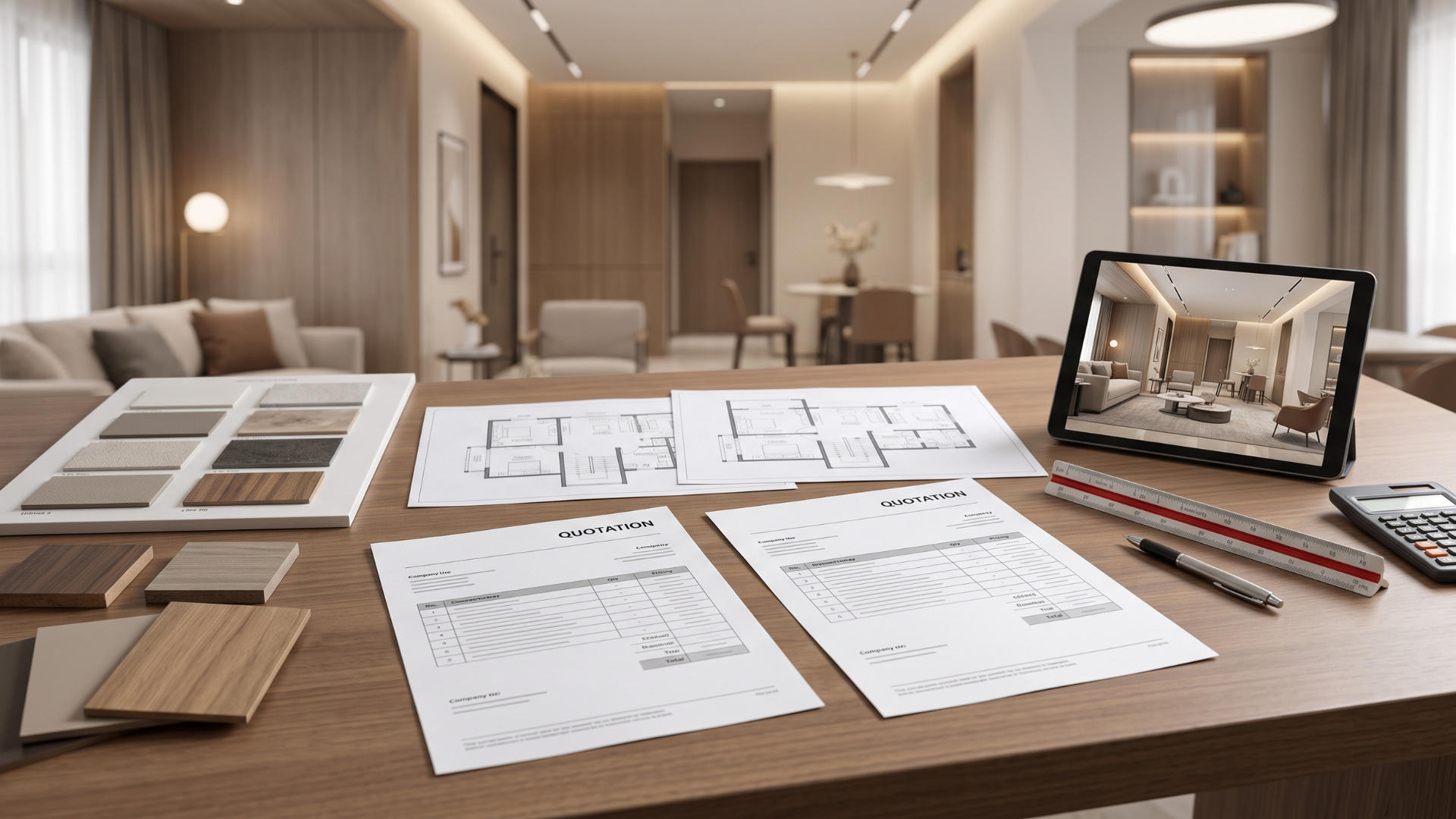
Getting two or three interior design quotations can sometimes make the decision harder, not easier. One quotation may look cheaper, while another may include more detailed specifications, materials, execution work or services.

The important question is not simply, “Which quotation is cheaper?” It is “What exactly am I getting for the quoted amount?”

Whether you are planning a 2 BHK, 3 BHK, 4 BHK, bungalow, office or commercial interior project in Ahmedabad, comparing quotations line by line can help you understand the actual scope, materials, exclusions, payment terms and execution responsibilities before you sign.

In this guide, we explain 15 important checks for comparing an interior design quotation in Ahmedabad.

Why Do Interior Design Quotations Differ?

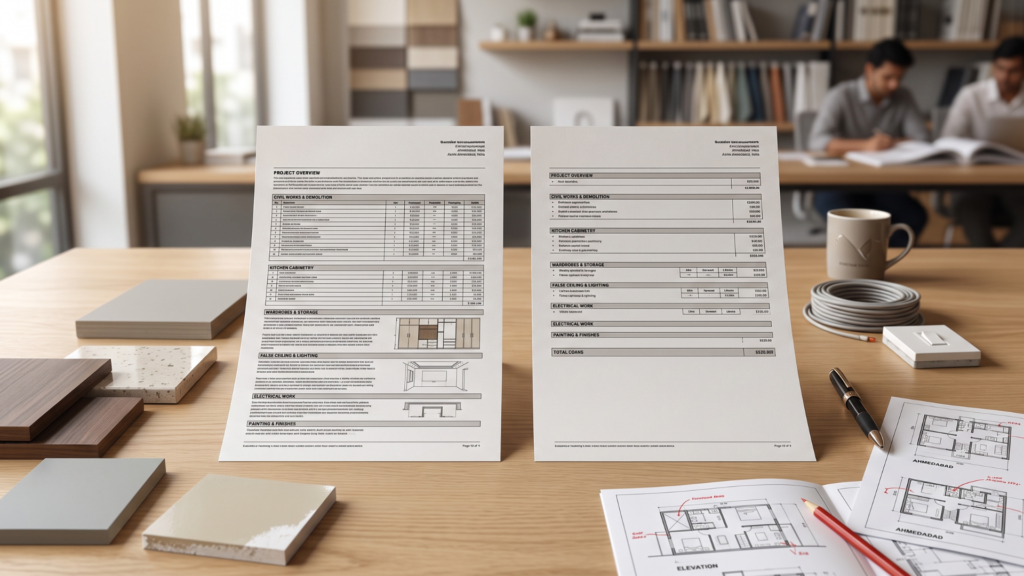
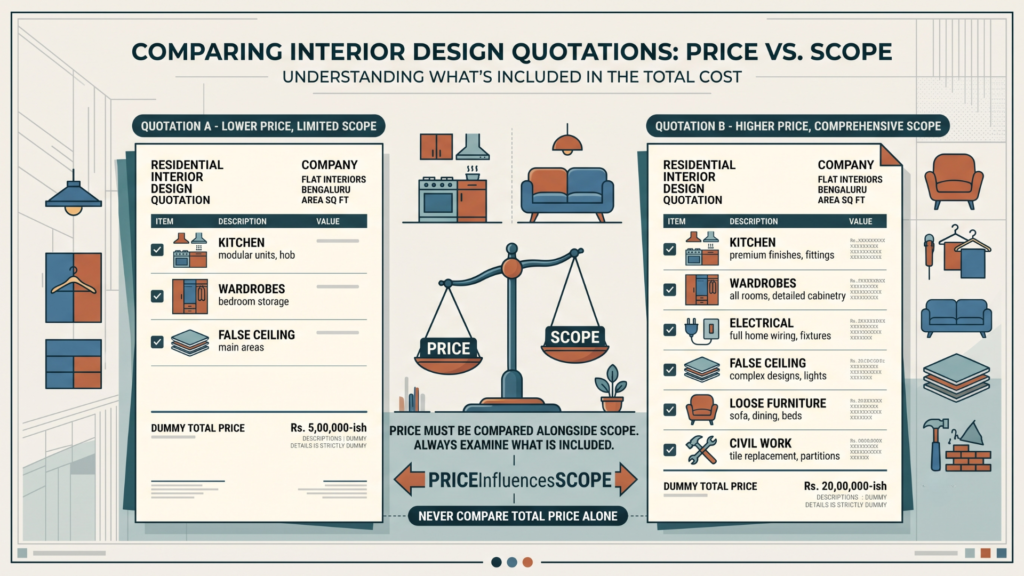
Two interior design quotations being compared for scope and materials in Ahmedabad
Two quotations can have different totals because the scope, materials and exclusions may not be the same.

Interior quotations can vary because different designers or contractors may be quoting for different scopes of work.

For example, one quotation may include wardrobes, kitchen work, false ceiling, electrical changes and painting, while another may include only selected furniture and carpentry.

Material specifications, hardware brands, measurements, design fees, execution responsibilities, taxes, transportation and exclusions can also affect the total amount.

That is why comparing only the final price can give you an incomplete picture.

15 Checks Before You Sign an Interior Design Quotation

1. Check Whether It Is a Quotation, Estimate or Proposal

First understand what document you have received.

An estimate may provide an approximate project cost, while a detailed quotation may specify individual items, quantities, materials and prices. A proposal may include design services, concepts and professional fees without representing the complete execution cost.

Before comparing two documents, make sure you understand what each one actually covers.

2. Check the Date and Quotation Validity

Look for the quotation date and validity period.

Material prices, product availability and project requirements can change. A quotation that was prepared several weeks or months ago may not necessarily represent the current project conditions.

3. Check the Scope of Work Carefully

Interior quotation scope showing kitchen wardrobes false ceiling and electrical work
Check exactly which interior works are included in the quoted scope.

This is one of the most important sections of the quotation.

Check whether the document clearly states the work being provided. Depending on the project, this may include:

  • Modular kitchen
  • Wardrobes
  • TV unit and storage
  • False ceiling
  • Electrical work
  • Painting
  • Civil modifications
  • Partitions
  • Flooring or wall treatments
  • Loose furniture

Do not assume that an item is included simply because it appears in the design discussion. It should be clearly documented in the quotation or agreed scope.

4. Check How Measurements Are Calculated

Look at how the quantity or measurement of each item has been calculated.

For example, cabinetry may be measured by running feet, square feet or another agreed method. False ceiling, painting and other work may also use different measurement bases.

Make sure you understand what the quoted quantity represents before comparing prices between vendors.

5. Check Itemisation and Linkage to the Design

A detailed quotation should make it reasonably clear what each major cost relates to.

Where applicable, compare the quotation with your approved drawings, layouts, elevations and design details. This helps identify whether the pricing corresponds to the actual design requirements.

6. Check Core Material Specifications

Interior design material samples and specifications for an Ahmedabad home project
Material type, thickness, finish and grade can affect an interior quotation.

Do not stop at a generic description such as “plywood,” “laminate,” “MDF” or “acrylic.”

Where relevant, check the specified material type, thickness, finish and grade.

The same furniture item can have significantly different specifications depending on the materials and construction method used.

7. Check Hardware Brands and Grades

Hardware can make a meaningful difference to both price and functionality.

Check whether hinges, drawer channels, lift-up systems, handles and other hardware are specified by brand, range or grade wherever required.

Also check whether the quotation permits substitutions and under what conditions.

8. Check Civil, Electrical, Plumbing, Ceiling and Painting Work

Interior projects can involve more than furniture and décor.

Check whether the quotation includes or excludes services such as:

  • Civil modifications
  • Electrical points and rewiring
  • Plumbing modifications
  • False ceiling
  • Painting
  • Partitions
  • Demolition or dismantling

For every major work category, look for a clear inclusion or exclusion.

9. Check Furniture, Appliances and Loose Items

Some quotations cover built-in interiors only, while others may include selected furniture or appliance-related work.

Check whether items such as beds, sofas, dining tables, chairs, mattresses, appliances, curtains or decorative elements are included.

Do not assume that a product shown in a 3D design is automatically part of the execution quotation.

10. Check All Written Exclusions

Interior quotation checklist showing exclusions for transport debris and additional work
Review exclusions such as transport, debris removal, permissions and additional site work.

This is one section many homeowners overlook.

Read the exclusions carefully and check for items such as:

  • Transportation
  • Debris removal
  • Building or society permissions
  • Additional civil work
  • Special site requirements
  • Appliances
  • Loose furniture
  • Third-party products

An exclusion does not necessarily mean a problem. The important point is understanding it before signing.

11. Check GST and Other Applicable Taxes

Always check whether the quoted amount is inclusive or exclusive of applicable taxes.

A lower-looking quotation may simply be presented differently from another quotation where taxes are already included.

Ask for clarity on the final payable amount so that the quotations can be compared on the same basis.

12. Check the Payment Schedule

Do not look only at the total project value.

Read the payment schedule and understand when payments are expected. The quotation or agreement should clearly explain applicable stages, milestones or payment terms.

For a broader understanding of why project documentation matters, you can also read our guide on agreements between interior designers and clients.

13. Check Changes, Revisions and Final Billing Rules

Interior projects can evolve during execution.

Before signing, understand what happens if you request a design change, material change, additional item or modification after approval.

Check whether such changes are documented through revised quotations, variation statements or another agreed process.

14. Check Timeline, Site Supervision and Delay Terms

Look for the expected project timeline and understand what responsibilities are assigned to the parties.

Where relevant, clarify site access, approvals, material availability, client decisions and other factors that may affect execution.

A realistic timeline is easier to manage when responsibilities are clearly documented.

15. Check Warranty, Handover and Snagging

Before signing, check what happens at the end of the project.

Understand the process for identifying pending work, resolving snags, completing handover and handling applicable product or workmanship warranties.

These details are especially important because the project relationship does not end simply because the main installation is completed.

How to Compare Two Interior Quotations Properly

Instead of placing the two final totals side by side, create a simple comparison like this:

Item Quotation A Quotation B What to Check
Kitchen Included Included Material, hardware, size and accessories
Wardrobes Included Extra Quantity and internal configuration
False Ceiling Included Excluded Area and lighting scope
Electrical Partial Included Points, wiring and fixtures
GST Extra Included Final payable amount

This type of comparison makes it easier to understand whether the price difference is actually a difference in pricing or simply a difference in scope.

Why the Cheapest Interior Quotation May Not Be the Lowest Final Cost

Interior quotation price comparison showing different project scopes
A lower quotation may represent a smaller scope, different specifications or additional exclusions.

Imagine two quotations for the same home.

Quotation A: ₹12 lakh

Quotation B: ₹14 lakh

At first glance, Quotation A appears cheaper.

But after checking the details, you discover that Quotation A excludes selected wardrobes, some electrical work, loose furniture and certain site-related costs, while Quotation B includes them.

In that situation, the ₹2 lakh difference does not necessarily represent a higher price for identical work. The two quotations are not offering the same scope.

This is why a quotation should be compared based on scope + specifications + quantities + exclusions + taxes + payment terms, rather than price alone.

Red Flags to Watch for in an Interior Quotation

Pay closer attention when a quotation:

  • Provides only one large lump-sum amount with no useful breakdown
  • Does not clearly define the scope
  • Uses vague material descriptions
  • Does not mention important exclusions
  • Does not explain applicable taxes
  • Provides unclear payment terms
  • Does not explain how changes will be charged
  • Shows major design elements that are missing from the execution scope

One unclear line does not automatically make a quotation unsuitable, but unclear points should be discussed and documented before signing.

Should You Compare Three Interior Quotations?

Comparing multiple quotations can help you understand the range of pricing and scope available for your project.

However, the comparison is useful only when the quotations are based on reasonably similar requirements.

For example, if one designer is quoting for a complete turnkey project and another is quoting only for furniture work, the final totals are not directly comparable.

If you are still at the stage of selecting an interior designer, our guide to choosing an interior designer in Ahmedabad can help you understand the broader selection process.

What Information Should You Give an Interior Designer Before Asking for a Quote?

The more clearly you define your requirements, the easier it becomes to receive a meaningful quotation.

Depending on your project, share:

  • Property type and location
  • 2 BHK, 3 BHK, 4 BHK or bungalow details
  • Approximate carpet area
  • Number of bedrooms and bathrooms
  • Kitchen requirements
  • Wardrobe requirements
  • Preferred design style
  • Existing site conditions
  • Expected timeline
  • Budget range
  • Any specific materials or brands you prefer

For homeowners planning different apartment sizes, you can also explore our guides covering 2 BHK interior design cost in Ahmedabad and 3 BHK interior design cost in Ahmedabad.

How Saara Spaces Approaches Interior Projects in Ahmedabad

Saara Spaces interior design project in Ahmedabad

Saara Spaces is an Ahmedabad-based interior design and build company working across residential, workspace, hospitality and retail environments. Its website describes an approach centred on design, execution and delivery, with project examples across Ahmedabad and other locations.

For clients considering a turnkey scope, it is useful to understand what the service covers rather than relying only on the phrase “turnkey”. You can read our detailed guide on interior turnkey solutions in Ahmedabad to understand the broader design and execution approach.

You can also explore completed work through the Saara Spaces projects section and discuss your requirements directly with the team through the contact page. The current contact page lists the Ahmedabad office at Sun Gravitas, Satellite, along with the firm’s contact information.

Frequently Asked Questions

What should I check first in an interior design quotation?

Start with the scope of work. Before comparing prices, confirm exactly what each quotation includes and excludes.

Is the cheapest interior quotation always the best option?

Not necessarily. A lower total can reflect a smaller scope, different material specifications, exclusions or different tax treatment.

Should GST be mentioned in an interior quotation?

Check whether applicable GST or other taxes are included or excluded and compare quotations using the final payable amount.

Why do two interior designers quote different prices for the same home?

The difference can come from scope, measurements, materials, hardware, design fees, execution requirements, exclusions, taxes and other project-specific factors.

Should I sign the quotation before checking the agreement?

Before committing, understand how the quotation relates to the final agreement or contract, especially regarding scope, payments, variations, timelines, warranties and handover.
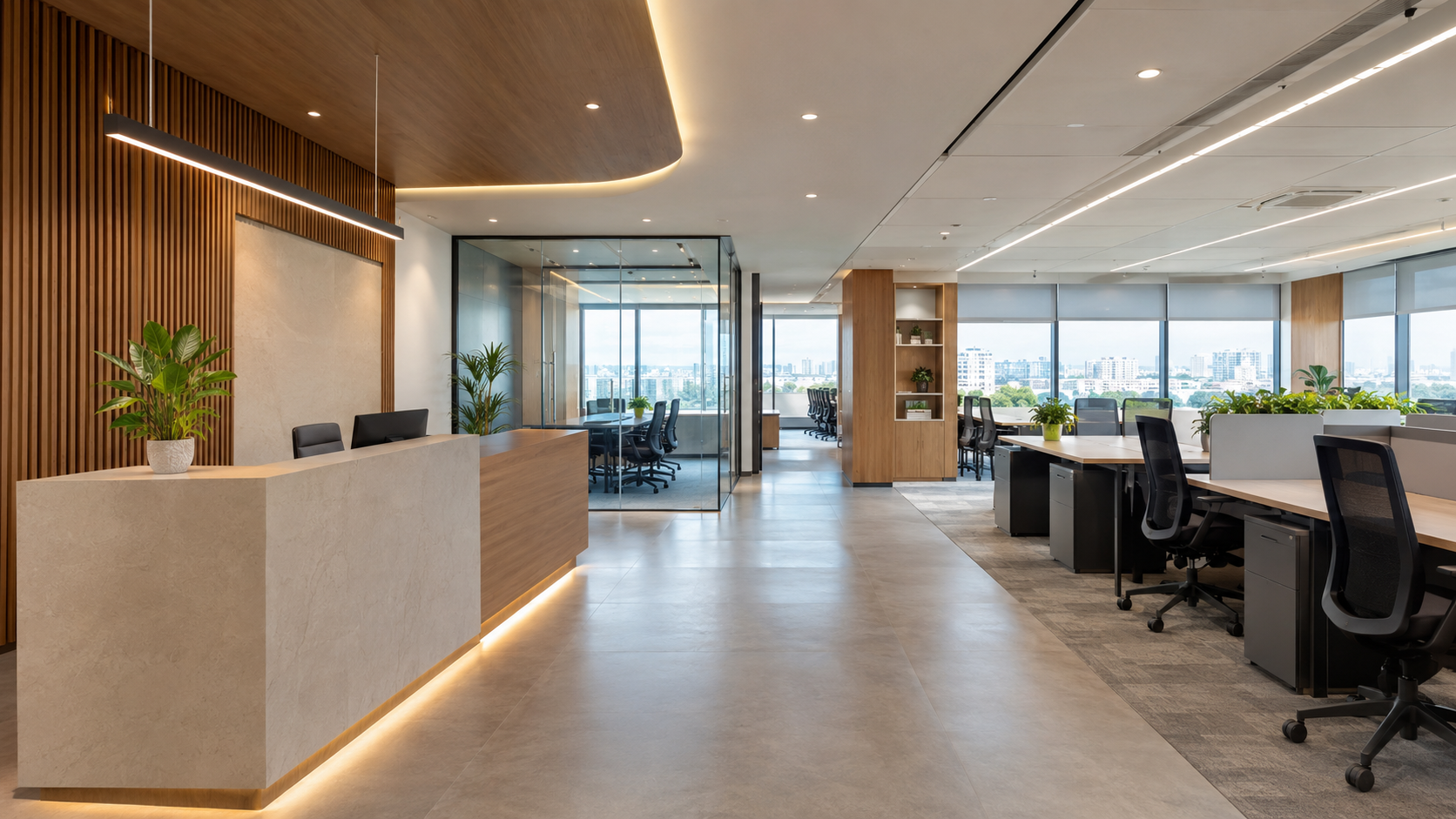
Final 15-Point Interior Quotation Checklist

Before signing an interior design quotation in Ahmedabad, check:

  1. Quotation type
  2. Date and validity
  3. Scope of work
  4. Measurement basis
  5. Itemisation
  6. Material specifications
  7. Hardware specifications
  8. Civil, electrical, plumbing, ceiling and painting scope
  9. Furniture, appliances and loose items
  10. Exclusions
  11. GST and taxes
  12. Payment schedule
  13. Changes and revisions
  14. Timeline and site responsibilities
  15. Warranty, snagging and handover

The objective is not to find the lowest number on the page. It is to understand what that number represents.

Planning an Interior Project in Ahmedabad?

15-point interior design quotation checklist before signing in Ahmedabad
Use this 15-point checklist before signing an interior design quotation.

A well-reviewed quotation can make project discussions clearer from the beginning. Take time to understand the scope, specifications, exclusions and payment terms before making a commitment.

For residential, commercial and turnkey interior requirements in Ahmedabad, you can explore Saara Spaces’ completed projects or contact the Saara Spaces team to discuss your requirements.

Save this 15-point checklist and use it before signing your next interior design quotation.

4 BHK Interior Design Cost in Ahmedabad (2026): Complete Budget, Room-Wise Breakdown & Tips

Planning the interiors of a 4 BHK home in Ahmedabad? One of the first questions most homeowners ask is: how much does 4 BHK interior design cost in Ahmedabad in 2026?

There isn’t one fixed answer.
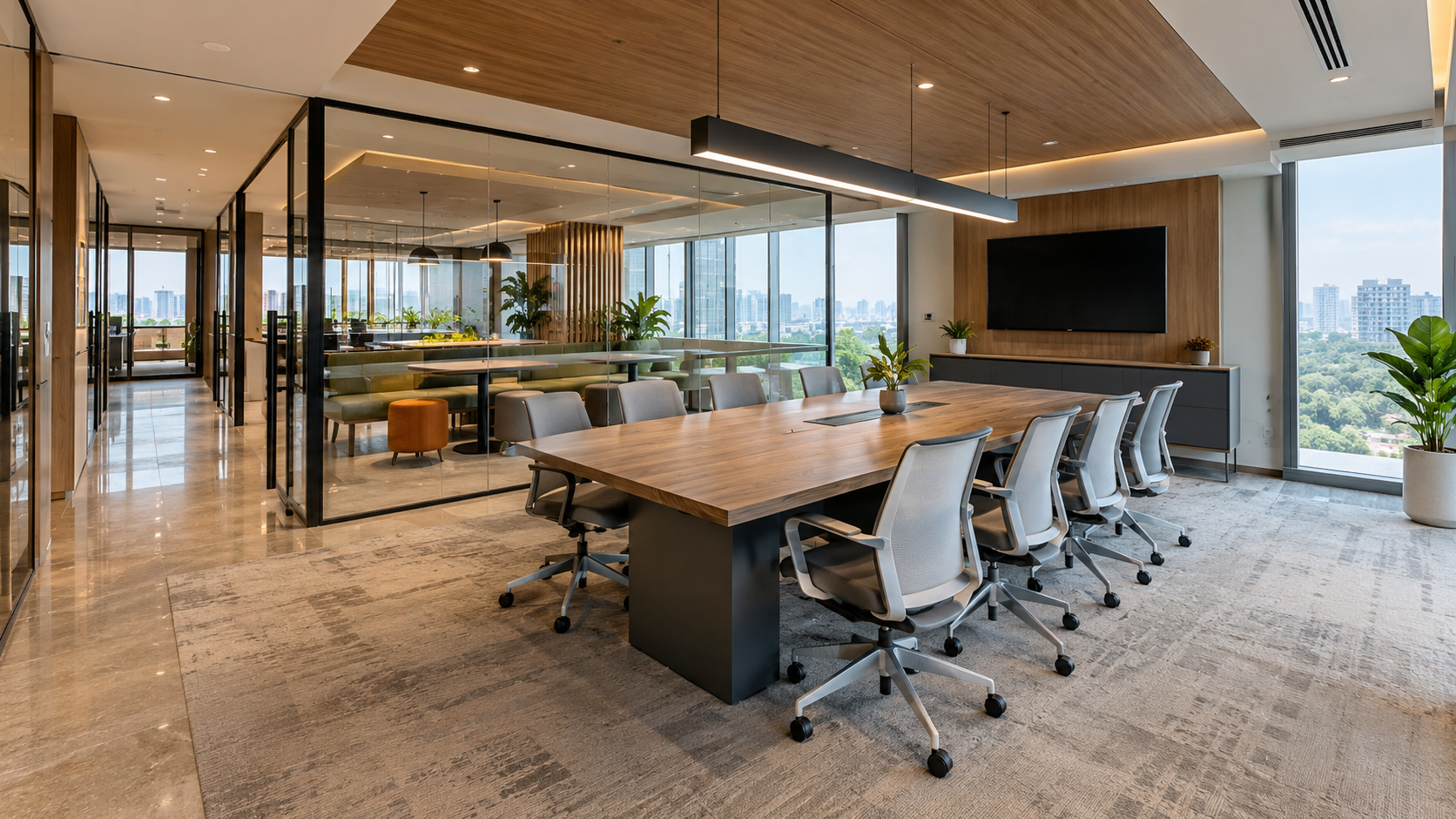
Two 4 BHK homes with a similar carpet area can have very different interior requirements depending on which rooms are being designed, the kitchen and wardrobe configuration, furniture requirements, materials, lighting, civil work, customisation and the level of execution involved.

So instead of starting with a generic number, it is more useful to understand what actually determines the cost of a 4 BHK interior project and what should be included in the scope.

If you’re comparing different home sizes, you can also read our guides on 2 BHK interior design cost in Ahmedabad and 3 BHK interior design cost in Ahmedabad to understand how the scope changes as the home gets larger.
Key Takeaways

  • 4 BHK interior cost depends on usable area, scope, materials, furniture and customisation, not simply the number of bedrooms.
  • Full turnkey, modular-only and phased interiors represent different scopes and should not be compared by headline price alone.
  • A proper quotation should clearly identify civil work, electrical work, kitchen, wardrobes, furniture, finishes, taxes and exclusions.
  • Per-square-foot pricing is useful only when the measurement basis and scope are the same.
  • Not every room needs the same level of customisation. A homeowner can prioritise important spaces while keeping secondary areas more practical.
  • The most reliable estimate comes from the actual floor plan, requirements and material specifications rather than a generic online figure.

Why 4 BHK Interior Cost Is Not a Single Number

The number of bedrooms is only one part of the calculation. Major cost drivers include:

  • Usable area: Carpet area and how much of the home is actually being designed.
  • Scope: Complete interiors versus selected areas such as the kitchen and wardrobes.
  • Materials: Laminate, acrylic, veneer, PU and other finishes have different price points.
  • Furniture: Beds, sofas, dining tables and other loose furniture may be separate from fixed interiors.
  • Civil work: Wall changes, flooring, plumbing or other site work can add significant costs.
  • Electrical and lighting: Rewiring, additional points, false ceiling and layered lighting affect the budget.
  • Customisation: Bespoke joinery generally requires more design and execution work.
  • Site conditions: Building restrictions, access, floor level, working hours and material movement can affect execution.

This is why the same 4 BHK configuration can produce very different project budgets.

What Is Usually Included in a 4 BHK Interior?

The exact scope depends on the project, but a complete residential interior may include the following.

Living and Dining Areas

Typical requirements may include a TV unit, feature wall, crockery or display storage, dining furniture, false ceiling and lighting.

These areas often receive higher design attention because they are visible, frequently used and important to the overall character of the home.

Modular Kitchen

Modern modular kitchen in a 4 BHK Ahmedabad home with tall storage, premium hardware and clean cabinetry
Kitchen layout, hardware, storage and finishes can significantly affect a 4 BHK interior budget.

Kitchen cost can vary considerably depending on cabinetry, storage requirements, countertop, hardware, accessories, finishes and appliance inclusion.

Premium hardware, tall units and specialised storage can increase the investment.

Master Bedroom

Contemporary 4 BHK master bedroom with custom wardrobe, upholstered headboard and warm ambient lighting
Bedrooms can be customised to different levels of specification depending on the overall budget.

A master bedroom may include a bed and backdrop, wardrobe, dresser, bedside units, study area, ceiling and lighting.

The level of customisation has a major effect on the final cost.

Additional Bedrooms

If all four bedrooms are being fully furnished, each may require some combination of wardrobes, bed or headboard treatment, study space, storage and lighting.

Not every bedroom needs the same specification. Some homeowners choose a highly customised master bedroom while keeping other bedrooms simpler.

Bathrooms

Where bathroom interiors are part of the agreed scope, the work may include vanity units, mirror units, storage, selected tiling or fixture upgrades.

The actual requirement depends on the home’s existing condition and the agreed scope.

Balcony, Utility and Pooja Area

Depending on the layout, these areas may require storage, seating, a pooja unit, utility cabinetry or customised elements.

Foyer and Passage

A foyer may include a shoe cabinet, console, mirror, wall treatment or accent lighting. Passage areas may include storage or selected decorative treatment.

Room-Wise 4 BHK Interior Scope

Modern 4 BHK living and dining interior with custom TV unit, dining furniture and layered lighting
Living and dining areas often combine custom furniture, lighting, storage and finish work.

A room-wise view helps homeowners understand where the budget is going.

Area Typical requirements Main cost drivers
Living room TV unit, furniture, ceiling, lighting Customisation and finishes
Dining Furniture, crockery/storage Furniture and materials
Kitchen Cabinets, countertop, hardware Layout and hardware
Master bedroom Bed, wardrobe, backdrop, storage Custom carpentry
Other bedrooms Wardrobes, bed/backdrop, study/storage Quantity and specification
Bathrooms Vanity, mirror, selected upgrades Scope and finishes
Utility Storage and cabinetry Layout and materials
Pooja area Unit and storage Customisation
Foyer Console, shoe storage, lighting Design detail

Actual costs should come from the final scope rather than applying one fixed rate to every room.

Full Turnkey vs Partial or Phased Interior

A 4 BHK can be executed as a full turnkey project or in phases.

Full Turnkey

A full turnkey arrangement can coordinate design, procurement and the agreed execution scope through one project plan. Depending on the contract, this may include civil work, electrical coordination, modular work, furniture and finishing.

The advantage is that related activities can be planned together under one coordinated project structure.

For a deeper explanation of the process, scope and execution model, see our guide to Interior Turnkey Solutions in Ahmedabad.

Partial or Phased Interior

Some homeowners may complete the kitchen and wardrobes first and add other furniture or areas later.

This can spread spending over time, but later phases may require additional coordination and protection of completed work.

The two approaches should not be compared simply by headline price because the scope can be very different.

Why Per-Square-Foot Pricing Can Be Misleading

Interior companies often quote a price per square foot, but the figure is useful only when you know what it includes.

One quotation might include:

  • Kitchen
  • Wardrobes
  • False ceiling
  • Basic electrical work
  • Painting

Another might additionally include:

  • Loose furniture
  • Premium hardware
  • Designer lighting
  • Civil modifications
  • High-end finishes
  • Project management
  • Other site work

Both quotations can therefore have different per-square-foot rates while covering very different scopes.

Also confirm whether the calculation uses carpet area, built-up area or another measurement basis.

So instead of asking only:

“What is your price per square foot?”

ask:

“What exactly is included in this rate?”

That creates a much more meaningful comparison.

What Should Be Included in a 4 BHK Interior Quotation?

Before comparing proposals, check whether they clearly mention:

  • Design and 3D visualisation
  • Civil work, where applicable
  • Electrical work and wiring
  • False ceiling
  • Modular kitchen
  • Wardrobes and storage
  • Hardware specifications
  • Fixed furniture
  • Loose furniture
  • Soft furnishings
  • Painting and finishing
  • Site supervision/project management
  • Taxes
  • Exclusions
  • Payment schedule
  • Expected timeline

A lower quotation is not necessarily cheaper if important items are excluded.

The best comparison is scope against scope, material against material and specification against specification.

If you are still evaluating which type of interior design company to work with, you can also refer to our Best Interior Designer in Ahmedabad: Complete Buyer’s Guide for practical points to consider before making a decision.

How to Compare Two 4 BHK Interior Quotations

Use a simple comparison before making a decision.

Check Quote A Quote B
Kitchen scope ✓ / — ✓ / —
Wardrobes ✓ / — ✓ / —
Furniture ✓ / — ✓ / —
Civil work ✓ / — ✓ / —
Electrical ✓ / — ✓ / —
False ceiling ✓ / — ✓ / —
Hardware specification Check Check
Taxes Included / Extra Included / Extra
Exclusions Check Check
Timeline Check Check

This helps you understand whether the two proposals are actually comparable.

What Affects 4 BHK Interior Cost in Ahmedabad?

Local project conditions can influence execution requirements.

For example, properties in Bopal, South Bopal, Thaltej, Bodakdev, Satellite, Science City, Sindhu Bhavan Road and Motera can have different access conditions, building requirements and site constraints.

These locations should not be treated as fixed price zones. The property itself and the agreed scope remain the primary factors.

How to Plan Your 4 BHK Interior Budget

1. Start With the Floor Plan

Share the carpet area and layout before discussing a final estimate.

2. Decide the Scope

Clarify which rooms need complete interiors and which areas can have a simpler treatment.

3. Define Material Preferences

Decide whether you want standard, premium or highly customised finishes.

4. Separate Fixed and Loose Furniture

Beds, sofas and dining furniture can significantly change the total investment.

5. Define Exclusions

Confirm whether appliances, curtains, décor, civil work and electrical changes are included.

6. Compare Complete Quotations

Do not compare only the final figure. Compare what you actually receive for that figure.

How Long Does a 4 BHK Interior Project Take?

A 4 BHK project can require more coordination than a smaller home because there are more rooms, materials and execution stages.

The actual timeline depends on:

  • Design approvals
  • Site readiness
  • Scope
  • Procurement
  • Material lead times
  • Custom furniture
  • Civil work
  • Client decisions
  • Building/site restrictions

The final timeline should therefore be confirmed once the design and execution scope have been agreed.

Saara Spaces’ Residential Interior Experience

Saara Spaces is an Ahmedabad-based interior design and build company serving residential and other project types. Its portfolio includes residential apartments and bungalows, including 4 BHK and larger homes.

You can explore the Saara Spaces project portfolio to see completed residential and commercial work and understand the range of spaces the team has worked on.

For homeowners who are already planning a project, the next step is to discuss the floor plan, location, required scope and preferred level of finish with the team.

Frequently Asked Questions

How much does a 4 BHK interior cost in Ahmedabad in 2026?

There is no single fixed price. The final budget depends on carpet area, scope, kitchen and wardrobe requirements, furniture, civil work, electrical work, materials, finishes and customisation. Saara Spaces should provide a project-specific estimate after reviewing the floor plan and requirements.

Does a 4 BHK interior quotation include furniture?

Not necessarily. Fixed interiors such as wardrobes and modular kitchens and loose furniture such as sofas, beds and dining tables may be treated separately. Always check the quotation carefully.

Is a full turnkey interior more expensive than a phased project?

The two cannot be compared simply by headline price because their scope can be different. A turnkey project may coordinate several trades and services, while a phased project may initially cover selected areas.

Should 4 BHK interior cost be calculated by carpet area?

Carpet area can be a useful basis, but the calculation method must be clearly defined. Scope and inclusions should remain consistent when comparing different quotations.

How can I get an accurate estimate for my 4 BHK?

Share your floor plan, carpet area, location, requirements and preferred material/finish level with the interior design team. A project-specific estimate can then be prepared.

Does a luxury 4 BHK always cost much more?

Premium hardware, custom furniture, specialised lighting, high-end materials and bespoke finishes can substantially increase the budget. The final difference depends on the selections actually included in the project.

What should I check before selecting an interior designer?

Review relevant project experience, scope of work, materials and hardware, quotation inclusions and exclusions, timeline, payment schedule, execution process and previous project work.

Planning a 4 BHK Interior in Ahmedabad?

Completed residential interior project by Saara Spaces in Ahmedabad
Explore completed Saara Spaces residential projects before planning your own interior.

The right starting point is not a generic price. It is a clear understanding of your floor plan, scope, materials and priorities.

Share your floor plan and requirements with Saara Spaces to discuss your 4 BHK interior project and prepare a project-specific estimate.

Contact Saara Spaces

Interior Turnkey Solutions in Ahmedabad: Complete Guide to Design & Execution

Planning an interior project can quickly become complicated when design, civil work, electrical services, furniture, materials and finishing are handled by different vendors.

This is where interior turnkey solutions in Ahmedabad can simplify the process. Instead of the client coordinating multiple independent contractors, a turnkey interior company manages the project through a structured design and execution process, with a defined scope, project coordination and a planned handover.

Whether you are planning a corporate office, commercial space, retail outlet, hospitality project or home interior, understanding what a turnkey model includes can help you make a better decision.

This guide explains what turnkey interior solutions cover, how the process works, what affects project cost and what you should check before choosing a turnkey interior company in Ahmedabad.

Key Takeaways

  • Turnkey interior solutions bring design, execution and project coordination under one structured project arrangement.
  • Depending on the agreed scope, turnkey projects can include space planning, civil work, MEP coordination, furniture, finishes, lighting, procurement and site management.
  • A typical turnkey project moves through requirement assessment, design development, scope and budget finalisation, procurement, execution, quality checks and handover.
  • Turnkey execution can be particularly useful for businesses, retail spaces, hospitality projects and clients who do not want to coordinate multiple vendors themselves.
  • There is no universal turnkey interior price per square foot because project cost depends on area, design complexity, materials, civil and MEP requirements, furniture scope, site conditions and timeline.
  • Before signing a contract, review the scope, exclusions, project-management process, payment milestones, relevant portfolio and post-handover responsibilities.

What Are Interior Turnkey Solutions?

Interior turnkey solutions are a project approach in which design, execution and related project coordination are managed through one structured arrangement.

Depending on the project scope, this can involve:

  • Space planning
  • Interior design
  • Design development and visualisation
  • Civil and partition work
  • Electrical and plumbing coordination
  • HVAC and other MEP requirements where applicable
  • Furniture and carpentry
  • Flooring and ceiling
  • Wall finishes
  • Lighting
  • Material procurement
  • Site supervision
  • Quality checks
  • Final installation and handover

The exact scope should always be defined in the project agreement because not every turnkey project includes the same services.

Turnkey vs Multiple Independent Vendors

In a traditional fragmented approach, a client may appoint separate people for design, civil work, electrical work, carpentry, painting and other services.

The client or their representative then has to coordinate:

  • Which vendor works first
  • When materials should arrive
  • Whether one trade is affecting another
  • Whether the execution matches the design
  • Whether the project is following the planned timeline
  • How issues are resolved between different vendors

With a turnkey approach, these activities are coordinated within a single project structure.

This does not eliminate every project challenge, but it can make responsibility, communication and project coordination more straightforward.

Design-Only vs Turnkey Interior Design

A design-only service primarily focuses on how the space should look and function.

This can include:

  • Concept development
  • Space planning
  • Material selection
  • Furniture layouts
  • 3D visualisation
  • Design drawings

Turnkey interior design goes further by connecting the design with execution.

The project can therefore move from design → procurement → execution → finishing → handover under one coordinated project scope.

For clients who want both design and execution, this can reduce the need to independently manage several contractors.

What Is Included in a Turnkey Interior Design Package?

The exact scope depends on the project, but a comprehensive turnkey interior fit-out may include the following.

1. Space Planning and Interior Design

The project begins with understanding the space, requirements and intended use.

This may include:

  • Space planning
  • Zoning
  • Furniture layouts
  • Circulation planning
  • Design concepts
  • Mood boards
  • Material palettes
  • 3D visualisation

For offices, this may also involve understanding employee requirements, meeting spaces, workstations, breakout areas and functional zones.

2. Civil and Partition Work

Depending on the existing condition of the property, the project may require:

  • Flooring
  • False ceilings
  • Partitions
  • Wall preparation
  • Civil modifications
  • Other site-related work

The requirements can be very different between a finished property and a bare-shell commercial space.

3. Electrical, Plumbing and MEP Coordination

Commercial and larger interior projects can involve significant technical requirements.

Depending on the project scope, this may include:

  • Electrical points
  • Lighting circuits
  • Plumbing
  • HVAC coordination
  • Power requirements
  • Data and structured-cabling coordination
  • Fire-safety-related provisions where applicable

Specific technical requirements, approvals and responsibilities should be confirmed for each project rather than assumed as part of every turnkey package.

4. Furniture and Carpentry

Furniture requirements can include:

  • Workstations
  • Storage
  • Reception counters
  • Meeting-room furniture
  • Wardrobes
  • Modular kitchens
  • Custom furniture
  • Display units
  • Other built-in elements

The exact furniture specification depends on the project’s design, function and budget.

5. Finishes and Surface Treatment

Interior finishes can significantly influence the final appearance and budget.

Depending on the design, these may include:

  • Paint
  • Laminates
  • Veneers
  • Wall panelling
  • Wallpaper
  • Flooring
  • Ceiling finishes
  • Feature walls

Material selection should be finalised before execution wherever possible so that the project team can plan procurement and installation correctly.

6. Lighting

Lighting is not only about selecting fixtures.

A well-planned lighting approach considers:

  • Functional lighting
  • Ambient lighting
  • Accent lighting
  • Task lighting
  • Fixture placement
  • Colour temperature
  • Electrical requirements

For offices and commercial spaces, lighting also needs to support the way the space is actually used.

7. Procurement and Material Coordination

Materials need to reach the site at the right stage of execution.

A coordinated project approach can help manage:

  • Material specifications
  • Procurement schedules
  • Vendor coordination
  • Delivery
  • Storage
  • Installation sequence

Material availability and lead times should be considered while preparing the project schedule.

8. Project Management and Site Coordination

Turnkey execution also involves coordinating different activities on site.

This may include:

  • Vendor coordination
  • Site supervision
  • Work sequencing
  • Quality checks
  • Progress monitoring
  • Material coordination
  • Client updates
  • Snag identification

The exact project-management structure should be explained to the client before work begins.

How Does a Turnkey Interior Project Work in Ahmedabad?

Interior design and execution process for a turnkey project in Ahmedabad

A well-managed turnkey project generally follows a structured process.

1. Requirement Discussion and Site Assessment

The first stage is understanding the client’s requirements and assessing the site.

The team may review:

  • Existing layout
  • Site dimensions
  • Existing services
  • Structural limitations
  • Project requirements
  • Functional needs
  • Expected timeline

For offices and commercial projects, understanding how the business operates is particularly important.

2. Space Planning

The design team develops an initial planning direction based on the site’s dimensions and the client’s requirements.

The goal is to balance:

  • Function
  • Movement
  • Storage
  • Aesthetics
  • Furniture
  • Lighting
  • Services

3. Design Development and Visualisation

Once the planning direction is established, the design is developed further.

This can include:

  • Design concepts
  • Material selections
  • Colour palettes
  • Furniture design
  • 3D visualisation
  • Detailed drawings

This is an important stage because major design decisions are easier to change before physical execution begins.

4. Material and Finish Selection

Materials and finishes are selected according to the agreed design, performance requirements and budget.

This can include:

  • Flooring
  • Laminates
  • Veneers
  • Paint
  • Furniture materials
  • Lighting
  • Hardware
  • Wall finishes

5. Budget and Scope Finalisation

The project scope should clearly identify what is included and excluded.

The client should understand:

  • Design scope
  • Civil scope
  • MEP scope
  • Furniture scope
  • Material specifications
  • Project-management responsibilities
  • Payment milestones
  • Potential variations

This is one of the most important stages because unclear scope can create confusion later.

6. Procurement and Execution Planning

Material selection and procurement planning for turnkey interiors

Once the scope is approved, procurement and execution can be planned around the project schedule.

Materials, vendors and different trades need to be coordinated so that one activity does not unnecessarily delay another.

7. Site Execution and Quality Control

Execution can include civil work, MEP activities, carpentry, furniture installation, flooring, ceiling, painting and other finishing work depending on the project.

Regular supervision and quality checks help identify issues while work is still underway.

8. Final Inspection and Handover

Before handover, the project should go through a final walkthrough.

This can include:

  • Identifying snags
  • Completing pending finishing work
  • Checking installations
  • Reviewing agreed scope
  • Final cleaning
  • Documentation where applicable
  • Handover

The objective is to deliver the completed space according to the agreed project scope.

Who Should Choose Turnkey Interior Execution?

Turnkey execution can make sense for several types of clients.

Businesses Setting Up New Offices

Companies that need to make a workplace operational by a particular date may benefit from having design, procurement and execution coordinated through one project structure.

For businesses planning an office project, explore office interior design in Ahmedabad.

Retail and Commercial Spaces

Retail projects often involve several elements that need to work together, including:

  • Customer movement
  • Displays
  • Lighting
  • Branding
  • Furniture
  • Electrical requirements
  • Finishes

A coordinated execution approach can help manage these requirements together.

Hospitality Projects

Hotels, restaurants and other hospitality environments require attention to guest experience, functionality, durability and aesthetics.

Turnkey execution can help coordinate the different trades required to bring the design together.

Homeowners With Limited Time

Homeowners who do not want to personally coordinate several contractors may prefer a structured turnkey approach.

However, turnkey is not automatically the right choice for every project. Clients who already have established contractors and are comfortable managing the project themselves may prefer a more fragmented approach.

Turnkey Interior Design Cost Factors in Ahmedabad

There is no single turnkey interior price that applies to every project.

Two spaces with the same area can have completely different project costs because their requirements, materials and execution conditions may be very different.

The main cost factors include:

Area and Layout Complexity

A larger project generally requires more material and labour, while complex layouts can increase design and execution requirements.

Level of Finish

The selection of standard or premium materials can have a significant effect on the final project cost.

Examples include:

  • Laminates vs premium veneers
  • Standard vs premium hardware
  • Basic vs designer lighting
  • Standard vs custom furniture

Civil and MEP Requirements

A space requiring extensive electrical, plumbing, HVAC or other services may have substantially different costs from a property where many existing services can be retained.

Furniture Scope

The amount and type of furniture can make a significant difference.

Custom furniture, workstations, storage and specialised installations can require more design, material and labour than standard furniture.

Project Type

A corporate office, retail store, restaurant, home and hospitality project can have completely different technical and functional requirements.

Project Timeline

Compressed timelines may require additional coordination, overlapping trades or faster procurement, depending on the project.

Site Access and Logistics

Floor level, parking, loading access, building working hours, material movement restrictions and site conditions can all influence execution.

Why Per-Square-Foot Pricing Can Be Misleading

A simple per-square-foot number does not always explain what you are actually getting.

For example, two 5,000 sq. ft. offices could have very different budgets if one requires basic partitions and furniture while the other requires extensive MEP work, custom furniture, premium finishes, lighting and additional technical infrastructure.

For this reason, it is better to compare quotations based on a clearly defined scope rather than comparing only the headline per-square-foot price.

What Should You Check Before Choosing a Turnkey Interior Company in Ahmedabad?

Before signing a turnkey interior contract, look beyond the design renders.

1. Relevant Portfolio

Check whether the company has experience with projects similar to yours.

A residential interior specialist may have a very different skill set from a company experienced in large office or commercial projects.

You can review the Saara Spaces projects to understand the company’s project portfolio.

2. Design and Execution Capability

Ask how design decisions are transferred into execution.

A good process should connect:

Design → Drawings → Materials → Procurement → Execution → Quality Control

3. Single Point of Contact

Understand who will communicate with you during the project and how issues will be escalated.

Saara Spaces’ turnkey approach describes a single point of contact who coordinates project information while different team members handle planning, procurement, quality control and manpower-related responsibilities. Read more about turnkey office interior designers in Ahmedabad for a more specific discussion of the office-interior application of this model.

4. Clear Scope of Work

Your quotation should clearly explain:

  • What is included
  • What is excluded
  • Material specifications
  • Furniture scope
  • Civil work
  • MEP responsibilities
  • Project-management responsibilities
  • Variations/change orders

5. Payment Schedule

Payment milestones should be clear before the project starts.

Avoid relying only on a single headline project amount without understanding when and why payments are due.

6. Site Management Process

Ask:

  • Who supervises the site?
  • How frequently is the site reviewed?
  • How are quality issues recorded?
  • Who communicates progress?
  • How are changes approved?

7. Timeline

A realistic timeline should account for:

  • Design approvals
  • Material availability
  • Procurement
  • Site conditions
  • Civil work
  • Installation
  • Finishing
  • Final corrections

8. Post-Handover Support

Ask what happens if a minor defect or snag appears after handover.

The responsibilities and duration of post-handover support should be clearly understood.

Why Local Ahmedabad Experience Matters for Turnkey Interiors

Turnkey projects are influenced not only by design but also by the practical conditions of the site.

Local project experience can help teams understand:

Local Building Requirements

Commercial buildings, residential societies and business premises can have their own rules regarding:

  • Working hours
  • Material movement
  • Lift usage
  • Parking
  • Noise
  • Site access
  • Approvals

Vendor and Material Coordination

Local sourcing relationships can help with material availability and project coordination.

Site Logistics

Ahmedabad projects can involve different site conditions depending on the location, building type and accessibility.

Understanding these practical factors during planning can help create a more realistic execution schedule.

Understanding the Local Market

Ahmedabad includes a mix of corporate offices, commercial buildings, retail spaces, hospitality projects, apartments and independent homes.

A turnkey team working regularly in the city can build its process around the practical requirements of these different project environments.

Turnkey Interior Solutions for Different Project Types

Completed turnkey office interior project in Ahmedabad

Turnkey execution is not limited to one type of property.

Office Interiors

Office projects can include:

  • Reception areas
  • Workstations
  • Cabins
  • Meeting rooms
  • Conference spaces
  • Breakout areas
  • Storage
  • Employee facilities

For businesses planning an office project, explore office interior design and projects by Saara Spaces.

Commercial Interiors

Commercial spaces require a balance of customer experience, functionality, branding and operational requirements.

For a broader look at commercial interiors in Ahmedabad, explore commercial interior design in Ahmedabad.

Retail Interiors

Retail environments need to consider:

  • Product visibility
  • Customer movement
  • Display systems
  • Lighting
  • Branding
  • Storage
  • Staff areas

Hospitality Interiors

Hospitality projects require particular attention to guest experience, durability, functionality and visual identity.

Residential Interiors

For homes, turnkey execution can combine design, furniture, finishes and execution into a coordinated project.

Explore the Saara Spaces project portfolio for examples of completed residential and other interior work.

How Saara Spaces Approaches Turnkey Interior Solutions in Ahmedabad

Saara Spaces presents its turnkey approach as a coordinated project model in which a single point of contact communicates project information while different team members handle areas such as planning, procurement, quality control and manpower management.

The company’s website also showcases Saara Spaces projects across different interior categories.

For a turnkey project, the focus should be on understanding the client’s requirements, developing the design, coordinating materials and execution, monitoring quality and bringing the agreed scope through to completion.

The exact scope, materials, timelines and responsibilities should always be discussed and documented for the individual project.

Examples of Saara Spaces Projects

For readers evaluating a turnkey interior partner, looking at completed work is often more useful than reading only about services.

Explore the Saara Spaces project portfolio to see completed office, residential and commercial interior work.

When evaluating a project portfolio, look for examples that are relevant to your own requirement in terms of:

  • Project type
  • Scale
  • Design style
  • Function
  • Material quality
  • Execution complexity

Ready to Discuss Your Project?

Completed interior project by Saara Spaces in Ahmedabad

If you are evaluating interior turnkey solutions in Ahmedabad for a home, office, retail or hospitality project, the best next step is to discuss your actual site and requirements.

The project scope, materials, design direction, budget and timeline can then be evaluated according to the specific property.

Contact Saara Spaces to discuss your interior project with the team.

Frequently Asked Questions

What does turnkey mean in interior design?

Turnkey interior design means that design, execution and related project coordination are managed through one structured project arrangement. Depending on the agreed scope, this can include civil work, MEP coordination, furniture, finishes, procurement and final handover.

Is turnkey interior design more expensive than hiring separate vendors?

Not necessarily. The total cost depends on the project scope, materials, design complexity and execution requirements. A turnkey model can simplify coordination and may reduce the risk of delays or rework between different vendors, but the financial outcome depends on the individual project.

How long does a turnkey interior project take in Ahmedabad?

The timeline depends on the size of the project, design complexity, civil and MEP requirements, material availability, site conditions and finish level. A realistic schedule should be prepared specifically for the project rather than relying on a generic timeline.

Can turnkey interior solutions work for a small office or retail space?

Yes. Turnkey execution can be used for projects of different sizes. The appropriate approach depends on the scope, complexity and requirements of the space.

What should be included in a turnkey interior quotation?

A quotation should clearly identify the design scope, civil work, MEP responsibilities, furniture, materials, finishes, project-management responsibilities, exclusions, payment milestones and any conditions related to changes in scope.

What approvals are required for a turnkey interior project?

Approval requirements depend on the property, building, project type and scope of work. Depending on the project, coordination may be required with building management, society authorities or relevant statutory departments. The responsibilities and exclusions should be confirmed before work begins.

How should I choose a turnkey interior company in Ahmedabad?

Review relevant project experience, portfolio quality, design and execution process, project-management structure, scope of work, material specifications, payment milestones, timelines and post-handover support before making a decision.

12 Best Living Room Design Ideas for Ahmedabad Homes (2026 Guide)

If you’re looking for living room design ideas that actually suit an Ahmedabad home — not just a Pinterest board shot in a European apartment — this guide is built around what’s realistic here: our slab heights, our light, our furniture sizes, and our budgets.

The living room carries more pressure than any other room in the house. It’s where guests are received, where the family actually spends most of its evening, and often the first space a visitor judges the whole house by.

For 2026, the direction is clear: rooms are moving away from cold, catalogue-perfect looks toward something warmer, more textured, and more personal. This guide walks through 12 living room design ideas that fit that shift — and that work with Ahmedabad’s apartment sizes and climate.


living room design ideas for modern Ahmedabad homes


What’s Changing in Living Room Design for 2026

Cool greys and stark whites, which dominated living rooms for almost a decade, are quietly on their way out. In their place: warm, earthy tones like terracotta, sage, ochre, and deep mocha.

Furniture shapes are softening too. Rounded sofa arms, curved coffee tables, and oval shelving are replacing the sharp, boxy silhouettes that defined minimalist interiors. The overall goal isn’t a showroom look — it’s a room that feels lived-in and personal, while still looking put-together.

For Ahmedabad homes specifically, this shift works in our favour. Warmer tones pair naturally with the strong natural light most apartments get, and curved furniture makes better use of compact floor plans by softening tight corners.

These living room design ideas aren’t about a total overhaul — most can be introduced through paint, furniture choices, and lighting, without touching the civil structure.


Colour & Wall Ideas

1. Warm Neutral Base with One Earthy Accent Wall

Instead of flat white or cool grey, use a warm neutral (cream, sand, warm taupe) across the main walls, and bring in one accent wall in terracotta, olive, or deep ochre. This keeps the room bright while adding depth.

2. Textured Wall Finishes

Limewash, textured paint, or a fluted panel section on one wall adds visual interest without needing bold colour. This works particularly well behind the TV unit or sofa backdrop, where a flat wall usually looks empty.

3. Two-Tone Walls with a Horizontal Break

A lower band in a deeper tone (say, terracotta or clay) with a lighter shade above, separated by a moulding strip. This adds a sense of structure to taller Ahmedabad living rooms without needing false ceiling changes.


curved furniture living room design idea Ahmedabad


Furniture & Layout Ideas

4. Curved or Rounded Seating

A gently curved sofa or a set of rounded armchairs softens a room instantly and tends to encourage better conversation flow than straight-edged seating pushed against walls.

5. Mixed Wood Tones

Instead of matching every wooden surface to one finish, combine a lighter wood (like light oak) with a darker one (like walnut) across the TV unit, coffee table, and shelving. This adds depth without looking mismatched, as long as one tone is clearly dominant.

6. Modular & Multi-Functional Furniture

Storage ottomans, modular sofa units, and nesting tables are especially useful in 2-3 BHK Ahmedabad apartments, where the living room often needs to flex between everyday use and hosting guests.

7. A Statement Rug to Anchor the Room

A textured jute, wool, or hand-tufted rug placed under the seating area visually “grounds” the furniture arrangement — particularly useful in open-plan living-dining layouts where there’s no wall to define the space.


Lighting Ideas

8. Layered Lighting Instead of One Central Light

A single central light fixture is being replaced by 2-3 layers: ambient (ceiling or cove), task (a floor or reading lamp), and accent (a wall light or small table lamp). As Wikipedia’s overview of interior lighting design notes, combining different light layers within one space is a standard approach for controlling both mood and function in a room, rather than relying on a single fixture. Layering makes the same room feel warmer in the evening without needing to change any furniture.

9. Coloured or Tinted Glass Fixtures

Pendant lights in amber, smoked, or soft emerald glass are increasingly used as a design feature rather than just a light source — they cast a gentle tint across nearby walls and furniture through the day and evening.

If your living room’s lighting plan is tied to a false ceiling redesign, it’s worth reading alongside our guide on false ceiling design ideas, since cove lighting and layered lighting both depend on how the ceiling is planned.


Small Living Room Ideas (Ahmedabad Apartments)

10. Wall-Mounted TV Units Over Floor-Standing Ones

Freeing up floor space visually enlarges a compact living room and makes cleaning easier — a small but practical shift for 2 BHK layouts.

11. Mirrors Positioned to Reflect Natural Light

A single well-placed mirror opposite a window can noticeably brighten a room that only gets light from one side, which is common in mid-rise Ahmedabad apartments facing narrow lanes.

12. Light, Airy Curtains Over Heavy Drapes

Sheer or light linen curtains let in more daylight while still offering privacy — a small change that keeps a compact living room from feeling boxed in.

If you’re planning your full apartment layout rather than just the living room, our home interior design ideas guide covers how these choices fit into the rest of the home.


small living room design ideas for Ahmedabad apartments


Ahmedabad Cost Guide (2026)

Living Room Element Approx. Cost Range Notes
Accent wall (textured paint/panel) ₹80 – ₹250 per sq. ft. Depends on finish complexity
TV unit (wall-mounted, modular) ₹35,000 – ₹90,000 Size and material dependent
Curved / rounded sofa (3-seater) ₹45,000 – ₹1,20,000 Fabric and frame quality vary widely
Layered lighting setup ₹15,000 – ₹40,000 Ceiling + floor + accent lights combined
Rug (statement size) ₹8,000 – ₹30,000 Hand-tufted costs more than machine-made

These are indicative ranges for budgeting purposes. For a full room-wise quotation, it helps to compare proposals the same way outlined in our guide on choosing the best interior designer in Ahmedabad.


3 Mistakes to Avoid

1. Matching every wood tone exactly. A single matched wood finish across all furniture can look flatter than intentionally mixing two complementary tones.

2. Relying on one central light. A single bright ceiling light makes most living rooms feel clinical rather than warm, especially in the evening.

3. Oversizing furniture for the room. A large sectional sofa in a compact Ahmedabad apartment often blocks natural walking paths — measure the room’s traffic flow before choosing furniture size.


FAQs

1. What is the most popular living room colour for 2026? Warm earthy tones — terracotta, sage green, ochre, and deep mocha — are the most requested colours, replacing the cool greys popular in previous years.

2. Is curved furniture more expensive than straight furniture? Slightly, on average, because curved frames need more custom carpentry. The difference is usually 10-20% depending on the fabric and finish chosen.

3. How do I make a small Ahmedabad living room look bigger? Wall-mounted furniture, light curtains, a well-placed mirror, and layered lighting are the most cost-effective ways to visually expand a compact space without any structural change.

4. Should living room lighting and false ceiling design be planned together? Yes. Cove lighting, spotlights, and layered lighting all depend on wiring that’s routed through the false ceiling, so both are usually planned in the same design stage.

5. How long does a full living room redesign typically take? A furniture and finish-level redesign (without civil work) usually takes 3-5 weeks, including procurement and installation. A full renovation involving false ceiling or flooring changes takes longer.


completed living room design project by Saara Spaces Ahmedabad


Bringing These Ideas Into Your Home

None of these living room design ideas need a complete renovation to work. Most start with a colour or furniture decision and build outward from there — a curved sofa, one accent wall, or a layered lighting plan can shift the entire feel of the room on their own.

The ideas that make the biggest difference are the ones planned early, alongside your electrical layout and false ceiling design, rather than added as an afterthought once the room is already built.

Planning your living room as part of a larger home interior project in Ahmedabad? Get in touch with Saara Spaces for a consultation that ties layout, lighting, furniture, and finishes into one plan.

15 Best False Ceiling Design Ideas for Ahmedabad Homes (Proven 2026 Guide)

If you’re hunting for false ceiling design ideas for a home or office in Ahmedabad, you’ve probably noticed the same problem everyone runs into: most “design idea” lists online show ceilings that don’t match Indian slab heights, local budgets, or the way rooms are actually used here.

For years, the ceiling was the one surface homeowners forgot about. All the attention went to flooring, walls, and furniture, while the ceiling just sat there — plain, white, and doing nothing except holding a light fixture.

That’s changing fast in 2026. Designers are now calling it “functional drama” — ceilings that frame a room, shape the lighting, and are often the first thing a visitor notices.

This guide breaks down 15 practical false ceiling design ideas that are actually being requested in Ahmedabad homes and offices right now — what room each one suits, what it typically costs, and what to check before you finalise anything.


false ceiling design ideas for modern living room
A floating gypsum ceiling with cove lighting is currently the most requested of all false ceiling design ideas for Ahmedabad living rooms.

Why the Ceiling Finally Matters

A false ceiling isn’t just decoration. Done well, it solves real problems.

It hides ugly stuff — electrical conduits, AC ducting, plumbing lines, and beams that would otherwise sit exposed. It controls lighting, since cove lighting, spotlights, and layered light sources are only possible once wiring can be routed behind a ceiling.

It also improves acoustics. A gypsum board absorbs sound better than a bare concrete slab — useful in homes with open kitchens or media rooms. According to Wikipedia’s overview of dropped ceilings, the space created above a suspended ceiling is often used specifically for concealing wiring and improving acoustic performance, which is exactly why the format has stayed popular in both homes and offices for decades.

A false ceiling also adds insulation. It creates an air gap that reduces heat transfer from the slab above — genuinely useful during Ahmedabad summers. And it defines zones. In open-plan homes, a change in ceiling level tells your eye where the living room ends and dining begins, without needing a wall.

That’s exactly why ceiling design has become part of planning a home interior design project, rather than an afterthought added at the end.


Living Room False Ceiling Design Ideas

1. Floating Ceiling with Cove Lighting

A rectangular or oval gypsum board “floats” a few inches below the main ceiling, with a hidden LED strip running along the gap. The light bounces off the ceiling above and creates a soft glow with no visible fixture.

This is the single most-requested of all false ceiling design ideas for Ahmedabad living rooms right now — it looks premium without needing an oversized chandelier.

2. Stepped / Multi-Level Ceiling

Two or three levels, stepping down from the edges of the room toward the centre. Works well in living-cum-dining layouts, since each step can mark a different zone.

3. Wooden Batten Ceiling

Slim wooden (or wood-finish) battens fixed in a repeating pattern across a section of the ceiling. This reflects the 2026 shift toward warmer, textured interiors — away from flat white gypsum, toward finishes with more visual weight.

4. Statement Circular or Geometric Panel

A single bold shape — circle, hexagon, or interlocking geometric pattern — placed centrally, usually paired with a pendant or chandelier. Works best as one feature, not applied across the whole ceiling.


bedroom false ceiling design idea with cove lighting
A soft curved ceiling above the headboard is one of the simplest bedroom false ceiling design ideas that still feels premium.

Bedroom False Ceiling Design Ideas

5. Simple Border Ceiling with Perimeter Lighting

A slim gypsum border (4–6 inches) around the room edge with LED strip lighting hidden inside. Minimal cost, minimal maintenance — and it makes even a compact bedroom feel taller, since the eye follows the light line outward.

6. Curved Ceiling Above the Bed

A soft curved or arched gypsum section directly above the headboard. This pairs naturally with the “organic shapes over hard edges” direction showing up across bedroom design in 2026 — softer silhouettes instead of sharp rectangular panels.

7. Wardrobe-to-Ceiling Continuation

The wardrobe design visually continues into the ceiling through a matching border. Commonly requested when the bedroom is planned as part of a larger wardrobe or storage layout.


Kitchen & Dining Ceiling Ideas

8. Moisture-Resistant Grid Ceiling

Kitchens need a different board specification than living rooms — moisture-resistant gypsum or PVC grid panels that can be removed section-by-section for chimney or plumbing access.

9. Dining Table Drop Ceiling

A rectangular drop, sized to match the dining table below it, with a pendant light or linear fixture through the centre. One of the easiest ways to make a dining area feel intentional rather than an extension of the living room.

If your kitchen layout is still being finalised, it’s worth reading this alongside our modular kitchen design guide, since cabinet height and chimney position directly affect how low a kitchen ceiling can safely drop.


Office & Commercial Ceiling Ideas

10. Acoustic Panel Ceiling

Perforated or fabric-wrapped acoustic panels that reduce echo in open workstation areas. Increasingly requested in Ahmedabad office fit-outs as open floor plans become the norm again.

11. Grid Ceiling with Integrated AC Diffusers

A clean, modular grid layout designed around AC vents, sprinklers, and lighting so nothing looks patched on afterward. This is the standard for most professional office interior projects, since panels lift out individually for maintenance.

12. Exposed-Look Ceiling with Selective Gypsum Sections

Instead of boxing in the entire slab, only areas with visible ducting or wiring get a false ceiling section, while the rest stays exposed and painted. Popular in cafés, studios, and startups wanting a faster, lower-cost option.


false ceiling material types compared for Ahmedabad homes
Choosing between gypsum, PVC, and wooden batten is one of the first decisions in any false ceiling design plan.

Budget-Friendly & Statement Ideas

13. PVC False Ceiling

The most budget-friendly option, especially for bathrooms, utility areas, and balconies. Water-resistant and quick to install, though it offers less design flexibility than gypsum. As detailed on Wikipedia’s ceiling overview, dropped ceilings can be built from a range of materials — from drywall to lightweight PVC panels — depending on the budget and purpose of the space.

14. Mirror or Glossy Panel Accent

A small glossy or mirrored panel section, usually above a dining table or entryway, used to visually expand a compact space. Best used sparingly — one accent, not the whole ceiling.

15. Fabric or Textile Ceiling Panels

An emerging idea for bedrooms and lounges — fabric-wrapped panels that soften the room acoustically and visually. Still rare in Ahmedabad homes, which makes it a genuinely distinctive choice.


Ahmedabad Cost Guide (2026)

Costs vary by design complexity, board type, and lighting — but here’s a general range for early budgeting.

Ceiling Type Approx. Cost (per sq. ft.) Best Suited For
Simple border ceiling ₹55 – ₹75 Bedrooms, budget projects
Standard gypsum ceiling with cove lighting ₹85 – ₹130 Living rooms, dining areas
Multi-level / stepped design ₹130 – ₹200 Larger living rooms, villas
Wooden batten or textured ceiling ₹150 – ₹250 Statement living rooms, offices
PVC ceiling ₹40 – ₹65 Bathrooms, balconies, utility
Acoustic panel ceiling ₹120 – ₹220 Offices, media rooms

These are indicative ranges. Actual pricing depends on site conditions, material brand, and design complexity. For an accurate number, it’s best to get a detailed room-wise estimate — the same way you’d approach comparing interior design quotations for any other part of a project.


5 Checks Before You Finalise a Design

1. Slab height matters. A false ceiling typically drops room height by 4–8 inches. In rooms with lower existing height, keep the design simple.

2. Plan wiring before the ceiling, not after. AC points, spotlights, and cove lighting wiring all need routing before the gypsum board goes up.

3. Match the board to the room. Moisture-resistant boards for kitchens and bathrooms, standard gypsum for dry areas.

4. Don’t over-design a small room. A heavy multi-level ceiling in a compact bedroom can make it feel smaller, not grander.

5. Think about maintenance access. If ducting or plumbing runs above the ceiling, check whether sections can be opened without damaging the whole design.


FAQs

1. Is a false ceiling necessary in every room? No. It’s most valuable where you need to hide wiring/ducting, want layered lighting, or want to define zones in an open layout.

2. Gypsum or POP — which is better in 2026? Gypsum boards are now more common than traditional POP (Plaster of Paris) because they’re faster to install and easier to repair in sections. POP still suits highly customised curved designs.

3. How long does false ceiling installation take? A standard living room ceiling typically takes 4–7 days, plus 2–3 days for finishing and lighting.

4. Does a false ceiling reduce room height too much? A well-planned border or single-level ceiling drops height by only a few inches — barely noticeable in most Ahmedabad apartments.

5. Can false ceiling designs be changed later? Yes, but it involves partial demolition, which costs more than getting the design and lighting layout right the first time during turnkey interior execution.


Getting the Ceiling Right, from the Start

A false ceiling is easy to underestimate during planning and expensive to fix once built. The right approach is deciding on the ceiling design at the same time as your electrical layout, lighting plan, and furniture placement — not as a separate decision made later.

If you’re working out your overall interior budget, our cost guides for 2 BHK and 3 BHK homes both include false ceiling costing as part of the room-wise breakdown, which makes it easier to see how these false ceiling design ideas fit into your total project cost.

Planning a home or office project in Ahmedabad and want the ceiling design handled as part of a complete plan, not a last-minute add-on? Get in touch with Saara Spaces for a consultation that covers layout, lighting, and ceiling design together.

Commercial Interior Design in Ahmedabad: 10 Proven Steps for Success

Commercial interior design in Ahmedabad is about much more than choosing attractive colours, furniture and finishes. A successful business environment needs to support daily operations, employee productivity, customer experience, brand identity and long-term maintenance while staying within an agreed budget and timeline.

Whether you are planning a corporate office, retail store, showroom, restaurant, hospitality space or another commercial property, decisions made during the design stage can influence how effectively the space performs for years.

From space planning and lighting to materials, branding, compliance, budgeting and execution, every element needs to work together.

This guide explains the most important factors businesses should consider before starting a commercial interior project in Ahmedabad.


Key Takeaways

Before beginning a commercial interior project:

  • Start with function and workflow, not aesthetics alone.
  • Create a detailed space plan before selecting furniture or finishes.
  • Select materials based on durability, maintenance and commercial performance.
  • Plan lighting together with electrical and architectural requirements.
  • Integrate the company’s brand identity into the interior from the concept stage.
  • Understand the difference between interior design and commercial fit-out.
  • Establish a realistic budget based on scope rather than relying on a generic per-square-foot figure.
  • Consider fire safety, accessibility and other applicable requirements early.
  • Build a phased project timeline instead of estimating duration only from floor area.
  • Evaluate an interior design company based on its process, experience, execution capability and communication.

What Does Commercial Interior Design Cover?

Commercial interior design is the planning and development of interior environments used for business purposes rather than residential living.

This can include:

  • Corporate offices
  • Startup and coworking spaces
  • Retail stores
  • Showrooms
  • Restaurants
  • Hotels and hospitality spaces
  • Clinics
  • Professional offices
  • Client-facing business environments

A commercial interior project can involve:

  • Space planning and layout development
  • Furniture planning
  • Material and finish selection
  • Lighting design
  • Electrical coordination
  • MEP coordination
  • Ceiling and flooring design
  • Branding integration
  • Acoustic planning
  • Custom furniture and joinery
  • Technical drawings
  • 3D visualisation
  • Site execution and fit-out

The important point is that these decisions are interconnected.

A change in the layout can affect electrical planning. Material selection can affect maintenance costs. Lighting can influence the way products or workspaces are perceived. Branding can influence colours, finishes, signage and even spatial planning.

That is why commercial interiors should be approached as an integrated design and execution process rather than as a collection of individual decorative decisions.


Which Commercial Interior Decisions Change by Business Type?

Space Prioritise before decoration Ask your team
Corporate office Headcount, calls, meeting privacy, power/data, circulation Are workstation density and HVAC load coordinated?
Retail / showroom Customer movement, displays, lighting, back-of-house storage Does the layout make the products easier to explore?
Professional practice Client waiting, confidential rooms, accessibility, documents Can visitors move easily without exposing staff-only areas?
Hospitality Guest journey, specialist services, cleaning and maintenance Have operating and lifecycle costs been considered?

Each project has different approval and professional requirements. Finalise a measurable brief and site survey before choosing a fit-out specification.


1. Start With Function Before Aesthetics

In residential interiors, personal taste often drives the design. Commercial interiors work differently.

An office needs to support communication and workflow. A retail store needs to guide customers through the space. A restaurant needs an efficient relationship between the kitchen, service area and dining space.

Before selecting colours or furniture, consider:

  • How many people will use the space every day?
  • What departments or functions need to be accommodated?
  • How will employees, customers and visitors move through the space?
  • What equipment or technology is required?
  • What areas need privacy?
  • Which areas should encourage collaboration?
  • Could the business expand in the future?

These questions help establish the right design direction before aesthetics enter the conversation.

commercial interior design in Ahmedabad with functional office planning


2. Space Planning Determines How Well the Interior Works

Space planning is one of the most important parts of commercial interior design.

A visually impressive office can still fail if employees cannot move comfortably between departments. Similarly, an attractive retail space may perform poorly if customer circulation is confusing.

Effective commercial space planning should consider:

Circulation

Corridors, aisles and walkways need adequate space for daily movement.

Zoning

Different activities should be organised into appropriate zones. For example, quiet work areas can be separated from meeting, collaboration and visitor areas.

Flexibility

Businesses change over time. Modular furniture and adaptable layouts can make future changes easier.

Access and Safety

Emergency exits, accessibility requirements and circulation routes should be considered during the initial planning stage rather than added later.

A detailed space plan therefore provides the foundation on which the rest of the interior is developed.


3. Choose Materials for Commercial Performance

Commercial spaces generally experience considerably more wear than residential interiors.

Office floors may experience continuous movement. Retail counters can encounter repeated cleaning and customer interaction. Hospitality surfaces may be exposed to moisture, heat and spills.

When selecting materials, consider:

  • Durability
  • Cleaning requirements
  • Maintenance frequency
  • Fire performance where applicable
  • Acoustic performance
  • Slip resistance where relevant
  • Expected lifespan
  • Replacement availability
  • Overall lifecycle cost

A premium-looking material isn’t automatically the best material for every application.

The better approach is to evaluate the relationship between appearance, performance, maintenance and cost.

durable materials used in commercial interior design


4. Plan Lighting Around the Business

Lighting plays several roles in commercial environments.

In offices, it contributes to visual comfort and the usability of workstations. In retail, it can draw attention to products and displays. In hospitality, lighting contributes significantly to ambience.

A well-designed commercial lighting strategy can combine:

  • Ambient lighting
  • Task lighting
  • Accent lighting
  • Decorative lighting
  • Natural daylight

Workstations, reception counters and areas involving detailed tasks may require dedicated task lighting, while accent lighting can be used to highlight architectural elements or branded areas.

Lighting should also be coordinated with the electrical layout during the design stage rather than treated as a final decorative layer.

commercial office lighting design in Ahmedabad


5. Integrate Branding Into the Interior

A commercial space is often a physical extension of a company’s brand.

Reception areas, meeting rooms, signage, material palettes, colours and custom architectural details can all contribute to how visitors perceive a business.

Branding can be introduced through:

  • Reception design
  • Brand colours
  • Signage
  • Feature walls
  • Custom furniture
  • Material selection
  • Graphics
  • Meeting-room design
  • Spatial storytelling

The important consideration is when branding is introduced.

It is usually more effective to discuss brand identity during the concept and planning stages rather than trying to add branding after construction is already complete.

branded corporate office interior design in Ahmedabad


6. Understand Interior Design and Commercial Fit-Out

The terms interior design and fit-out are often used interchangeably, but they can represent different scopes of work.

Interior Design

Interior design may include:

  • Concept development
  • Space planning
  • Material selection
  • Lighting design
  • Furniture planning
  • Branding
  • Technical drawings
  • 3D visualisation

Commercial Fit-Out

Fit-out generally refers to the physical implementation of the design, including areas such as:

  • Flooring
  • Ceilings
  • Partitions
  • Electrical work
  • Services
  • Joinery
  • Furniture installation
  • Finishing work

Some businesses appoint separate design and execution teams. Others choose an integrated design-and-build approach.

For businesses that want a single point of coordination, a combined approach can reduce communication gaps between design decisions and site execution.

If you’re interested specifically in turnkey office execution, see our guide to turnkey office interior design in Ahmedabad.

commercial interior fit-out project by Saara Spaces in Ahmedabad


7. Build the Budget Around Trade-Offs

There is no universal commercial interior design price per square foot that applies to every project.

The budget can change depending on:

  • Type of business
  • Total area
  • Existing site condition
  • MEP requirements
  • Material selection
  • Custom furniture
  • Loose furniture
  • Joinery
  • Technology requirements
  • Lighting
  • Execution complexity

Instead of asking only for a fixed cost, businesses should discuss their budget range and priorities with the design team.

For example, a designer might recommend a different finish or construction method that achieves a similar visual result while reducing maintenance or procurement costs.

A good commercial interior designer should be able to explain these trade-offs clearly.


8. Consider Safety and Compliance From the Beginning

Safety should never be treated as a finishing-stage consideration.

Depending on the project, commercial interiors may need to consider:

  • Fire exits
  • Emergency lighting
  • Fire-rated elements
  • Electrical requirements
  • Accessibility
  • Building regulations
  • Structural approvals
  • Plumbing requirements
  • Industry-specific regulations

For example, Gujarat’s official fire-safety guidance includes considerations for business buildings, including fire prevention, life safety and fire protection. Project-specific requirements should always be verified with the relevant authorities and qualified professionals.

You can also refer to the official Gujarat Fire Prevention and Life Safety Measures Act, 2013 for the applicable legal framework.

The purpose of including authoritative references is not simply SEO. It gives readers a reliable starting point for further verification.


9. Plan a Realistic Project Timeline

Project duration does not depend only on square footage.

A smaller project involving extensive custom furniture, specialised materials or complex MEP work can take longer than a larger project with a straightforward specification.

Common factors affecting timelines include:

  • Design revisions
  • Approval processes
  • Material procurement
  • Custom furniture
  • Joinery
  • Electrical and MEP work
  • Structural modifications
  • Long-lead materials
  • Changes during execution

A phased schedule is generally more useful than simply giving a total number of days.

The phases may include:

  1. Requirement study
  2. Space planning
  3. Design development
  4. Technical drawings
  5. Material finalisation
  6. Procurement
  7. Site preparation
  8. Execution
  9. Furniture installation
  10. Final finishing and handover

10. How to Choose a Commercial Interior Designer in Ahmedabad

Choosing a commercial interior designer should involve more than looking at portfolio photographs.

Before appointing a team, ask:

Have they worked on similar projects?

Office, retail, hospitality and showroom requirements can be very different.

Is the scope clearly defined?

Understand whether the company provides design only, execution, or both.

What does the design process include?

Ask whether the team provides space plans, material specifications, technical drawings and 3D visualisations.

Who manages the site?

Clarify who will coordinate contractors, materials, quality checks and site progress.

How are changes handled?

A transparent process for variations can reduce disputes later.

What happens after handover?

Ask about snag rectification, maintenance support and post-possession services.

The right company should be able to explain its process clearly before asking you to commit to the design.


Commercial Fit-Out Quote: What Must Be Included?

Compare written proposals against the same drawings and specifications. A lump sum is difficult to evaluate unless it identifies trade packages, quantities, exclusions, taxes, IT/MEP interfaces and change approval.

Cost bucket Check before approval
Design and survey Drawings, site measurement and scope of revisions
Civil and finishes Ceilings, floors, partitions, selected materials
MEP and IT Electrical, HVAC, data, AV and safety interfaces
Furniture Built-in joinery versus loose furniture, hardware and models
Handover Tests, snagging, warranties and post-completion support

Use the interior quotation comparison checklist to prepare questions before approving your BOQ.


Saara Spaces’ Approach to Commercial Interior Design in Ahmedabad

At Saara Spaces, commercial interior projects begin with understanding how the space needs to function before developing the visual direction.

The company’s approach combines space planning, design development, material selection, execution coordination and quality control. Saara Spaces also provides design-and-build services where the project scope requires coordinated design and execution.

The studio works across working environments and commercial spaces with an emphasis on functional planning, thoughtful design and execution quality.

You can explore the Saara Spaces website to learn more about the studio and its approach to interior design and execution.

If you are planning a commercial interior project in Ahmedabad, contact Saara Spaces to discuss your project, requirements, timeline and scope.

Real Ahmedabad Office Case: Shivam Logistics

Saara Spaces’ published Shivam Logistics case study documents a 326 sq ft office in Jagatpur, Ahmedabad with an organised reception, linear workstations and a private executive cabin. It illustrates a practical point: space planning should reflect the business’s actual activities rather than follow a fixed desk-to-room formula. View more publicly listed work in the Saara Spaces project portfolio.

Project specifics above are drawn from Saara Spaces’ published case study; do not add unverified budget, deadline or performance claims.


Frequently Asked Questions

What is commercial interior design?

Commercial interior design is the planning and development of interior environments used for business purposes. It can include offices, retail stores, showrooms, restaurants, hospitality spaces, clinics and other professional premises.

How much does commercial interior design cost in Ahmedabad?

There is no single price per square foot that applies to every commercial project. Costs depend on the property, area, existing conditions, MEP requirements, materials, furniture, customisation and execution scope.

How long does a commercial interior project take?

The timeline depends on the project’s scope and complexity. Design development, approvals, procurement, custom furniture, MEP work and site execution can all influence the final schedule.

Should I hire an interior designer or a design-and-build company?

Both approaches can work. A design-and-build company can provide a single point of coordination between design and execution, potentially reducing communication gaps during construction.

Do commercial interiors require safety approvals?

Depending on the project and scope of work, various safety, fire, accessibility, structural and building requirements may apply. These should be reviewed with qualified professionals and the relevant authorities before execution.


Final Conclusion

A successful commercial interior is not simply a space that looks impressive when photographed. It should work efficiently every day.

From space planning and materials to lighting, branding, safety, budgeting and execution, every decision should support the way the business operates.

For businesses planning a new office, showroom, retail space or other commercial environment in Ahmedabad, working with an experienced design team can help bring these requirements together into one coordinated process.

Planning a commercial workspace in Ahmedabad? Share your project location, approximate area, business type, current floor plan and intended timeline with Saara Spaces. A properly scoped discussion can identify the planning, drawings, specialist checks and execution responsibilities needed before pricing.

×